

Views: 320 Author: Lasting Titanium Publish Time: 2026-02-05 Origin: Site


Content Menu
● Understanding Titanium Square Bars
>> What are Titanium Square Bars?
● Key Benefits of Titanium Square Bars in Marine Projects
>> 2. High Strength-to-Weight Ratio
>> 4. Durability and Longevity
>> 5. Cost-Effectiveness in the Long Run
>> 6. Versatility in Applications
>> 7. Resistance to Extreme Temperatures
>> 8. Environmental Sustainability
In the marine industry, the choice of materials is critical for ensuring the longevity and performance of various components. Among the materials available, titanium square bars have emerged as a preferred option due to their unique properties and advantages. This article explores the key benefits of using titanium square bars in marine projects, highlighting their applications, performance characteristics, and overall value.
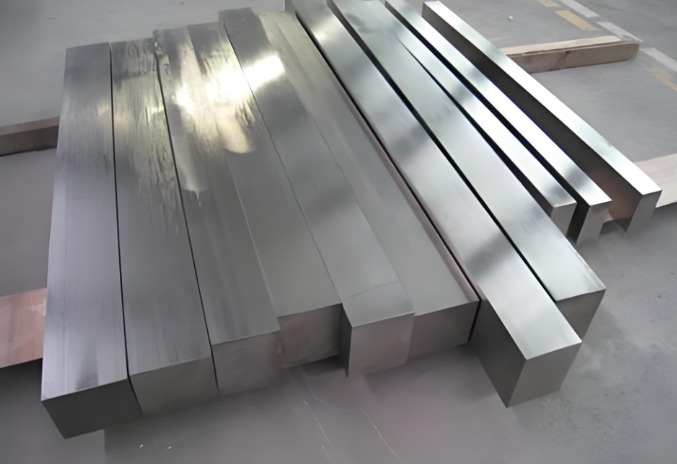
Titanium square bars are solid metal bars with a square cross-section made from titanium or titanium alloys. They are available in various grades, each offering different mechanical properties and corrosion resistance levels. The versatility of titanium square bars makes them suitable for a wide range of applications in the marine industry, from structural components to specialized equipment. The manufacturing process of titanium square bars typically involves forging or extrusion, which enhances their mechanical properties and ensures uniformity in dimensions.
Titanium is known for its exceptional strength-to-weight ratio, corrosion resistance, and biocompatibility. These properties make it an ideal choice for marine applications where exposure to harsh environments is common. The unique atomic structure of titanium allows it to form a protective oxide layer that is highly stable and self-healing in the presence of oxygen. If the surface is scratched, this layer will rapidly re-form when exposed to aerated environments, such as seawater, providing ongoing protection. This self-healing characteristic is crucial in marine applications, where components are frequently subjected to abrasive conditions.
Titanium's low thermal expansion coefficient means it maintains its shape and integrity under varying temperature conditions, making it suitable for applications that experience thermal cycling. The metal's ability to withstand extreme temperatures without losing its mechanical properties further solidifies its position as a preferred material in high-performance applications. Additionally, titanium's lightweight nature contributes to its appeal in marine projects, where reducing weight can lead to improved fuel efficiency and performance.
One of the most significant advantages of titanium square bars is their exceptional corrosion resistance. In marine environments, components are often exposed to saltwater, which can lead to rapid degradation of materials. Titanium's ability to resist corrosion ensures that structures and equipment maintain their integrity over time, reducing the need for frequent replacements and maintenance. This property is particularly beneficial in applications such as underwater structures, marine fasteners, and components exposed to seawater.
The corrosion resistance of titanium is attributed to the formation of a stable oxide layer that protects the underlying metal from aggressive substances. This layer is not only effective against saltwater but also against a variety of corrosive chemicals, making titanium suitable for use in chemical processing equipment and marine environments where exposure to harsh substances is common. The longevity of titanium components in these environments translates to lower lifecycle costs and reduced downtime for maintenance and repairs.
Titanium square bars possess a high strength-to-weight ratio, making them an excellent choice for applications where weight savings are crucial. In the marine industry, reducing weight can lead to improved fuel efficiency and enhanced performance. The lightweight nature of titanium allows for the design of more efficient vessels and structures without compromising strength. This characteristic is especially important in the construction of ships and submarines, where every kilogram saved can lead to significant improvements in operational efficiency.
The high tensile strength of titanium ensures that components can withstand the stresses and strains encountered in marine environments. For instance, in the construction of marine vessels, using titanium square bars can lead to lighter hulls that improve speed and maneuverability while maintaining structural integrity. This advantage is particularly valuable in competitive marine applications, such as racing yachts, where performance is paramount.
Titanium is known for its biocompatibility, making it suitable for applications that require contact with living organisms. In marine projects, this property is particularly relevant for components used in underwater habitats or research facilities. The non-toxic nature of titanium ensures that it does not adversely affect marine life, making it an environmentally friendly choice. This characteristic is crucial for projects that aim to minimize their ecological footprint while still achieving high performance and reliability.
Additionally, titanium's excellent biocompatibility and non-toxicity make it an ideal choice for marine biological research equipment, aquaculture facilities, and any applications that require minimizing metal ion leaching to avoid impacting sensitive marine organisms. This further emphasizes titanium's value as an environmentally friendly material in marine engineering.
The durability of titanium square bars is another key benefit. Titanium is highly resistant to wear and tear, ensuring that components maintain their performance over extended periods. In marine applications, where exposure to harsh conditions is common, the longevity of materials is critical. The ability of titanium to withstand fatigue and stress corrosion cracking further enhances its durability, making it suitable for components subjected to cyclic loading, such as those found in marine propulsion systems and structural supports.
Titanium, especially certain alloys like Ti-6Al-4V, exhibits unparalleled resistance to stress corrosion cracking in seawater, which is a critical advantage over many high-strength steels and aluminum alloys. This combination of fatigue resistance and corrosion resistance makes titanium the preferred material for critical components such as submarine pressure hulls, propeller shafts, and deep-sea equipment frames, ensuring ultra-high reliability and safety in harsh marine environments.
While the initial cost of titanium square bars may be higher than that of traditional materials like steel, the long-term cost-effectiveness is undeniable. The reduced maintenance requirements, extended lifespan, and enhanced performance of titanium components lead to lower overall costs over time. In marine projects, where downtime and maintenance can be costly, investing in titanium square bars can result in significant savings.
Therefore, when evaluating the cost of titanium materials, a lifecycle cost analysis should be employed. Although the initial purchase price is high, the significantly reduced maintenance costs, inspection frequency, downtime losses, and extended service life often make the total cost over the project's entire lifecycle lower than that of traditional materials, such as stainless steel or coated steel, which require frequent replacement or maintenance.
Titanium square bars are versatile and can be used in a wide range of marine applications. From structural components to specialized equipment, the adaptability of titanium allows it to meet the diverse needs of the marine industry. Common applications include:
- Marine Fasteners: Titanium fasteners are used in various marine applications due to their strength and corrosion resistance. They are ideal for securing components in harsh environments, ensuring that critical connections remain intact over time.
- Propeller Shafts: The lightweight nature of titanium makes it suitable for propeller shafts, improving fuel efficiency and performance. By reducing the weight of the propeller shaft, vessels can achieve better speed and maneuverability.
- Underwater Structures: Titanium square bars are used in the construction of underwater habitats and research facilities, where corrosion resistance and biocompatibility are essential. These structures benefit from the long-lasting properties of titanium, ensuring that they can withstand the challenges of underwater environments.
The versatility of titanium square bars extends beyond these applications, as they can also be used in marine electronics, instrumentation, and other specialized equipment. This adaptability makes titanium a valuable material in the ever-evolving marine industry.
Titanium exhibits excellent performance at both high and low temperatures, making it suitable for a variety of marine applications. In environments where temperature fluctuations are common, titanium's ability to maintain its mechanical properties ensures reliable performance. This characteristic is particularly important for components exposed to extreme conditions, such as those found in deep-sea exploration or high-speed vessels.
Titanium maintains good toughness and strength in low-temperature environments, making it suitable for marine equipment related to low-temperature fluids, such as liquefied natural gas (LNG). Additionally, within a certain temperature range, such as areas subject to frictional heat in high-speed vessels, its performance remains stable. However, for long-term service in environments exceeding 350°C, nickel-based alloys are typically the superior choice.
As the marine industry increasingly focuses on sustainability, titanium square bars offer an environmentally friendly option. The long lifespan and reduced maintenance requirements of titanium components contribute to lower environmental impact. Additionally, titanium is fully recyclable, making it a sustainable choice for marine projects.
Using titanium in marine applications aligns with the industry's goals of reducing waste and minimizing environmental harm. The durability and longevity of titanium components further support sustainable practices in marine engineering. By choosing titanium, marine operators can demonstrate their commitment to environmental stewardship while still achieving high performance and reliability.
In conclusion, titanium square bars offer numerous benefits for marine projects, including exceptional corrosion resistance, high strength-to-weight ratio, biocompatibility, and durability. Their versatility in applications and resistance to extreme temperatures make them an ideal choice for various marine environments. As the industry continues to prioritize sustainability, titanium's recyclability and reduced environmental impact further enhance its appeal.
Investing in titanium square bars for marine projects not only ensures superior performance but also contributes to the long-term success and sustainability of marine operations. By leveraging the unique properties of titanium, marine operators can enhance the efficiency, reliability, and environmental responsibility of their projects.
1. What are the main advantages of using titanium square bars in marine applications?
Titanium square bars offer exceptional corrosion resistance, high strength-to-weight ratio, biocompatibility, and durability, making them ideal for marine environments.
2. How do titanium square bars compare to steel in marine applications?
While steel is often less expensive, titanium offers superior corrosion resistance and a higher strength-to-weight ratio, leading to better performance and longevity in marine applications.
3. Are titanium square bars suitable for underwater applications?
Yes, titanium square bars are highly resistant to corrosion in seawater, making them suitable for various underwater applications, including marine fasteners and structural components.
4. What is the cost-effectiveness of using titanium square bars?
Although the initial cost of titanium square bars may be higher than traditional materials, their long lifespan and reduced maintenance requirements lead to lower overall costs in the long run.
5. Can titanium square bars be used in extreme temperature environments?
Yes, titanium exhibits excellent performance at both high and low temperatures, making it suitable for a variety of marine applications exposed to extreme conditions.


