

Views: 380 Author: Lasting Titanium Publish Time: 2026-01-25 Origin: Site


Content Menu
● Understanding ASTM and AMS Standards
● Importance of Compliance with ASTM and AMS Standards
● Steps to Ensure Compliance with ASTM and AMS Standards
>>> Key Manufacturing Techniques
>>> Common Tests
>>> Importance of Certification
● Challenges in Meeting ASTM and AMS Standards
>> 2. Supply Chain Constraints
● Future Outlook for Titanium Round Bars
>> Innovations and Developments
>> 1. What are ASTM and AMS standards?
>> 2. Why is compliance with these standards important?
>> 3. What tests are required to ensure compliance?
>> 4. How can manufacturers reduce production costs while ensuring compliance?
>> 5. What challenges do manufacturers face in meeting these standards?
In the titanium industry, ensuring that your titanium round bars meet the necessary ASTM (American Society for Testing and Materials) and AMS (Aerospace Material Specifications) standards is crucial for maintaining quality and reliability. These standards are essential for various applications, particularly in aerospace, medical, and industrial sectors, where material performance is critical. This article provides a comprehensive guide on how to ensure your titanium round bars comply with these standards, covering everything from material selection to testing and certification.
ASTM standards are a set of guidelines developed by the American Society for Testing and Materials to ensure the quality and safety of materials and products. These standards cover a wide range of materials, including metals, plastics, and textiles. For titanium round bars, ASTM B348 is the primary standard that specifies the requirements for titanium and titanium alloy bars and billets. This standard outlines the chemical composition, mechanical properties, and testing methods necessary to ensure the material's performance in various applications.
ASTM B348 provides detailed specifications that manufacturers must adhere to, including the allowable limits for impurities and the required mechanical properties such as yield strength, tensile strength, and elongation. Compliance with these standards not only ensures the quality of the titanium round bars but also facilitates international trade by providing a common framework for material specifications.
AMS standards are specific to the aerospace industry and are developed by the Society of Automotive Engineers (SAE). These standards provide detailed specifications for materials used in aerospace applications, ensuring that they meet the rigorous demands of the industry. For titanium round bars, AMS 4928 is a commonly referenced standard that specifies the requirements for titanium alloy bars, including their chemical composition, mechanical properties, and manufacturing processes.
AMS standards are particularly stringent, reflecting the critical nature of aerospace applications where material failure can have catastrophic consequences. Compliance with AMS standards ensures that titanium round bars are suitable for use in high-stress environments, such as aircraft engines and structural components.
Compliance with ASTM and AMS standards is essential for quality assurance. These standards provide a framework for manufacturers to produce titanium round bars that meet specific performance criteria. By adhering to these standards, manufacturers can ensure that their products are reliable and suitable for critical applications.
Quality assurance processes often involve rigorous testing and inspection protocols to verify that the titanium round bars meet the required specifications. This includes not only mechanical testing but also chemical analysis to confirm the material's composition. Manufacturers that consistently meet these standards can build a reputation for quality, which is vital in competitive markets.
In industries such as aerospace and medical, the safety and reliability of materials are paramount. Non-compliance with ASTM and AMS standards can lead to catastrophic failures, resulting in significant financial losses and potential harm to individuals. Ensuring that titanium round bars meet these standards helps mitigate risks and enhances the overall safety of the end products.
For example, in aerospace applications, the failure of a titanium component can lead to aircraft malfunctions, endangering passengers and crew. Similarly, in medical applications, the integrity of implants and surgical instruments is critical for patient safety. Compliance with established standards provides assurance to manufacturers and end-users that the materials will perform as expected under the specified conditions.
Many industries require compliance with ASTM and AMS standards as a prerequisite for market acceptance. Manufacturers that can demonstrate compliance with these standards are more likely to gain the trust of customers and secure contracts in competitive markets. This compliance can also open doors to new opportunities in various sectors.
In the aerospace industry, for instance, major manufacturers often specify that materials must meet certain AMS standards. Failure to comply can result in disqualification from bidding on contracts or loss of existing business. Therefore, maintaining compliance is not just a matter of quality; it is also a strategic business decision.
The first step in ensuring compliance is selecting the appropriate titanium alloy for your application. Different grades of titanium offer varying properties, and it is essential to choose a grade that meets the specific requirements outlined in the relevant ASTM and AMS standards.
- Grade 1: Commercially pure titanium with excellent corrosion resistance and ductility. It is often used in chemical processing and marine applications.
- Grade 2: Offers a balance of strength and corrosion resistance, commonly used in chemical processing and aerospace applications.
- Grade 5 (Ti-6Al-4V): An alloy that provides high strength and is widely used in aerospace applications due to its superior mechanical properties.
Selecting the right grade is crucial, as it directly impacts the performance and reliability of the final product. Manufacturers should consult the relevant ASTM and AMS standards to determine the appropriate grade for their specific applications.
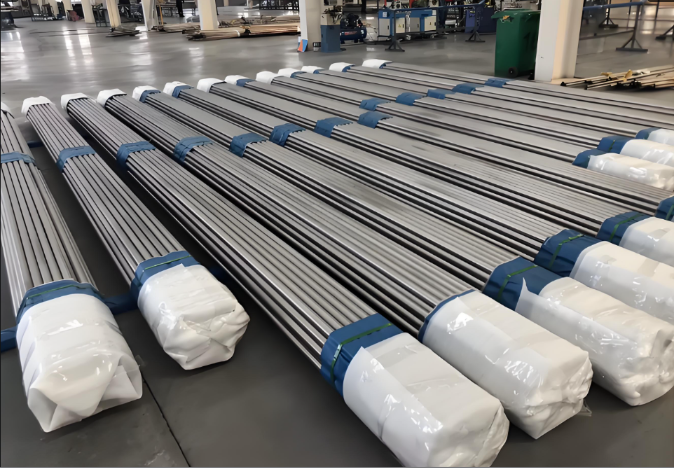
The manufacturing process plays a crucial role in determining the final properties of titanium round bars. It is essential to follow best practices during production to ensure compliance with ASTM and AMS standards.
- Hot Forging: Involves shaping the titanium at elevated temperatures, improving its mechanical properties. This process can enhance the material's strength and ductility, making it more suitable for demanding applications.
- Cold Working: Increases strength through deformation, but care must be taken to avoid excessive strain. Cold working can improve the mechanical properties of titanium but may also introduce residual stresses that need to be managed.
- Machining: Precision machining is necessary to achieve the desired dimensions and surface finish. Titanium can be challenging to machine due to its strength and tendency to work harden, so using the right tools and techniques is essential.
The choice of manufacturing process should align with the requirements of the specific ASTM and AMS standards applicable to the titanium round bars being produced.
Testing and inspection are critical components of the compliance process. Various tests must be conducted to verify that the titanium round bars meet the required specifications.
- Chemical Analysis: Determines the composition of the titanium alloy to ensure it meets the specified standards. This analysis typically involves techniques such as spectroscopy or mass spectrometry to accurately measure the elemental composition.
- Tensile Testing: Measures the strength and ductility of the material, ensuring it can withstand the required loads. Tensile tests provide valuable data on the material's mechanical properties, including yield strength, ultimate tensile strength, and elongation.
- Hardness Testing: Assesses the hardness of the titanium, which is an indicator of its strength and wear resistance. Common methods for hardness testing include Rockwell and Brinell tests.
Conducting these tests at various stages of production helps ensure that any deviations from the required specifications are identified and addressed promptly.
Once the titanium round bars have been manufactured and tested, obtaining certification is the final step in ensuring compliance with ASTM and AMS standards. Certification provides documentation that verifies the material meets the required specifications.
Certification is essential for traceability and accountability. It assures customers that the titanium round bars have been produced according to industry standards and are suitable for their intended applications. Manufacturers should maintain thorough records of testing and certification to facilitate audits and inspections.
Certification documents typically include details such as the material's chemical composition, mechanical properties, and the results of any testing performed. These documents are crucial for demonstrating compliance to customers and regulatory bodies.
One of the significant challenges in producing titanium round bars that meet ASTM and AMS standards is the high cost of production. The extraction and processing of titanium are complex and energy-intensive, leading to higher prices compared to other metals. Manufacturers must balance the need for compliance with the economic realities of production.
To mitigate these costs, manufacturers can explore process optimization, invest in advanced manufacturing technologies, and seek out more efficient supply chain solutions. Additionally, collaborating with suppliers to secure favorable pricing on raw materials can help reduce overall production costs.
The titanium supply chain can be affected by geopolitical factors, trade policies, and raw material availability. Disruptions in the supply chain can impact the production and delivery of titanium round bars, leading to potential delays and increased costs for manufacturers. Companies must develop strategies to mitigate these risks, such as diversifying suppliers and investing in local production capabilities.
Establishing strong relationships with suppliers and maintaining open lines of communication can help manufacturers navigate supply chain challenges more effectively. Additionally, keeping a close eye on market trends and geopolitical developments can provide valuable insights for proactive decision-making.
ASTM and AMS standards are continually evolving to reflect advancements in technology and changes in industry practices. Manufacturers must stay informed about updates to these standards and adapt their processes accordingly to maintain compliance.
Regular training and education for staff involved in production and quality assurance can help ensure that everyone is aware of the latest standards and best practices. Participating in industry conferences and workshops can also provide valuable insights into emerging trends and changes in regulations.
The titanium round bar market is expected to grow significantly in the coming years, driven by increasing demand from key industries such as aerospace, medical, and chemical processing. As more industries recognize the benefits of titanium, the market for titanium round bars is likely to expand further. According to reports from multiple market research firms, the titanium round bar market is projected to grow at a compound annual growth rate (CAGR) of over 6% through 2026.
This growth will be fueled by advancements in manufacturing technologies, increased investments in infrastructure, and a growing focus on sustainability. As industries continue to seek materials that can withstand harsh conditions while minimizing environmental impact, titanium will remain a key player in the market.
As the titanium industry continues to evolve, innovations in manufacturing processes and material properties will play a crucial role in shaping the future of titanium round bars. Companies that invest in research and development will be better positioned to meet the changing demands of the market. The development of new titanium alloys with enhanced properties, such as improved corrosion resistance and strength, will open up new applications and opportunities for growth.
Additionally, advancements in additive manufacturing and other innovative production techniques will enable manufacturers to create complex geometries and reduce material waste, further enhancing the appeal of titanium round bars in various applications.
Ensuring that your titanium round bars meet ASTM and AMS standards is essential for maintaining quality, safety, and market acceptance. By following the steps outlined in this article, manufacturers can produce titanium round bars that comply with industry standards and meet the demands of various applications. As the titanium market continues to grow, staying informed about standards and best practices will be crucial for success.
ASTM standards are guidelines developed by the American Society for Testing and Materials to ensure the quality and safety of materials. AMS standards are specific to the aerospace industry and provide detailed specifications for materials used in aerospace applications.
Compliance with ASTM and AMS standards is essential for quality assurance, safety, and market acceptance. Non-compliance can lead to catastrophic failures and significant financial losses.
Common tests include chemical analysis, tensile testing, and hardness testing to verify that the titanium round bars meet the required specifications.
Manufacturers can explore process optimization, technological advancements, and efficient supply chain management to reduce production costs while maintaining compliance with standards.
Challenges include high production costs, supply chain constraints, and the need to stay updated on evolving standards.


