

Views: 390 Author: Lasting Titanium Publish Time: 2026-02-16 Origin: Site


Content Menu
● How Titanium Reduces Maintenance Costs
>> Eliminating Preventive Replacements
● Full Lifecycle Cost Analysis
>> Conclusion of Cost Analysis
● Industry Application Examples
>> Aerospace
● Implementation Challenges and Considerations
In today's industrial landscape, maintenance costs represent a significant portion of operational expenditures, especially in harsh environments. The choice of materials plays a crucial role in determining these costs. Titanium fasteners have emerged as a leading solution for various applications, particularly in industries where reliability and durability are paramount. This article explores how titanium fasteners can effectively reduce maintenance costs, focusing on their unique properties and the mechanisms that contribute to their long-term performance.
One of the most significant advantages of titanium fasteners is their ability to resist corrosion. Titanium naturally forms a protective oxide layer that prevents corrosion and degradation, making it ideal for environments exposed to moisture and aggressive chemicals. Unlike traditional materials such as carbon steel or stainless steel, which require regular inspections, coatings, and replacements due to corrosion, titanium fasteners can maintain their integrity over extended periods.
For instance, in marine environments, the corrosion rate of titanium is significantly lower than that of stainless steel. Studies have shown that while stainless steel can corrode at rates of several microns per year in seawater, titanium can last for decades without significant degradation. This property eliminates the need for frequent maintenance and replacement, leading to substantial cost savings over time.
Titanium fasteners can achieve a lifespan that matches or exceeds that of the equipment they secure. In contrast, traditional materials often require planned replacements based on corrosion life predictions. For example, in chemical processing plants, fasteners made from stainless steel may need to be replaced every few years due to exposure to harsh chemicals. In contrast, titanium fasteners can often remain in place for the entire operational life of the equipment, reducing the need for scheduled maintenance and the associated costs.
This capability not only lowers maintenance expenses but also enhances operational efficiency. By minimizing the frequency of replacements, companies can allocate resources more effectively and avoid the disruptions associated with planned maintenance.
The reliability of titanium fasteners directly correlates with production continuity. Unplanned downtime due to fastener failure can result in significant financial losses, often exceeding the cost of the materials themselves. For instance, a single failure in a critical component can halt production for hours or even days, leading to lost revenue and increased operational costs.
By using titanium fasteners, companies can mitigate the risk of such failures. The durability and corrosion resistance of titanium ensure that fasteners remain functional under demanding conditions, reducing the likelihood of unexpected breakdowns. This reliability is particularly crucial in industries such as oil and gas, where operational integrity is essential for safety and profitability.
To illustrate the economic advantages of titanium fasteners, a comparative model can be established. Consider a hypothetical offshore platform using either 316 stainless steel bolts or titanium alloy bolts over a 20-year period. The analysis includes initial procurement costs, installation labor, periodic inspection and replacement costs, and the potential losses associated with downtime during replacements.
1. Initial Procurement Costs:
- 316 Stainless Steel Bolts: $1,000 for 100 bolts
- Titanium Alloy Bolts: $5,000 for 100 bolts
2. Installation Labor:
- Both Materials: $500 for installation
3. Inspection and Replacement Costs:
- Stainless Steel: Requires inspection and potential replacement every 5 years, costing $1,000 each time (including labor).
- Titanium: Requires minimal inspection, with no replacements needed over the 20-year period.
4. Downtime Losses:
- Stainless Steel: Each replacement incurs a downtime cost of $10,000.
- Titanium: No downtime costs due to the absence of replacements.
- 316 Stainless Steel:
- Initial Costs: $1,000 + $500 = $1,500
- Replacement Costs: $1,000 (every 5 years) x 4 = $4,000
- Downtime Losses: $10,000 (every 5 years) x 4 = $40,000
- Total: $1,500 + $4,000 + $40,000 = $45,500
- Titanium Alloy:
- Initial Costs: $5,000 + $500 = $5,500
- Replacement Costs: $0
- Downtime Losses: $0
- Total: $5,500
Despite the higher initial procurement price of titanium fasteners, the total cost over 20 years demonstrates that titanium can be more cost-effective than stainless steel. After approximately 5-10 years, the total costs of using titanium can equal and eventually surpass those of stainless steel due to the elimination of maintenance and replacement costs.
In marine applications, titanium fasteners are commonly used in critical components such as seawater cooling system flanges and mooring chain connectors. These areas are particularly susceptible to corrosion due to constant exposure to saltwater. By utilizing titanium, companies can significantly reduce the risk of corrosion-related failures, ensuring the longevity and reliability of marine structures.
In the chemical industry, environments such as those found in chlor-alkali production involve exposure to wet chlorine gas, which is highly corrosive. Titanium is often the only viable metal option for fasteners in these settings, as traditional materials would degrade rapidly. The use of titanium fasteners in such applications not only enhances safety but also reduces maintenance costs associated with frequent replacements.
In aerospace applications, titanium fasteners are used in critical areas such as wing structures, where access for inspection and replacement is challenging. The reliability of titanium fasteners in these locations is directly linked to safety and the avoidance of costly repairs. By ensuring that fasteners can withstand the rigors of flight without failure, manufacturers can enhance the overall safety of their aircraft.
While the benefits of titanium fasteners are clear, there are challenges to consider when implementing them in industrial applications.
1. Initial Cost: The upfront cost of titanium fasteners is significantly higher than that of traditional materials. Companies must weigh this initial investment against the long-term savings associated with reduced maintenance.
2. Assembly Considerations: Care must be taken to prevent galling, a phenomenon where titanium fasteners can seize when mated with other metals. Proper lubrication and the use of compatible materials can mitigate this risk.
3. Electrolytic Corrosion Protection: When titanium fasteners are used in conjunction with dissimilar metals, there is a risk of galvanic corrosion. To prevent this, insulating washers or coatings can be employed to separate the metals and protect against corrosion.
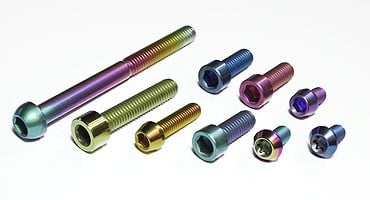
Titanium fasteners represent a significant advancement in fastening technology, particularly for applications in harsh environments. Their unique properties, including corrosion resistance, high strength-to-weight ratio, and durability, make them an ideal choice for industries that demand reliability and performance. While the initial investment may be higher, the long-term cost savings and reduced maintenance needs make titanium fasteners a smart choice for businesses looking to enhance their operational efficiency.
As industries continue to evolve and face new challenges, the role of titanium fasteners is expected to grow. The ongoing research and development in titanium alloys and manufacturing processes will likely lead to even more innovative applications, further solidifying titanium's position as a critical material in modern engineering.
1. What are the main advantages of using titanium fasteners?
- Titanium fasteners offer excellent corrosion resistance, high strength-to-weight ratio, and durability, making them ideal for harsh environments.
2. Are titanium fasteners more expensive than traditional fasteners?
- Yes, titanium fasteners typically have a higher initial cost, but their long-term benefits often justify the investment.
3. In which industries are titanium fasteners commonly used?
- Titanium fasteners are widely used in aerospace, marine, chemical processing, and renewable energy sectors.
4. How do titanium fasteners reduce maintenance costs?
- Their corrosion resistance and durability lead to fewer replacements and repairs, significantly lowering operational costs.
5. What challenges are associated with using titanium fasteners?
- The main challenges include higher initial costs and the need for specialized handling and machining processes.


