

Views: 340 Author: Lasting Titanium Publish Time: 2026-01-27 Origin: Site


Content Menu
● Overview of Titanium Fastener Grades
>> Grade 5 Titanium (Ti-6Al-4V)
>> Grade 7 Titanium (Ti-0.15Pd)
>> Grade 23 Titanium (Ti-6Al-4V ELI)
● Properties of Titanium Fastener Grades
● Applications of Titanium Fasteners
● Advantages of Using Titanium Fasteners
● Challenges and Considerations
>> Cost
>> Fire Risk
● Future Trends in Titanium Fasteners
>> Innovations in Alloy Development
>> Advancements in Manufacturing Techniques
>> Increased Adoption in Various Industries
>> Q1: What are the main benefits of using titanium fasteners?
>> Q2: How do titanium fasteners compare to stainless steel fasteners?
>> Q3: What is the most commonly used titanium fastener grade?
>> Q4: Can titanium fasteners be used in high-temperature applications?
>> Q5: What industries benefit from using titanium fasteners?
Titanium fasteners are essential components in various industries due to their unique properties, including high strength, low weight, and excellent corrosion resistance. This guide provides an in-depth look at the different grades of titanium fasteners, their characteristics, applications, and advantages. Understanding these grades is crucial for selecting the right fasteners for specific applications, ensuring optimal performance and longevity.
Titanium is a versatile metal that has gained popularity in many sectors, including aerospace, medical, marine, and chemical processing. Its ability to withstand harsh environments while maintaining structural integrity makes it a preferred choice for critical applications. This article aims to equip industry professionals with the knowledge needed to make informed decisions regarding titanium fasteners.
Titanium is categorized into two main groups: commercially pure titanium and titanium alloys. Each grade has distinct properties that make it suitable for specific applications. The most commonly used grades include Grade 1, Grade 2, Grade 5, Grade 7, and Grade 23.
Grade 1 titanium is the softest and most ductile of the commercially pure grades. It offers excellent corrosion resistance and high impact toughness, making it ideal for applications requiring ease of formability. This grade is commonly used in chemical processing, architecture, and marine environments. Its high ductility allows for easy shaping and forming, which is particularly beneficial in applications where complex geometries are required.
In addition to its formability, Grade 1 titanium's corrosion resistance makes it suitable for environments where exposure to aggressive chemicals is common. This includes applications in the chemical processing industry, where maintaining the integrity of components is critical to preventing leaks and ensuring safety. The lightweight nature of Grade 1 titanium also contributes to its popularity in applications where weight reduction is essential.
Grade 2 titanium is often referred to as the "workhorse" of titanium grades. It contains approximately 99% titanium and provides a balance of strength and corrosion resistance. This grade is widely used in applications such as marine environments, chemical processing, and medical devices due to its excellent weldability and moderate strength.
Grade 2 titanium's versatility makes it a preferred choice for many industries. Its ability to resist corrosion in seawater and other harsh environments ensures that it maintains its integrity over time, reducing the need for frequent replacements. In the medical field, Grade 2 titanium is commonly used for surgical implants and devices, where biocompatibility and strength are paramount. The combination of good mechanical properties and corrosion resistance makes Grade 2 titanium an ideal choice for a wide range of applications.
Grade 5 titanium, also known as Ti-6Al-4V, is the most widely used titanium alloy. It consists of 6% aluminum and 4% vanadium, offering a high strength-to-weight ratio and excellent corrosion resistance. This grade is commonly used in aerospace applications, medical implants, and high-performance automotive parts.
The exceptional strength of Grade 5 titanium allows it to withstand significant loads while remaining lightweight, making it ideal for applications where performance is critical. In aerospace, Grade 5 titanium is used in airframe structures, turbine components, and engine parts, where reducing weight can lead to improved fuel efficiency. Additionally, its corrosion resistance ensures that components remain reliable even in harsh environments, such as those encountered in marine and chemical processing applications.
Grade 7 titanium is a commercially pure titanium alloy that contains approximately 0.15% palladium. This addition significantly enhances its corrosion resistance, particularly in aggressive chemical environments. Grade 7 is ideal for applications in the chemical processing industry, where exposure to harsh chemicals is common. Its superior corrosion resistance makes it suitable for use in heat exchangers and reactors, where maintaining the integrity of the equipment is crucial.
The palladium in Grade 7 titanium not only improves corrosion resistance but also enhances the overall mechanical properties of the material. This makes it a reliable choice for applications where both strength and resistance to chemical attack are required. Industries that frequently utilize Grade 7 titanium include petrochemical, pharmaceutical, and food processing, where the risk of corrosion from aggressive substances is a significant concern.
Grade 23 titanium is an extra low interstitial version of Grade 5 titanium. It offers improved fracture toughness and is particularly suitable for medical applications, such as implants and surgical devices. Its biocompatibility and enhanced mechanical properties make it a preferred choice in the medical field, where the performance of implants is critical for patient safety and comfort.
The lower levels of interstitial elements in Grade 23 titanium contribute to its enhanced mechanical properties, making it less prone to fatigue and cracking. This is especially important in applications where the material will be subjected to dynamic loads or harsh conditions. The combination of strength, toughness, and biocompatibility makes Grade 23 titanium an excellent choice for a wide range of medical devices, including orthopedic implants and dental fixtures.
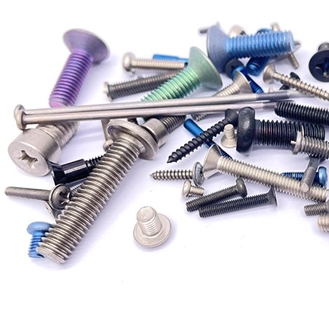
Understanding the properties of each titanium grade is essential for selecting the right fasteners for specific applications. Here are some key properties to consider:
Titanium is known for its excellent corrosion resistance, which varies among grades. Grade 1 and Grade 2 offer good resistance to oxidizing environments, while Grade 5 and Grade 7 provide enhanced resistance to aggressive chemicals. Grade 23 also exhibits excellent corrosion resistance, making it suitable for medical applications. The ability of titanium to form a protective oxide layer on its surface further enhances its resistance to corrosion, ensuring long-lasting performance in challenging environments.
Titanium fasteners are renowned for their high strength-to-weight ratio. Grade 5 titanium, for example, offers exceptional strength while remaining lightweight, making it ideal for aerospace and automotive applications. Grade 2, while not as strong, still provides a favorable strength-to-weight ratio for less demanding applications. This characteristic is particularly valuable in industries where reducing weight can lead to improved performance and fuel efficiency.
Ductility refers to a material's ability to deform under stress without breaking. Grade 1 titanium is the most ductile, allowing for easy forming and shaping. Grade 2 also offers good ductility, while Grades 5 and 7 are less ductile but provide higher strength. The ability to form titanium into complex shapes is crucial for many applications, particularly in the aerospace and automotive industries, where intricate designs are often required.
Titanium fasteners are used in a wide range of industries due to their unique properties. Here are some common applications:
In the aerospace sector, titanium fasteners are used extensively due to their lightweight and high strength. Grade 5 titanium is commonly used in airframe structures, turbine components, and engine parts, where weight reduction is critical for fuel efficiency. The aerospace industry demands materials that can withstand extreme conditions, and titanium's ability to maintain its strength at high temperatures makes it an ideal choice for these applications.
Titanium's biocompatibility makes it an ideal choice for medical implants and devices. Grade 23 titanium is particularly favored for surgical applications, as it offers excellent strength and resistance to corrosion in the human body. The use of titanium in medical devices has revolutionized the field, providing patients with safer and more effective solutions for various medical conditions.
In chemical processing, titanium fasteners are used in equipment that handles aggressive chemicals. Grade 7 titanium is often selected for heat exchangers and reactors due to its superior corrosion resistance, ensuring the integrity of the equipment. The ability of titanium to withstand harsh environments while maintaining its mechanical properties makes it a reliable choice for chemical processing applications.
Titanium fasteners are also widely used in marine environments, where exposure to saltwater can lead to corrosion. Grade 2 titanium is commonly used in marine applications due to its excellent resistance to seawater and other corrosive agents. The lightweight nature of titanium fasteners also contributes to improved performance in marine applications, where reducing weight can enhance fuel efficiency and overall vessel performance.
Titanium fasteners offer long-term durability due to their resistance to corrosion and wear. This durability translates to lower maintenance costs and reduced downtime, making them a cost-effective choice for many industries. The ability of titanium to withstand harsh environments ensures that components remain reliable over time, reducing the need for frequent replacements.
The lightweight nature of titanium fasteners allows for significant weight savings in equipment design. This is particularly beneficial in applications where every gram counts, such as in aerospace and automotive industries. By using titanium fasteners, manufacturers can create lighter and more efficient designs, leading to improved performance and reduced energy consumption.
Due to their corrosion resistance and durability, titanium fasteners require less frequent replacement and maintenance, leading to lower operational costs over time. In chemical processing, where equipment is often subjected to harsh conditions, the ability to extend maintenance intervals can result in significant cost savings. By minimizing the need for routine inspections and replacements, operators can allocate resources more effectively and focus on other critical aspects of their operations.
One of the primary challenges of using titanium fasteners is their cost. Titanium is generally more expensive than traditional materials like stainless steel. However, the long-term savings in maintenance and replacement often justify the initial investment. When evaluating the cost of titanium fasteners, it is essential to consider the total cost of ownership, including maintenance, downtime, and potential safety risks associated with fastener failure.
Titanium can be more challenging to machine than other metals, requiring specialized tools and techniques. This can impact production timelines and costs. Manufacturers must invest in the appropriate equipment and training to ensure effective machining of titanium materials. Additionally, the machining process must be carefully controlled to prevent issues such as work hardening, which can complicate the manufacturing of titanium fasteners.
When titanium fasteners are used in conjunction with other metals, galvanic corrosion can occur. It is essential to implement proper design practices to mitigate this risk, such as using insulating materials to separate dissimilar metals. Understanding the electrochemical properties of titanium and its interactions with other materials is crucial for ensuring the longevity of fasteners in mixed-metal assemblies.
Under certain conditions, such as exposure to high temperatures, reducing acids, or excessive cathodic protection, titanium can absorb hydrogen and become brittle. This phenomenon, known as hydrogen embrittlement, can compromise the integrity of fasteners and lead to catastrophic failures. It is essential to consider the operating environment and implement appropriate safeguards to minimize the risk of hydrogen embrittlement in applications involving titanium fasteners.
Fine titanium shavings or powders can pose a fire risk when exposed to air. During machining and maintenance activities, it is crucial to implement safety measures to prevent the accumulation of titanium dust and to handle it properly to avoid ignition. Awareness of this risk is essential for ensuring the safety of personnel and equipment in facilities that utilize titanium fasteners.
Ongoing research and development in titanium alloys are expected to enhance the performance and reduce the costs of titanium fasteners. New alloy compositions may offer improved properties, making them suitable for a wider range of applications. The development of more cost-effective titanium alloys will also play a crucial role in expanding the use of titanium fasteners across various industries.
Advancements in manufacturing technologies, such as additive manufacturing, are likely to expand the applications of titanium fasteners. These techniques can enable the production of complex geometries that were previously difficult to achieve with traditional machining methods. As manufacturers adopt these new technologies, they can create innovative designs that leverage the unique properties of titanium.
As industries continue to prioritize sustainability and efficiency, the adoption of titanium fasteners is expected to grow. Their lightweight and corrosion-resistant properties align well with the goals of reducing environmental impact and improving operational efficiency. As more companies recognize the long-term benefits of using titanium fasteners, they are likely to incorporate them into their designs and processes.
Titanium fasteners play a crucial role in various industries, offering unique advantages that enhance performance and reliability. Understanding the different grades of titanium fasteners is essential for selecting the right fasteners for specific applications. As technology advances and the demand for high-performance materials increases, titanium fasteners are poised to become even more integral to the industry.
Titanium fasteners offer excellent corrosion resistance, a high strength-to-weight ratio, and reduced maintenance needs, making them ideal for harsh environments.
Titanium fasteners provide superior corrosion resistance and a better strength-to-weight ratio compared to stainless steel, making them more suitable for aggressive chemical environments.
Grade 5 titanium (Ti-6Al-4V) is the most widely used titanium alloy due to its high strength and excellent corrosion resistance.
Yes, titanium fasteners are suitable for most chemical processes in medium to high-temperature environments, typically below 300°C.
Industries such as aerospace, medical, marine, and chemical processing benefit significantly from the use of titanium fasteners due to their unique properties.


