

Views: 320 Author: Lasting Titanium Publish Time: 2026-02-17 Origin: Site


Content Menu
>> Overview
>> Benefits
>> Applications
>> Overview
>> Benefits
>> Applications
>> Overview
>> Benefits
>> Applications
>> Overview
>> Benefits
>> Applications
>> Overview
>> Benefits
>> Applications
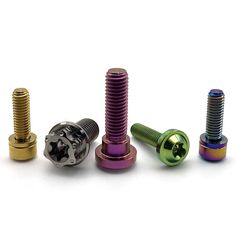
Titanium fasteners have become increasingly vital in various industries due to their unique properties, including high strength-to-weight ratio, excellent corrosion resistance, and durability. These characteristics make them particularly suitable for applications in harsh environments where traditional materials may fail. This article explores the top five applications where titanium fasteners are essential, highlighting their benefits and the reasons behind their growing popularity.
The aerospace industry is one of the largest consumers of titanium fasteners. The need for lightweight yet strong materials is critical in aircraft design, where every ounce saved contributes to fuel efficiency and performance. Titanium fasteners are used extensively in aircraft frames, engines, and various structural components. The aerospace sector demands materials that can withstand extreme conditions, including high altitudes, temperature fluctuations, and mechanical stresses.
- Weight Reduction: Titanium fasteners are significantly lighter than steel or aluminum fasteners, which helps reduce the overall weight of the aircraft. This weight reduction is crucial for improving fuel efficiency, allowing aircraft to carry more payload or travel longer distances without increasing fuel consumption.
- Corrosion Resistance: Titanium's natural resistance to corrosion ensures that fasteners maintain their integrity even in harsh environments, such as high-altitude flights where temperature and pressure changes are extreme. This property is particularly important for components exposed to moisture and varying atmospheric conditions.
- Fatigue Resistance: The ability of titanium to withstand repeated stress without failure is crucial in aerospace applications, where components are subjected to constant loading and unloading. This fatigue resistance enhances the safety and reliability of aircraft, reducing the risk of mechanical failures during operation.
Titanium fasteners are used in critical areas such as wing structures, engine mounts, and fuselage assemblies. Their reliability directly impacts the safety and performance of aircraft, making them an indispensable component in modern aviation. Additionally, the use of titanium fasteners in aerospace applications contributes to the overall longevity of the aircraft, reducing maintenance costs and downtime.
Titanium is not only lightweight but also exhibits excellent electrochemical compatibility with carbon fiber composites, which helps prevent galvanic corrosion. This compatibility is essential in aerospace applications where different materials are often used together, ensuring the integrity of the structure over time.
In marine environments, materials are constantly exposed to saltwater, which can lead to rapid corrosion. Titanium fasteners are increasingly used in shipbuilding and offshore structures due to their exceptional resistance to seawater corrosion. The marine industry faces unique challenges, including harsh weather conditions and the need for materials that can withstand constant exposure to corrosive elements.
- Longevity: Titanium fasteners can last significantly longer than traditional materials in marine applications, reducing the need for frequent replacements and maintenance. This longevity is particularly beneficial for offshore platforms and vessels that operate in challenging environments.
- Safety: The use of titanium fasteners in critical marine applications enhances the safety of vessels and offshore platforms, minimizing the risk of structural failures. The reliability of titanium fasteners ensures that essential components remain secure, reducing the likelihood of accidents at sea.
- Cost-Effectiveness: Although titanium fasteners have a higher initial cost, their durability and low maintenance requirements lead to significant long-term savings. By reducing the frequency of replacements and maintenance, companies can allocate resources more effectively and improve their overall operational efficiency.
Titanium fasteners are commonly found in components such as hulls, propellers, and mooring systems. Their ability to withstand harsh marine conditions makes them a preferred choice for shipbuilders and offshore engineers. Additionally, the use of titanium fasteners in marine applications contributes to the overall sustainability of marine operations by reducing the environmental impact associated with frequent replacements and repairs.
Titanium's unique properties make it irreplaceable in the most corrosive marine environments, such as submerged and splash zones. Unlike traditional materials that may require expensive cathodic protection systems or frequent replacements, titanium fasteners provide a lifetime of maintenance-free service, significantly reducing long-term operational costs.
The chemical processing industry often involves the use of aggressive substances that can corrode traditional fasteners. Titanium fasteners are ideal for these applications due to their resistance to a wide range of chemicals. The ability to maintain structural integrity in corrosive environments is essential for ensuring the safety and efficiency of chemical processing operations.
- Chemical Resistance: Titanium is resistant to many corrosive agents, including acids and alkalis, making it suitable for use in chemical plants. This resistance ensures that fasteners do not degrade over time, maintaining the reliability of equipment and reducing the risk of leaks.
- Reduced Downtime: The durability of titanium fasteners minimizes the need for maintenance and replacements, leading to increased operational efficiency. By reducing the frequency of inspections and replacements, companies can improve productivity and lower operational costs.
- Enhanced Safety: Using titanium fasteners in chemical processing equipment reduces the risk of leaks and failures, enhancing overall safety. The reliability of titanium fasteners ensures that critical components remain secure, preventing accidents that could result in hazardous spills or equipment failures.
Titanium fasteners are used in reactors, storage tanks, and piping systems where exposure to corrosive chemicals is common. Their reliability ensures that equipment operates smoothly without the risk of fastener failure. Additionally, the use of titanium fasteners in chemical processing contributes to the overall sustainability of operations by reducing the environmental impact associated with frequent replacements and repairs.
In chemical processing, titanium is often the only viable metal choice for environments involving wet chlorine gas, nitric acid, and organic chlorides. Its unique properties allow it to withstand these harsh conditions, making it indispensable for maintaining safety and operational efficiency in chemical plants.
The automotive industry is increasingly adopting titanium fasteners in high-performance vehicles, where weight reduction and strength are critical for performance and fuel efficiency. As manufacturers strive to improve vehicle performance and reduce emissions, the demand for lightweight materials has grown significantly.
- Performance Enhancement: Titanium fasteners contribute to the overall performance of vehicles by reducing weight without compromising strength. This weight reduction is particularly important in sports cars and racing vehicles, where every ounce saved can lead to improved speed and handling.
- Corrosion Resistance: The ability of titanium to resist corrosion ensures that fasteners maintain their integrity over time, even in harsh driving conditions. This property is essential for components exposed to moisture, road salt, and other corrosive elements.
- Durability: Titanium fasteners can withstand the stresses and strains of high-performance applications, making them ideal for racing and sports cars. Their durability ensures that fasteners remain secure under extreme conditions, enhancing the overall safety and reliability of vehicles.
Titanium fasteners are commonly used in engine components, suspension systems, and chassis assemblies. Their use in high-performance vehicles enhances speed, handling, and overall driving experience. Additionally, the adoption of titanium fasteners in the automotive industry contributes to the overall sustainability of vehicle production by reducing the environmental impact associated with traditional materials.
In the automotive sector, titanium is primarily used in high-performance applications such as racing engines, lightweight suspension components, and high-end motorcycles. Its high strength-to-weight ratio directly impacts performance by reducing unsprung mass, which improves handling and acceleration.
In the medical field, titanium fasteners are widely used due to their biocompatibility and strength. They are essential in various medical devices and implants, where reliability and safety are paramount. The unique properties of titanium make it an ideal choice for applications that require materials that can safely interact with the human body.
- Biocompatibility: Titanium is non-toxic and does not cause adverse reactions in the human body, making it suitable for medical applications. This property is crucial for implants and devices that remain in the body for extended periods.
- Strength and Durability: Titanium fasteners provide the necessary strength for medical devices while being lightweight, which is crucial for patient comfort. The durability of titanium ensures that fasteners maintain their integrity over time, reducing the risk of device failure.
- Corrosion Resistance: The ability of titanium to resist corrosion ensures that medical devices remain functional and safe over time. This property is particularly important for implants exposed to bodily fluids, where traditional materials may degrade.
Titanium fasteners are used in orthopedic implants, dental devices, and surgical instruments. Their reliability and safety make them a preferred choice in the medical industry. Additionally, the use of titanium fasteners in medical applications contributes to the overall effectiveness of devices, enhancing patient outcomes and safety.
Titanium's dense oxide layer (TiO₂) is chemically stable and promotes osseointegration with bone tissue, making it an ideal material for implants. Its elastic modulus is similar to that of bone, which helps reduce stress shielding effects, ensuring better integration and longevity of implants.
Titanium fasteners play a crucial role in various industries, including aerospace, marine engineering, chemical processing, automotive, and medical devices. Their unique properties, such as corrosion resistance, high strength-to-weight ratio, and durability, make them essential for applications in harsh environments. As industries continue to evolve and demand more reliable materials, the use of titanium fasteners is expected to grow, further solidifying their position as a critical component in modern engineering.
1. What are the main advantages of using titanium fasteners?
- Titanium fasteners offer excellent corrosion resistance, high strength-to-weight ratio, and durability, making them ideal for harsh environments.
2. In which industries are titanium fasteners commonly used?
- Titanium fasteners are widely used in aerospace, marine, chemical processing, automotive, and medical sectors.
3. How do titanium fasteners compare to traditional materials like stainless steel?
- Titanium fasteners are lighter, more corrosion-resistant, and have a longer lifespan than traditional materials, leading to lower maintenance costs.
4. What are the challenges associated with using titanium fasteners?
- The main challenges include higher initial costs and the need for specialized handling and machining processes.
5. Are titanium fasteners suitable for high-temperature applications?
- Titanium fasteners exhibit good performance at moderate temperatures, but their long-term continuous working temperature limit is around 315°C (600°F). For higher temperature applications, nickel-based superalloys are typically used.


