

Views: 380 Author: Lasting Titanium Publish Time: 2026-01-22 Origin: Site


Content Menu
● Understanding Titanium Round Bars
>> What Are Titanium Round Bars?
>> Key Properties of Titanium Round Bars
● Benefits of Custom Machining Titanium Round Bars
● Challenges in Machining Titanium Round Bars
>> 1. Tool Wear
● Best Practices for Custom Machining Titanium Round Bars
● Common Applications of Titanium Round Bars
>> 1. What are the different grades of titanium used for round bars?
>> 2. How does the machining process differ for titanium compared to other metals?
>> 3. What are the common applications for custom machined titanium round bars?
>> 4. How can I ensure the quality of custom machined titanium parts?
>> 5. What are the benefits of using titanium round bars in manufacturing?
Custom machining titanium round bars is a critical process in various industries, including aerospace, medical, and automotive. Titanium is renowned for its exceptional strength-to-weight ratio, corrosion resistance, and biocompatibility, making it an ideal material for high-performance applications. This article will provide an in-depth look at the essential aspects of custom machining titanium round bars, including the benefits, challenges, and best practices.
Titanium round bars are cylindrical bars made from titanium or its alloys, characterized by their uniform diameter and smooth surface. These bars are available in various grades, each offering specific properties that cater to different applications. The manufacturing process typically involves cutting, shaping, and finishing the titanium to meet precise specifications.
Titanium round bars are often used in applications where strength and weight are critical factors. Their unique properties make them suitable for a wide range of uses, from structural components in aircraft to surgical instruments in the medical field. The versatility of titanium allows it to be tailored for specific applications, ensuring optimal performance in demanding environments.
1. High Strength: Titanium round bars exhibit exceptional tensile strength, allowing them to withstand significant loads without deforming. This property is particularly important in applications where structural integrity is paramount. The strength of titanium is often compared to that of steel, yet it is much lighter, making it an ideal choice for high-performance applications. The ability to maintain strength under stress is crucial in industries such as aerospace, where components must endure extreme conditions.
2. Lightweight: Titanium is significantly lighter than steel, making titanium round bars an excellent choice for applications where weight reduction is essential. This lightweight nature contributes to improved fuel efficiency in vehicles and aircraft, enhancing overall performance. In aerospace applications, for instance, reducing weight can lead to lower fuel consumption and increased payload capacity, making titanium an attractive option for manufacturers.
3. Corrosion Resistance: Titanium's natural resistance to corrosion makes it suitable for use in harsh environments, including marine and chemical applications. This property ensures that titanium round bars maintain their integrity over time, reducing the need for frequent replacements. The corrosion resistance of titanium is due to the formation of a protective oxide layer on its surface, which prevents further oxidation and degradation. This makes titanium an ideal choice for components exposed to seawater, acids, and other corrosive substances, ensuring longevity and reliability.
4. Biocompatibility: Titanium is biocompatible, making it safe for use in medical applications, such as implants and surgical instruments. This characteristic is crucial for ensuring patient safety and comfort. Specifically, commercially pure titanium grades, such as Grade 1 and Grade 2, as well as titanium alloy Grade 23 (Ti-6Al-4V ELI), have verified biocompatibility. The ability to integrate seamlessly with human tissue further enhances the appeal of titanium round bars in the medical field, where the risk of adverse reactions must be minimized.
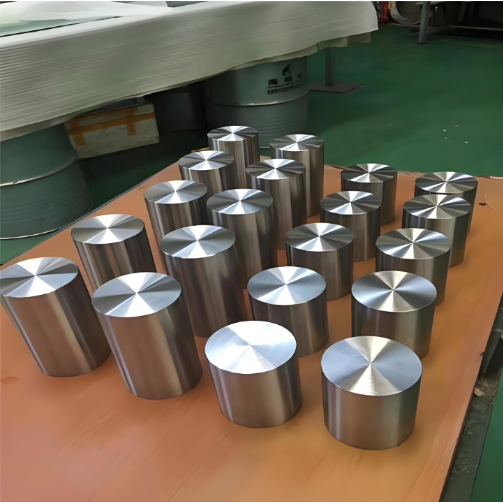
Custom machining allows for the production of titanium round bars with tight tolerances and precise dimensions. This level of accuracy is essential for applications that require exact specifications, such as aerospace components and medical devices. Advanced CNC machining techniques enable manufacturers to achieve high precision, ensuring that the final products meet stringent quality standards. The ability to produce parts with minimal deviation from specified dimensions is critical in maintaining the performance and safety of components used in high-stakes environments.
Custom machining provides the flexibility to create titanium round bars tailored to specific project requirements. This includes variations in size, shape, and surface finish, allowing manufacturers to meet the unique needs of their clients. Whether it's a small batch of specialized components or a large production run, custom machining can accommodate diverse demands. This adaptability is particularly valuable in industries where unique designs and specifications are common, enabling manufacturers to respond quickly to changing market needs.
By utilizing custom machining techniques, manufacturers can optimize the performance of titanium round bars for specific applications. This includes selecting the appropriate titanium grade, surface treatment, and machining processes to enhance properties such as strength, corrosion resistance, and fatigue life. Tailored solutions can lead to improved product performance and longevity, ensuring that components perform reliably under the conditions they will face in service.
While the initial cost of custom machining titanium round bars may be higher than off-the-shelf solutions, the long-term benefits often justify the investment. Custom machined parts can reduce waste, minimize the need for additional processing, and improve overall efficiency. Additionally, the durability and corrosion resistance of titanium can lead to lower maintenance and replacement costs over time. This cost-effectiveness is particularly important in industries where operational efficiency and reliability are critical to success.
Machining titanium can be challenging due to its hardness and toughness, which can lead to increased tool wear. Specialized cutting tools, such as those coated with titanium aluminum nitride (TiAlN), are often required to withstand the high temperatures generated during machining. Selecting the right tools and optimizing machining parameters are essential for minimizing wear and ensuring consistent quality. The choice of tooling can significantly impact production efficiency and the overall cost of machining operations.
Titanium has low thermal conductivity, which means that heat generated during machining is concentrated at the cutting edge. This can lead to tool deflection and affect the surface finish of the machined parts. To mitigate this issue, high-pressure coolant systems are often employed to dissipate heat and lubricate the cutting zone, ensuring successful machining. Proper coolant application is critical in maintaining tool life and achieving the desired surface quality.
Determining the appropriate machining parameters, such as feed rate, cutting speed, and depth of cut, is critical for achieving optimal results. These parameters must be carefully adjusted based on the specific titanium grade being machined and the complexity of the part being produced. Failure to optimize these parameters can result in poor surface finish, dimensional inaccuracies, and increased production costs. Continuous monitoring and adjustment of machining parameters are essential for maintaining quality and efficiency.
Choosing the right titanium grade is crucial for ensuring optimal performance in your application. Different grades offer varying properties, such as strength, corrosion resistance, and biocompatibility. For example, Grade 5 (Ti-6Al-4V) is commonly used in aerospace applications due to its high strength-to-weight ratio, while Grade 2 is often preferred for chemical processing because of its top-notch corrosion resistance. Understanding the specific requirements of your application will guide you in selecting the most suitable titanium grade.
Investing in high-quality tooling and advanced machining equipment is essential for achieving precision and efficiency in titanium machining. Utilizing CNC machines with multi-axis capabilities allows for greater flexibility in producing complex geometries and tight tolerances. Additionally, using specialized cutting tools designed for titanium can enhance tool life and improve overall machining performance. Regular maintenance of machinery and tools is also vital to ensure consistent performance and minimize downtime.
Regularly reviewing and optimizing machining processes can lead to significant improvements in efficiency and product quality. This includes monitoring tool wear, adjusting machining parameters, and implementing best practices for coolant application. Continuous improvement efforts can help manufacturers stay competitive and meet the evolving demands of their clients. Engaging in process optimization not only enhances productivity but also contributes to cost savings over time.
Implementing rigorous quality control measures throughout the machining process is essential for ensuring that titanium round bars meet the required specifications. This includes conducting inspections at various stages of production, utilizing advanced measurement techniques, and maintaining detailed records of machining parameters and outcomes. Quality assurance practices help identify potential issues early and ensure that the final products meet industry standards. Establishing a culture of quality within the organization can lead to improved customer satisfaction and long-term success.
In the aerospace sector, titanium round bars are used for a variety of components, including aircraft frames, engine parts, and landing gear. The lightweight nature and high strength of titanium make it an ideal choice for applications where weight reduction is critical for fuel efficiency and performance. The aerospace industry demands materials that can withstand extreme conditions, including high temperatures and pressures, and titanium round bars meet these requirements with ease.
Titanium round bars are widely used in the medical field for manufacturing implants, surgical instruments, and dental devices. The biocompatibility and corrosion resistance of titanium ensure that these components are safe for use in the human body, making them a preferred material for medical applications. The ability to integrate seamlessly with human tissue further enhances the appeal of titanium round bars in the medical field, where the risk of adverse reactions must be minimized.
In the automotive sector, custom machined titanium round bars are utilized in high-performance vehicles for components such as suspension systems, exhaust systems, and engine parts. The strength-to-weight ratio of titanium allows for the design of lighter, more efficient vehicles without compromising performance. The use of titanium in automotive applications not only enhances performance but also contributes to the longevity of components, reducing the need for frequent replacements.
Due to their excellent corrosion resistance, titanium round bars are commonly used in chemical processing equipment, including tanks, pipes, and valves. Their ability to withstand harsh chemicals ensures reliability and longevity in aggressive environments. The lightweight nature of titanium also allows for easier handling and installation of equipment, reducing labor costs and improving efficiency in chemical processing operations.
Custom machining titanium round bars is a complex process that requires careful consideration of various factors, including material selection, tooling, machining parameters, and quality control. By understanding these elements, manufacturers can produce high-quality titanium components that meet the specific needs of their applications. The unique properties of titanium, combined with advanced machining techniques, make it an ideal choice for a wide range of industries.
Titanium round bars are available in various grades, including Grade 1, Grade 2, Grade 5 (Ti-6Al-4V), Grade 7, and Grade 23 (Ti-6Al-4V ELI), each offering unique properties for different applications.
Machining titanium requires specialized tools and techniques due to its hardness and low thermal conductivity. High-pressure coolant systems are often used to dissipate heat and lubricate the cutting zone.
Custom machined titanium round bars are commonly used in aerospace, medical, automotive, and chemical processing applications due to their unique properties and performance characteristics.
Implementing rigorous quality control measures, including inspections and monitoring machining parameters, is essential for ensuring that titanium parts meet the required specifications.
Titanium round bars offer high strength, low weight, excellent corrosion resistance, and biocompatibility, making them ideal for a wide range of applications across various industries.


