
Views: 305 Author: Lasting Titanium Publish Time: 2026-04-18 Origin: Site
Content Menu
● The Material Evolution: Why Titanium Dominates Offshore Environments
● Understanding High-Pressure Resistance Standards
● Fluid Dynamics and Design Integrity: Minimizing Energy Losses
● Strategic Selection of Titanium Grades
● The Economics of Total Lifecycle Performance
● Quality Assurance: The Shaanxi Lasting Advantage
● FAQ
In the demanding landscape of offshore oil and gas operations, where exposure to corrosive seawater, extreme temperatures, and volatile chemical compounds is constant, the integrity of piping systems is paramount. Engineers, procurement specialists, and project managers are increasingly pivoting toward titanium pipe fittings to ensure system longevity, operational safety, and the optimization of long-term maintenance budgets. As a premier global supplier of high-performance titanium solutions, Shaanxi Lasting New Material (Lasting Advanced Titanium) Industry Co., Ltd. recognizes that for critical infrastructure, strict adherence to high-pressure resistance standards is not merely a technical checkbox—it is the foundational prerequisite for operational success in hazardous environments.
The global transition from conventional materials like carbon steel, stainless steel, or copper-nickel alloys to titanium in offshore projects is driven by the unique physical and chemical characteristics of titanium. Operating in marine environments presents a "triple threat": aggressive salt-water corrosion, high hydrostatic pressures, and extreme temperature fluctuations.
* Exceptional Corrosion Resistance: Unlike ferrous alloys that rely on coatings or inhibitors to slow the onset of oxidation, titanium spontaneously forms a stable, tenacious, and self-healing oxide layer. This layer renders the metal virtually immune to seawater corrosion, including pitting, crevice corrosion, and microbiologically influenced corrosion (MIC), which are common failure points for traditional piping materials.
* Superior Strength-to-Weight Ratio: Titanium provides the structural strength of high-grade steel at approximately 45% of its weight. In the context of offshore platforms—where payload capacity is at a premium and weight directly dictates structural design and stability—utilizing titanium components allows for significant reductions in dead weight without compromising safety margins.
* Reliability in High-Pressure, High-Temperature (HPHT) Conditions: Modern drilling operations are reaching deeper reservoirs with higher temperatures and pressures. Titanium alloys retain their mechanical properties—such as yield strength and fatigue resistance—at elevated temperatures where other materials may undergo creep or softening.
* Optimal Fracture Toughness: Unlike some steels that exhibit a ductile-to-brittle transition at low temperatures, common titanium alloys used offshore (such as Grades 2 and 5) maintain excellent fracture toughness in the cold marine environment, ensuring reliable performance without the risk of sudden, brittle failure under load.
For titanium pipe fittings to be classified as suitable for offshore oil and gas projects, they must strictly comply with internationally recognized metallurgical and mechanical standards. These standards govern everything from the chemical composition of the titanium sponge used in the initial melt to the final tolerances of the machined threads or flanges.
At Shaanxi Lasting New Material, our production cycle is mapped against these critical standards to ensure total project compliance:
| Standard | Application/Focus Area |
|---|---|
| ASTM B337 | Standard Specification for Seamless and Welded Titanium Pipe Fittings |
| ASTM B381 | Standard Specification for Titanium and Titanium Alloy Forgings |
| ASME B16.9 | Standard for Factory-Made Wrought Buttwelding Fittings |
| ASME B16.5 | Standards for Pipe Flanges and Flanged Fittings (Pressure-Temperature Ratings) |
Compliance is non-negotiable in offshore engineering. Our manufacturing process incorporates rigorous multi-stage testing, including ultrasonic inspection, hydrostatic testing, and full chemical analysis, ensuring that every fitting can withstand the specified pressure ratings mandated by the American Society of Mechanical Engineers (ASME) and the American Society for Testing and Materials (ASTM).
A critical, yet frequently underestimated aspect of pipeline design is internal flow efficiency. In high-pressure offshore oil and gas pipelines, the internal geometry of a fitting is just as important as the material composition. Our titanium pipe fittings are engineered with precision-contoured internal transitions, focusing on the seamless flow of media.
Internal irregularities, such as sharp shoulders or abrupt diameter changes, create localized turbulence and increased wall shear stress. For most conventional metals, this fluid-dynamic instability can accelerate erosion-corrosion and fatigue. While titanium itself boasts exceptional resistance to both erosion-corrosion and cavitation, optimized flow geometry is still essential. By minimizing system-wide turbulence, our designs prevent unnecessary energy losses and protect downstream components—such as valves, sensors, or thinner-walled piping sections—that may be more susceptible to the mechanical stress caused by turbulent flow patterns.
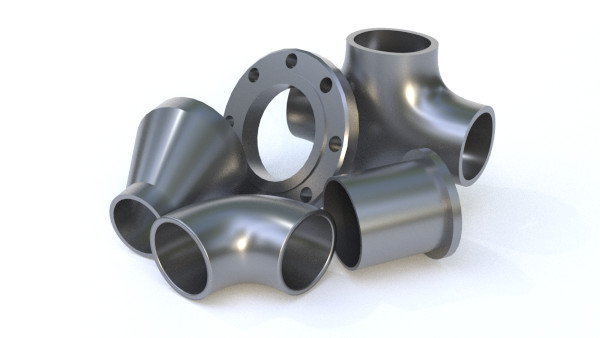
Selecting the correct titanium alloy is as vital as the quality of the manufacturing process. Different grades offer varied mechanical advantages that should be aligned with the specific operational requirements:
* Grade 2 Titanium (CP Titanium): As the "workhorse" of the industry, Grade 2 offers excellent corrosion resistance and superior weldability. It is the ideal choice for general offshore seawater piping, utility lines, and firewater systems where moderate strength is sufficient.
* Grade 5 Titanium (Ti-6Al-4V): When the application requires high-stress load-bearing capabilities, Grade 5 is the preferred alloy. It provides high fatigue strength and excellent tensile properties, making it essential for high-pressure valves, downhole equipment, and critical structural components where weight and strength are equally prioritized.
When evaluating the cost of titanium infrastructure, it is a mistake to focus solely on the initial procurement price. While titanium carries a higher upfront cost compared to carbon steel, the true value is found in the Total Cost of Ownership (TCO).
The longevity of titanium, combined with its high-pressure resistance and maintenance-free operation, ensures that the initial cost premium is often offset by the near-elimination of replacement costs, expensive production downtime, and significant environmental risk. For operators, choosing titanium is a risk-mitigation strategy. By preventing leaks and failures in remote or subsea locations, titanium fittings eliminate the massive costs associated with emergency repairs and the reputational damage resulting from spills or hazardous leaks.
As a top-tier supplier, Shaanxi Lasting New Material (Lasting Advanced Titanium) Industry Co., Ltd. operates with an integrated production system that guarantees traceability and quality at every step.
1. Material Purity: We utilize high-quality titanium sponge, which is melted under controlled conditions (VAR or EB melting) to ensure the highest purity levels and the complete absence of harmful inclusions.
2. Advanced Fabrication: Our manufacturing facilities in Baoji—the "Titanium Valley" of China—employ state-of-the-art forging and CNC machining technologies. This allows us to maintain tight dimensional tolerances, ensuring that our fittings seat perfectly with existing pipeline infrastructure.
3. Comprehensive Traceability: Every fitting is documented from the raw ingot to the final product. We provide full Mill Test Reports (MTRs) and, where required, third-party certification (e.g., DNV, Lloyd's Register) to provide our clients with complete peace of mind.
For the offshore oil and gas sector, titanium pipe fittings represent a strategic asset that balances extreme performance with long-term risk mitigation. By adhering to strict high-pressure resistance standards and utilizing advanced engineering design, companies like Shaanxi Lasting New Material provide the durability and reliability required for the world's most challenging energy extraction environments. Titanium is not merely an alternative material; it is the industry-standard solution for companies looking to future-proof their subsea and topside infrastructure.
We invite procurement managers and offshore engineers to reach out to our team at Shaanxi Lasting New Material. Whether your project requires standard ASME-rated components or custom-machined fittings designed to unique specifications, we have the technical expertise and manufacturing capacity to deliver excellence.
1. Why is titanium preferred over stainless steel for high-pressure offshore pipelines?
Titanium offers vastly superior corrosion resistance in salt-water environments and a much higher strength-to-weight ratio. This combination significantly reduces the need for maintenance and allows for lighter platform designs compared to heavy steel alloys.
2. What international standards do your titanium pipe fittings comply with?
Our products are manufactured to meet global industrial standards, including ASTM B337, ASTM B381, and ASME B16.9/B16.5, ensuring they perform reliably in high-pressure oil and gas settings.
3. Is titanium brittle at cold operating temperatures?
Unlike certain steel alloys that exhibit a ductile-to-brittle transition at low temperatures, common offshore titanium alloys like Grade 2 and Grade 5 retain high levels of fracture toughness and ductility, preventing brittle failure in cold, deep-sea environments.
4. How do you minimize the impact of turbulence within your piping fittings?
We use advanced internal design geometry to ensure smooth transitions within our fittings. This minimizes localized shear stress and turbulence, protecting the pipeline system from accelerated erosion and energy loss.
5. Can Shaanxi Lasting provide custom-engineered titanium fittings?
Yes. We specialize in working with international clients to provide both standard and custom-machined parts. Our team can work from your specific drawings or help optimize a design for your unique high-pressure requirements.
Selecting between ASTM B338 and ASTM B861 is vital for piping integrity. This article explores the technical differences, manufacturing philosophies, and application-specific requirements of these standards, guiding engineers to choose the correct titanium solution for their projects.
This technical article provides an in-depth analysis of the role of titanium pipe fittings in the offshore oil and gas industry. It details why titanium is superior to traditional materials in high-pressure, corrosive environments, specifically focusing on its fracture toughness, corrosion resistance, and strength-to-weight ratio. The content outlines key industry standards (ASTM/ASME), explains the fluid-dynamic benefits of precision-machined fittings, and provides a clear case for the total lifecycle cost benefits of titanium. As a leading manufacturer, Shaanxi Lasting New Material (Lasting Advanced Titanium) Industry Co., Ltd. is positioned as a reliable, high-quality partner for global energy infrastructure projects.
Selecting the right piping is vital for chemical plant safety and efficiency. This guide from Shaanxi Lasting New Material Industry Co., Ltd. provides a deep-dive analysis into seamless versus welded titanium pipes, exploring performance, cost, and NDT requirements. Designed for industry professionals, it offers actionable data to help you optimize procurement decisions for high-pressure and corrosive environments.
This in-depth article examines how Vacuum Arc Remelting (VAR) enhances the purity and structural integrity of titanium bars. By detailing the scientific methodology, the limitation regarding alloying, and the critical role of defect elimination (including hard α-inclusions), it serves as a technical resource for global professionals. Learn why VAR is the standard for high-performance sectors such as aerospace and medical engineering, ensuring reliable, defect-free material for mission-critical applications.
This comprehensive analysis compares titanium bars and stainless steel for high-performance racing engines, focusing on strength-to-weight ratios, stiffness, and thermal resilience. Designed for industry professionals, it provides expert guidance on selecting materials for reciprocating versus structural components, backed by engineering data to optimize racing performance, durability, and cost-efficiency.
Discover why AMS 4928 is the gold standard for aerospace titanium bar procurement. This guide explores the technical advantages of Ti-6Al-4V, essential steps for ensuring supply chain traceability and quality compliance, and expert strategies for sourcing high-performance titanium materials.
This guide provides an expert-led analysis on sourcing medical-grade titanium bars for dental implants. It covers critical biocompatibility standards (ASTM/ISO), the importance of surface engineering for osseointegration, and key criteria for selecting high-quality, reliable suppliers.
This article provides an in-depth technical comparison between Grade 5 and Grade 23 titanium alloys for aerospace fastener production. It analyzes their mechanical differences in strength, fatigue resistance, and composition, offering industry-expert insights into why Grade 23 (Ti-6Al-4V ELI) is becoming essential for high-stress, fatigue-critical aerospace applications. The content also addresses practical manufacturing challenges and provides procurement criteria for aerospace engineers and procurement specialists.
his technical report examines the application of titanium pipe fittings in high-pressure environments as of 2026. It highlights the superiority of Grade 5 and Grade 9 titanium alloys as the industrial benchmarks for strength and corrosion resistance. The discussion covers critical design features, including double-ferrule technology and optimized internal geometries, while addressing the integration of smart sensing and the evolution of certification standards. It serves as a comprehensive guide for industry professionals to ensure high-pressure system reliability.
This technical treatise provides an in-depth analysis of the selection and application of premium titanium fasteners in professional motorsport. It explores the critical interplay between metallurgical integrity and manufacturing processes, specifically highlighting the necessity of rolled threads for maximizing fatigue resistance in high-vibration environments. The article details essential engineering protocols, including torque-to-tension calibration, galvanic corrosion mitigation in multi-material assemblies—specifically focusing on the use of aluminum as a sacrificial anode—and rigorous inspection regimes required for structural components. Designed for industry professionals, this content emphasizes how the strategic use of Grade 5 (Ti-6Al-4V) titanium optimizes vehicle dynamics and reliability in the pursuit of performance, ensuring peak structural efficiency in the extreme conditions of modern racing.
This article provides an advanced technical examination of titanium fasteners for professional engineers and procurement specialists. It explores the relationship between titanium metallurgy and mechanical performance, emphasizing the critical role of phase composition and precision manufacturing techniques like thread rolling. The discussion extends to high-temperature stability, modulus considerations, and the mechanical challenges of integrating titanium fasteners within advanced composite assemblies. By focusing on critical performance indicators such as fatigue resistance and surface integrity, this guide serves as a comprehensive reference for ensuring structural reliability in the most demanding aerospace and industrial applications.
This article provides an in-depth analysis of why titanium fasteners are the optimal choice for modern offshore structures. It explores the technical reasons behind titanium's superior performance in marine environments, specifically focusing on its immunity to crevice and pitting corrosion, high strength-to-weight ratio, and exceptional fatigue resistance. The text also delves into critical engineering practices, such as mitigating galvanic corrosion and the long-term economic advantages of reduced subsea maintenance and the prevention of non-productive downtime. This comprehensive overview is intended for industry professionals who prioritize structural integrity and lifecycle efficiency in high-stakes deep-sea applications.
As a company specializing in international trade, Shaanxi Lasting New Material Industry Co.,Ltd. is fully aware of the environmental impact of its business operations. We are committed to fulfilling our environmental responsibilities through transparent data disclosure, proactive emission reduction actions, and forward-looking goals. To comprehensively and clearly demonstrate our carbon footprint, the company has conducted systematic accounting of greenhouse gas (GHG) emissions for the years 2024 and 2025, based on the Greenhouse Gas Protocol.
This article examines the complex economic and technical factors that dictate the pricing of titanium wire in the global market. It identifies the cost of raw titanium sponge, the intensive metallurgical processes—including multiple vacuum-melting stages and precision drawing—as primary drivers of value. The text further explores how regulatory requirements, documentation for traceability, and geopolitical stability influence market volatility. By analyzing these components, the article provides industry professionals with the knowledge to navigate procurement, understand price fluctuations, and evaluate the "assurance premium" inherent in high-end medical and aerospace titanium supplies.
This article provides an in-depth technical examination of the compliance requirements for titanium wire used in medical devices. It analyzes the critical differences between international standards (ASTM and ISO) and emphasizes the paramount importance of material chemistry, specifically the "Extra Low Interstitial" (ELI) designation, for long-term implant success. The text outlines the essential role of trace element control, surface integrity, grain structure management, and the absolute necessity of rigorous documentation for regulatory compliance. Furthermore, it touches upon emerging trends such as β-type titanium alloys and additive manufacturing feedstocks, serving as an essential technical resource for professionals within the high-end medical-grade titanium industry.
Marking a new chapter in our corporate responsibility, Lasting Titanium unveiled its inaugural Greenhouse Gas Emission Reduction Commitment in February 2026. This public announcement represents our formal pledge to address climate change through concrete, accountable actions.
Identifying high-quality titanium wire requires a disciplined approach that combines metallurgical knowledge with strict documentation and physical verification. Buyers must focus on surface integrity, grain structure consistency, and rigorous chemical traceability regarding interstitial elements. By moving beyond price-based procurement and demanding transparent mill logs, microstructural reports, and consistent mechanical testing, industry professionals can mitigate risks and ensure that their supply chain meets the high-performance demands of aerospace, medical, and specialized industrial sectors.
Selecting the optimal titanium tube grade requires a deep understanding of the specific operational stressors—whether chemical corrosion or mechanical load. While Grade 2 remains the universal standard for its balance of performance and availability, advanced grades like Grade 7 and 12 provide specialized solutions for hostile environments, and Grade 5 serves high-stress structural needs. Professional success depends on rigorous adherence to standards like ASTM B338 and ensuring full traceability, guaranteeing that the selected material fulfills the long-term structural and chemical integrity requirements of the application.
Choosing between titanium and nickel alloy sheets is a strategic technical decision. Titanium wins in chloride-rich, oxidizing, and weight-sensitive applications due to its stable passivation and lower density. Nickel alloys dominate in high-temperature, reducing environments where mechanical strength at heat is paramount. Understanding these metallurgical bounds ensures optimal engineering, minimized maintenance, and long-term economic efficiency for industrial stakeholders.
Titanium sheet stands apart in the chemical industry due to its unique combination of self-healing corrosion resistance, high resistance to chloride-induced pitting, and exceptional strength-to-weight ratio. By leveraging advanced grades like Grade 7 and Grade 12, chemical engineers can operate in environments previously considered too hostile for metals. While requiring specialized fabrication, titanium's long-term reliability and low Total Cost of Ownership (TCO) make it an essential strategic material for modern, high-performance chemical infrastructure.