

Views: 365 Author: Lasting Titanium Publish Time: 2026-05-11 Origin: Site


Content Menu
● Why Titanium for Subsea Manifolds?
● The Precision of Titanium Forged Blocks
● Industry Insights: Expert Perspectives
● Advanced Applications in Subsea Mining
● Frequently Asked Questions (FAQ)
In the relentless pursuit of deep-sea mineral resources, the equipment tasked with operating thousands of meters below the ocean surface faces environmental pressures that are, quite simply, crushing. Among these critical components, high-pressure manifolds act as the central distribution hubs for hydraulic fluids, sensors, and production streams. Their failure is not an option.
This article explores why titanium forged blocks have become the industry standard for these high-stakes applications, examining their metallurgical advantages, the precision of the forging process, and the future of subsea mining infrastructure.
The deep-sea environment is aggressive, characterized by immense hydrostatic pressure, corrosive salt-water environments, and, in some mining scenarios, chemically active fluids. Standard engineering steels often require heavy-duty cathodic protection and frequent maintenance, which is prohibitively expensive at extreme depths.
Titanium alloys, particularly those used in subsea production, offer a unique combination of properties:
- Superior Corrosion Resistance: Titanium forms a tenacious, self-healing oxide film that provides virtual immunity to seawater-induced corrosion, eliminating the need for complex anti-corrosion coatings [ymaws](https://cdn.ymaws.com/titanium.org/resource/resmgr/ZZ-WCTP2007-VOL2/2007_Vol_2_Pres_183.pdf), [slideshare](https://pt.slideshare.net/slideshow/titanium-for-subsea-and-offshore-industry-cataloguepdf/257306291).
- Exceptional Strength-to-Weight Ratio: The high strength of titanium allows for thinner, lighter manifold designs that can still withstand extreme internal pressures without compromising structural integrity [slideshare](https://pt.slideshare.net/slideshow/titanium-for-subsea-and-offshore-industry-cataloguepdf/257306291).
- Immunity to Microbiologically Influenced Corrosion (MIC): Unlike many alloys, titanium is immune to MIC, a common, costly problem for subsea assets in nutrient-rich seabed zones [facebook](https://www.facebook.com/groups/871271326601808/posts/2542989862763271/).
- Non-Magnetic Properties: Essential for applications involving sensitive electronic sensor arrays commonly housed within or near subsea manifolds [slideshare](https://pt.slideshare.net/slideshow/titanium-for-subsea-and-offshore-industry-cataloguepdf/257306291).
| Property | Titanium (Ti-6Al-4V) | Carbon/Low Alloy Steel |
|---|---|---|
| Corrosion Resistance | Excellent (Seawater) | Requires Protection |
| Strength-to-Weight | Very High | Moderate |
| Maintenance Needs | Minimal | Significant |
| Density | Low (4.43 g/cm³) | High (7.85 g/cm³) |
The performance of a manifold depends heavily on the internal quality of the material. Forging is the preferred manufacturing technology because it produces a consistent, dense microstructure that is far superior to cast components, which can suffer from porosity or inclusions [chinatitaniumfactory](https://chinatitaniumfactory.com/oil-gas).
- Mechanical Modification: Raw solid titanium is modified under immense pressure at elevated temperatures. This process refines the grain structure of the metal, significantly enhancing its fatigue life and toughness—critical factors for components subjected to cyclic pressure changes [onepetro](https://onepetro.org/OTCONF/proceedings-pdf/26OTC/26OTC/D011S006R004/5367712/otc-36957-ms.pdf).
- Integrity and Reliability: Forged blocks minimize the risk of internal voids, ensuring that high-pressure channels machined into the block remain leak-free throughout their operational life [ymaws](https://cdn.ymaws.com/titanium.org/resource/resmgr/ZZ-WCTP2007-VOL2/2007_Vol_2_Pres_183.pdf).
- Customizable Geometries: Forging allows for the creation of near-net-shape blocks, which are subsequently machined into complex manifolds with internal flow channels optimized for hydraulic efficiency [ymaws](https://cdn.ymaws.com/titanium.org/resource/resmgr/ZZ-WCTP2007-VOL2/2007_Vol_2_Pres_183.pdf), [onepetro](https://onepetro.org/OTCONF/proceedings-pdf/26OTC/26OTC/D011S006R004/5367712/otc-36957-ms.pdf).
From the perspective of subsea engineering managers, the shift toward titanium is driven by Total Cost of Ownership (TCO), not just initial procurement cost.
> "The misconception that titanium is an 'exotic' or 'difficult' metal has long been overcome. In deep-sea mining, the real cost isn't the material—it's the downtime and the cost of intervention to repair or replace a failed manifold at 3,000 meters depth. Using forged titanium blocks is an investment in 25+ years of maintenance-free operation" [facebook](https://www.facebook.com/groups/871271326601808/posts/2542989862763271/), [onepetro](https://onepetro.org/OTCONF/proceedings-pdf/26OTC/26OTC/D011S006R004/5367712/otc-36957-ms.pdf).
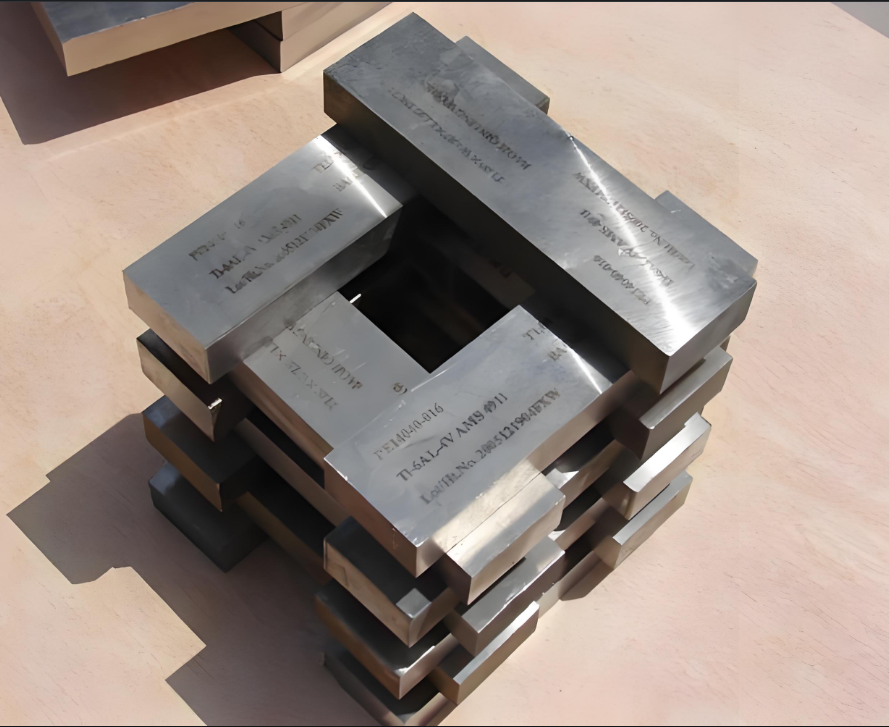
Subsea mining operations utilize titanium forged blocks beyond just basic fluid distribution.
1. High-Pressure Actuation: Manifolds often house the actuators for subsea valves. The dimensional stability of forged titanium ensures that these actuators operate with precise tolerances even under extreme external pressure.
2. Sensor Integration: As mining systems become more "intelligent," manifolds are increasingly used as junctions for sensor arrays (temperature, pressure, vibration). The non-magnetic nature of titanium is crucial here [slideshare](https://pt.slideshare.net/slideshow/titanium-for-subsea-and-offshore-industry-cataloguepdf/257306291).
3. Hybrid Material Architectures: Engineers are increasingly using titanium forged blocks in combination with other materials (e.g., carbon fiber-reinforced plastics) in modular housing assemblies, using titanium for the highest-stress, connection-heavy points [facebook](https://www.facebook.com/groups/871271326601808/posts/2542989862763271/).
As the mining industry moves into ever-deeper waters, the reliance on high-performance materials like titanium will only grow. Titanium forged blocks offer a robust, reliable, and cost-effective solution for high-pressure manifolds, providing the structural integrity needed to withstand the most challenging environments on Earth. By prioritizing material quality and structural design through forging, subsea operators can ensure the longevity and safety of their critical subsea assets.
1. [The Development of Hollow Forged Ti 6-4 ELI Rounds (Technical Report)](https://cdn.ymaws.com/titanium.org/resource/resmgr/ZZ-WCTP2007-VOL2/2007_Vol_2_Pres_183.pdf)
2. [Titanium for Offshore Applications (AZoM)](https://www.azom.com/article.aspx?ArticleID=638)
3. [Titanium Forged Block Grade 5 (TiLong Titanium)](https://www.tilongtitanium.com/titanium-forgings/titanium-forging-block-grade-5)
4. [Titanium for subsea and offshore industry catalogue (Slideshare)](https://pt.slideshare.net/slideshow/titanium-for-subsea-and-offshore-industry-cataloguepdf/257306291)
5. [Titanium Forging Guide 2026 (HDC Manufacturing)](https://hdcmfg.com/resources/blog/titanium-forging/)
1. Is titanium cost-effective for subsea manifolds compared to steel?
Yes. While the initial procurement cost of titanium is higher, its superior corrosion resistance and immunity to MIC lead to a significantly lower Total Cost of Ownership (TCO) by reducing the need for costly subsea interventions, repairs, or replacements over the 20-25 year lifespan of the asset.
2. What forging methods are used for titanium manifolds?
Manufacturers typically use open-die or closed-die forging to create the block. These processes, combined with subsequent heat treatment, ensure that the metal has the necessary fatigue resistance and toughness for high-pressure subsea applications.
3. Can titanium be used at depths beyond 6,000 meters?
Yes, titanium is routinely used in deep-diving equipment and subsea housings rated for 6,000m and deeper. Its strength-to-weight ratio is the key to maintaining structural integrity under these extreme pressures.
4. Why is a forged block better than a cast block?
Forging improves the internal metallurgical structure, making it denser and eliminating defects like porosity or inclusions common in castings. This provides higher reliability and fatigue resistance, which are mandatory for critical high-pressure components.
5. How do you integrate titanium manifolds with other subsea materials?
Titanium is compatible with various materials, but care must be taken to manage galvanic corrosion if it is directly coupled to dissimilar metals (like steel). This is typically addressed through proper isolation techniques or the use of compatible alloys at joint interfaces.


