

Views: 320 Author: Lasting Titanium Publish Time: 2026-05-03 Origin: Site


Content Menu
● The Engineering Challenge: Forces in High-Speed Rotation
● Why Forging Beats Casting for Centrifuge Rings
● Advanced Insights: Achieving Structural Integrity
>> 1. The Critical Role of Ultrasonic Testing (UT)
>> 2. Advanced Heat Treatment and Microstructure Control
>> 3. Surface Finish and Residual Stresses
● Procurement Strategy for Global Buyers
● Conclusion: Investing in Reliability
● Frequently Asked Questions (FAQ)
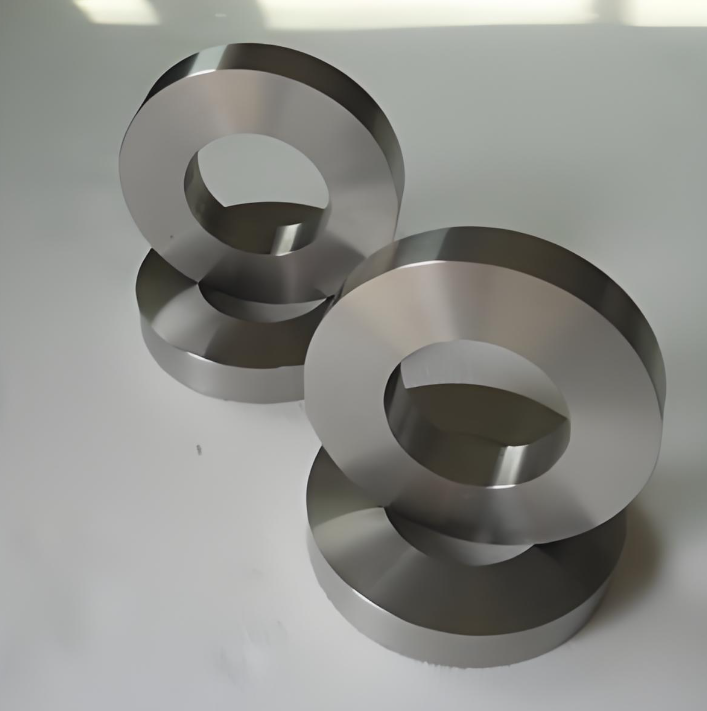
In the high-stakes world of industrial separation, pharmaceutical manufacturing, and chemical processing, centrifugal equipment operates under conditions that push materials to their absolute physical limits. When precision-engineered machinery spins at tens of thousands of revolutions per minute (RPM), the structural integrity of the rotating assembly is not merely a performance metric—it is a non-negotiable safety mandate. Titanium forged rings have rapidly emerged as the definitive gold standard for high-performance centrifuge components, offering an unmatched, industry-leading combination of high strength-to-weight ratio, exceptional fatigue resistance, and chemical stability that traditional steel or aluminum alloys simply cannot replicate.
As industry-leading experts at Shaanxi Lasting New Material (Lasting Advanced Titanium) Industry Co., Ltd., we have spent over three decades refining the complex production of critical titanium components for the world's most demanding industrial environments. Our deep experience in metallurgy and forging science has provided us with unique insights into the challenges faced by manufacturers of high-speed rotating equipment. This article explores the metallurgical and mechanical reasons why titanium forged rings are the superior choice for high-speed centrifuge applications, and how the precision of your material selection and forging process dictates the operational lifespan, safety, and efficiency of your critical equipment.
Centrifuges operate by creating extreme centrifugal forces that amplify gravitational pull by thousands of times. At these extreme rotational speeds, the material in the structural ring is subject to massive hoop stress—also known as circumferential stress—which acts to pull the material apart radially. In such environments, even a single microscopic material flaw, a minor inclusion, or an area of lack of homogeneity can act as a stress concentrator. Over time, these points become the origin of catastrophic fracture propagation, which can lead to the total destruction of the centrifuge assembly.
Titanium, particularly the Ti-6Al-4V (Grade 5) alloy, is favored for these high-stress applications due to several key factors that optimize machine performance:
* Exceptional Strength-to-Weight Ratio: By reducing the mass of the rotating assembly, titanium reduces the overall moment of inertia. This lower mass minimizes the energy required for rapid acceleration and deceleration, while simultaneously reducing the bearing load and the stress exerted on drive shafts.
* Superior Fatigue Strength: Centrifuges often operate in cycles, frequently undergoing high-speed start-stop operations. Titanium's innate ability to retain its mechanical properties under millions of cycles of loading is crucial for operational reliability.
* Inherent Corrosion Resistance: Many modern industrial centrifuges are used to process highly aggressive chemicals, acids, or volatile slurries. Unlike carbon steels, which require coatings that can chip or wear away, titanium forms a stable, self-healing passive oxide layer. This layer prevents pitting and corrosion-induced crack initiation, which are the primary enemies of long-term structural integrity in rotating machinery.
* Thermal Stability: As a centrifuge operates, the friction at the bearings and the energy of rotation can generate heat. Titanium retains its structural stability at elevated temperatures far better than aluminum, ensuring the ring does not soften or deform during long, continuous production runs.
When it comes to high-speed rotation, the manufacturing method is just as fundamentally important as the material chemistry itself. Forged rings are structurally superior to cast or welded alternatives for several critical reasons that impact the longevity of the equipment.
| Feature | Forged Titanium Rings | Cast Titanium Components |
|---|---|---|
| Grain Structure | Refined and directional (follows part contour) | Random and dendritic (brittle) |
| Mechanical Strength | Superior due to intense compression | Lower due to inherent porosity |
| Reliability | Extremely high; consistent fatigue life | Lower; risk of hidden internal defects |
| Operational Safety | Best for high-RPM/critical applications | Not recommended for high-speed use |
| Homogeneity | Highly uniform throughout the cross-section | Prone to cooling-related inconsistencies |
The Grain Flow Advantage: During the specialized forging process, the titanium billet is subjected to massive, controlled pressure that physically forces the metal's internal grain structure to align with the shape of the finished ring. This "fiber flow" creates a continuous, uninterrupted metallurgical path that significantly enhances the ring's ability to withstand the intense hoop stresses encountered during high-speed rotation. Unlike castings, which are formed by pouring molten metal into a mold—resulting in random grain patterns—forgings are dense, solid, and structurally optimized for the exact stresses the centrifuge will face in the field.
To ensure that a titanium ring is worthy of high-speed centrifuge service, the manufacturing process must involve more than just shaping the metal. It requires a comprehensive approach to quality management.
For high-speed centrifuge rings, we mandate rigorous, 100% volumetric Ultrasonic Testing as a baseline requirement. Even a microscopic internal void, which might be invisible to the naked eye, can propagate into a significant fracture under high-centrifugal loads. Our industry-standard testing protocols ensure that every titanium forged ring is free from internal discontinuities, inclusions, or porosity, effectively guaranteeing peace of mind for high-RPM, mission-critical service.
The balance of Alpha and Beta crystalline phases in titanium is the secret to its mechanical success. Through precise solution treatment and aging (STA) processes, our engineers can tailor the microstructure to prioritize either ultimate tensile strength or fracture toughness, depending on the centrifuge design's specific requirements. This ability to "tune" the metal's personality is a key differentiator between a standard ring and a high-performance centrifuge component.
Surface integrity is paramount for rotating parts. Minor tool marks, scratches, or surface irregularities created during the machining phase can serve as focal points for crack initiation. We recommend that all centrifuge rings undergo precision machining followed by controlled shot peening. This process induces a layer of compressive residual stress on the ring's outer and inner surfaces. By keeping the surface in a state of compression, the material actively resists the formation of cracks, effectively delaying the initiation of fatigue damage and extending the operational life of the part by thousands of hours.
When sourcing titanium forged rings for high-speed industrial centrifuges, procurement professionals and design engineers must look beyond the quoted price and focus on the technical pedigree of the manufacturer. To ensure you are receiving the quality required for high-RPM operation, we recommend that you focus on these three pillars:
1. Comprehensive Mill Test Reports (MTRs): Always demand detailed, certified chemical and mechanical property reports for the specific heat of titanium used in your ring. Ensure the reports confirm that the material complies with global standards such as AMS or ASTM, specifically for forging-grade stock.
2. Mastering the Forge Ratio: The forge ratio is a critical benchmark in high-end manufacturing. It is defined as the ratio of the cross-sectional area of the initial billet to the cross-sectional area of the finished forging. For mission-critical titanium components, we generally mandate a forge ratio of at least 3:1 or higher. This high ratio is essential to fully break down the coarse, original cast-like grain structure of the raw ingot, transforming it into a refined, uniform, and dense distribution of fine equiaxed grains. Achieving this specific metallurgical state is the only way to ensure the perfect match of high tensile strength and fracture toughness required for centrifuge performance.
3. Stringent Environmental and Contamination Controls: Titanium is exceptionally reactive to atmospheric gases like oxygen, nitrogen, and hydrogen at the high temperatures required for forging. The intake of hydrogen into the titanium matrix can lead to "hydrogen embrittlement," which causes a dramatic and dangerous reduction in the material's fracture toughness. Furthermore, oxygen and nitrogen infiltration creates a hard, brittle surface layer known as the "alpha-case" (or α-shell). This layer is notoriously brittle and must be removed through secondary machining; if left on the part, it acts as an immediate stress concentrator and a primary site for fatigue crack initiation. We utilize high-vacuum or inert-gas atmosphere heating to prevent these contaminants from compromising the ring's integrity.
While titanium forged rings carry a higher initial investment compared to steel components, the return on investment is found in the total cost of ownership. Centrifuges are often the bottleneck in production processes; when they fail, entire production lines can be brought to a halt. By choosing high-performance titanium, you minimize the "dead weight" of the rotating assembly, which translates to lower energy consumption over the lifetime of the machine. Furthermore, by opting for the superior fatigue life of a forged part, you extend your maintenance intervals, reduce the frequency of equipment teardowns, and minimize the risk of costly, unplanned downtime.
Choosing titanium forged rings is fundamentally an investment in the long-term, stress-free reliability of your centrifuge systems. By minimizing rotating mass, maximizing resistance to fatigue, and ensuring unmatched corrosion resistance, you effectively safeguard your machinery against the harsh realities of high-speed industrial operation. At Shaanxi Lasting New Material (Lasting Advanced Titanium) Industry Co., Ltd., we combine deep-rooted metallurgical expertise with advanced, precision-forging technologies to deliver components that consistently meet the most stringent global engineering standards. We understand that your centrifuge is only as reliable as its weakest component; that is why we treat every forged ring as a critical engineering solution, not just a commodity.
We invite you to experience the quality and technical support that has made us a preferred partner for global brand owners, wholesalers, and specialized manufacturers. Our team is ready to assist you with everything from alloy selection to custom forging specifications tailored to your specific RPM requirements.
*Are you looking for high-performance, precision-engineered titanium forged rings for your next centrifuge project? Contact our dedicated technical team at Shaanxi Lasting New Material (Lasting Advanced Titanium) Industry Co., Ltd. today to discuss your project specifications and discover how we can help you achieve new heights in operational durability.*
- [1] [Fatigue and Fracture Behavior of Ti-6Al-4V Alloy: Insights from ScienceDirect](https://www.sciencedirect.com/topics/engineering/ti-6al-4v-alloy)
- [2] [ASM International: Titanium Forging Technology and Material Standards](https://www.asminternational.org/search/-/journal_content/56/10192/06757G/PUBLICATION)
- [3] [Shaanxi Lasting New Material: Capability and Quality Assurance](https://www.lastingtitanium.com/)
- [4] [The Metallurgical Importance of Grain Flow and Forge Ratios](https://www.forging.org/forging-process)
- [5] [Corrosion Resistance and Surface Integrity of Titanium Alloys](https://www.sciencedirect.com/science/article/pii/B978008096532100010X)
1. Why is Ti-6Al-4V (Grade 5) the preferred alloy for high-speed centrifuge rings?
It offers the optimal balance of high tensile strength and fracture toughness, which are the two most essential properties required to resist the massive, radial hoop stresses generated during high-speed rotation.
2. How specifically does the forging process improve the fatigue life of centrifuge rings?
Forging aligns the metal's internal grain structure to follow the geometry of the ring, a process known as "grain flow." This alignment optimizes mechanical properties and minimizes internal voids, leading to a much higher resistance to crack initiation compared to cast or machined-from-plate parts.
3. What is "alpha-case" and why is it dangerous for centrifuge parts?
Alpha-case is a hard, brittle surface layer formed when titanium reacts with oxygen and nitrogen at high temperatures. If not removed through machining, it acts as a site for fatigue crack initiation, significantly shortening the component's operational life.
4. What is an ideal "forge ratio" for critical titanium components?
For high-speed rotating parts, a forge ratio of 3:1 or higher is standard. This ensures the original coarse cast structure is fully broken down, yielding a uniform, fine-grained structure that maximizes strength and toughness.
5. How can I ensure the quality of my titanium supplier for mission-critical parts?
Always look for suppliers who provide comprehensive, batch-specific Mill Test Reports (MTRs) and have a documented history of manufacturing forged products specifically for aerospace or high-RPM industrial applications, ensuring they understand the criticality of the parts they produce.


