

Views: 380 Author: Lasting Titanium Publish Time: 2026-04-05 Origin: Site


Content Menu
>> The Material Imperative: Why Titanium Dictates the Pace of Modern Racing
>> Metallurgy and Manufacturing: The Anatomy of a High-Performance Fastener
>>> The Critical Role of Thread Rolling
>>> Precision Engineering and Dimensional Tolerances
>> Advanced Applications in the Modern Race Vehicle
>>> Engine and Powertrain Internals
>>> Chassis and Suspension Integration
>> Addressing the Challenges: Installation and Maintenance Protocols
>>> Galling Mitigation and Lubrication
>>> Mastering Torque Protocols
>>> Rigorous Inspection Regimes
>> Summary: The Strategic Value of Precision Hardware
In the elite echelons of professional motorsport, where victory is often determined by a margin of mere milliseconds and engineering constraints are pushed to the absolute edge of physical possibility, the selection of fasteners is not merely a logistical procurement decision—it is a critical, high-stakes design imperative. For industry professionals and lead design engineers, titanium fasteners represent far more than a simple strategy for weight reduction; they embody a sophisticated intersection of advanced metallurgy, precision manufacturing, and uncompromising structural reliability. This article provides a comprehensive, deep-dive analysis into the material science, performance benchmarks, and strategic deployment of titanium fasteners within the world's most demanding racing environments.
Motorsport engineering is perpetually governed by the relentless pursuit of optimizing strength-to-weight ratios. In a racing vehicle, steel—while functionally robust and historically reliable—imposes a significant mass penalty. This penalty is particularly detrimental in two specific areas: unsprung weight and rotational inertia. The former directly dictates the tire's ability to maintain contact with the track surface over irregular terrain, while the latter influences the engine's responsiveness and the vehicle's agility during rapid acceleration and deceleration cycles.
By opting for titanium alloys, specifically Ti-6Al-4V (commonly designated as Grade 5 per ASTM standards), engineers can achieve a weight reduction of approximately 45 percent per fastener compared to high-strength alloy steels. While this might appear negligible on a single component, the cumulative effect of hundreds of fasteners across a chassis, powertrain, and suspension system results in substantial mass centralization, lower centers of gravity, and improved transient response times. Furthermore, because Grade 5 titanium maintains a tensile strength comparable to many high-strength alloy steels while offering this massive weight advantage, it provides an exceptional specific strength (strength-to-weight ratio). For the material scientist, this specific strength is the ultimate metric of structural efficiency, allowing engineers to push the boundaries of mechanical design without compromising the integrity of the racing platform.
Beyond mere weight savings, the inherent metallurgical profile of Ti-6Al-4V offers a unique mechanical synergy. Its superior fatigue resistance is a defining characteristic for longevity in racing. Components such as suspension links, steering arm bolts, and engine connecting rod hardware are subjected to millions of cycles of varying loads throughout a competitive season. Titanium's inherent ability to withstand these cyclic stresses—provided that the internal metallurgical grain flow is respected during the manufacturing process—ensures that the racing vehicle remains resilient throughout the grueling duration of endurance racing events or intense sprint series.
For the industry professional, simply specifying "Grade 5" in a purchase order is dangerously insufficient. The true performance of a fastener is dictated by its manufacturing pedigree and the microscopic integrity of its structure.
Perhaps the most crucial differentiator between a generic hardware-store bolt and a high-performance racing fastener is the methodology employed during thread manufacturing. Traditional thread cutting involves machining away the surface material to form the thread profile. This process fundamentally severs the grain structure of the metal, creating microscopic stress risers and interruptions in the fiber flow. In a high-vibration environment, these discontinuities serve as the primary nucleation points for fatigue cracks, which can propagate rapidly under load, leading to catastrophic fastener failure.
Conversely, thread rolling—a process where the threads are formed by cold-working the material between precision dies—fundamentally preserves and compresses the grain structure, forcing it to flow and conform to the geometry of the thread profile. This cold-working process imparts beneficial compressive residual stresses into the thread roots, significantly enhancing the component's fatigue life and shear strength. For any critical application within a racing platform, a rolled thread is a non-negotiable engineering requirement, providing the necessary resilience against the intense resonant frequencies generated by internal combustion or high-torque electric powertrains.
Motorsport fasteners operate in an environment characterized by extreme thermal expansion, intense vibration, and severe shock loading. Consequently, dimensional tolerances and surface integrity are functional necessities rather than secondary considerations. Fasteners engineered for aerospace and top-tier racing classes are typically manufactured to tolerances within a few microns. This level of precision ensures that the clamp load is distributed evenly across the entire surface of the joint, preventing the development of loose fasteners or localized stress concentrations.
Surface finish also plays a vital role. High-end titanium fasteners undergo precision grinding to achieve specific roughness averages, which are often followed by specialized surface treatments or coatings. These coatings serve two primary functions: reducing the coefficient of friction to ensure highly accurate torque-to-tension conversion during installation, and mitigating the phenomenon of galling. Galling is a particularly persistent issue with titanium, as the metal's affinity for oxygen causes the passive oxide layer to rupture under high contact pressure, allowing the exposed base metal surfaces to cold-weld together. Proper surface engineering prevents this, ensuring that the fastener can be removed and reused throughout the vehicle's maintenance cycle.
The deployment of titanium hardware is ubiquitous across the modern racing platform, with each subsystem demanding a unique approach to mechanical integration.
Within the heart of the engine, titanium fasteners are subjected to the most brutal conditions: immense thermal cycling and extreme high-frequency vibration. In this context, the primary challenge is maintaining the integrity of the clamping force despite disparate rates of thermal expansion between the titanium bolt, the aluminum engine block, and the steel cylinder head. Specialized alloys with higher thermal stability are often employed here. For critical applications such as connecting rod bolts or valve train hardware, engineers must account for the elastic deformation of the fastener under extreme heat. Failure to manage this can lead to a loss of preload, resulting in the dreaded "clamping loss" that allows for micro-movements, which quickly escalates into structural failure of the entire powertrain.
In the suspension architecture, where fasteners manage extreme cornering forces, braking torque, and high-impact curb strikes, the focus shifts towards maximizing fatigue strength and shear resistance. Titanium is frequently the material of choice for uprights, wishbones, and shock absorber mounting points. When integrating titanium into an assembly containing other materials—such as carbon fiber monocoques or aluminum billet uprights—engineers must be acutely aware of galvanic corrosion. Because titanium is more noble than aluminum, in the presence of an electrolyte like water or road grime, the aluminum will act as the sacrificial anode and corrode preferentially. To prevent this, professional teams utilize dielectric isolation materials, specialized washers, and stringent assembly protocols, often employing isolating coatings to effectively break the galvanic circuit.
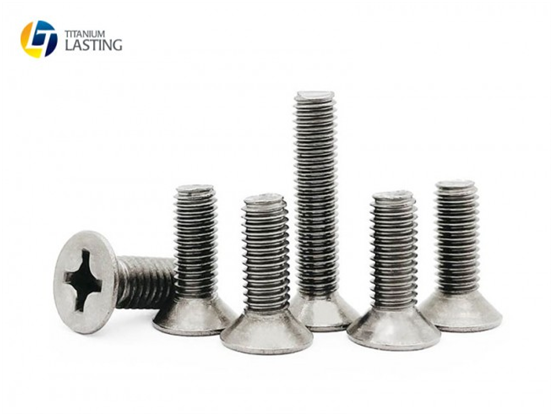
Despite their undeniable performance advantages, titanium fasteners require a distinct, disciplined approach to installation and long-term care that differs from conventional steel fasteners.
Titanium's passive oxide layer, while beneficial for corrosion resistance, is prone to damage under high-load contact, leading to galling. To prevent this, the consistent use of specialized anti-seize compounds—typically nickel-based, silver-based, or molybdenum-disulfide—is mandatory during every assembly. This not only prevents the cold-welding of threads but also ensures that the torque applied to the fastener is converted into actual tension rather than being consumed by surface friction.
Titanium has a lower modulus of elasticity and unique frictional characteristics compared to steel. Consequently, applying standard steel torque specifications to a titanium bolt will almost always result in an incorrect preload, either under-tightening the joint or exceeding the bolt's elastic limit. Modern racing engineering teams establish specific torque-to-tension protocols, which often involve measuring the actual stretch or elongation of the bolt rather than relying solely on a torque wrench. This ensures the fastener remains within its elastic range, maintaining consistent and repeatable clamping forces throughout the race duration.
The cyclic nature of motorsport dictates that titanium fasteners must be treated as life-limited components. A rigorous non-destructive testing (NDT) regime is essential for structural fasteners. It is critical to note that Magnetic Particle Inspection (MPI) is fundamentally ineffective here because titanium is non-magnetic; it simply does not react to the magnetic fields used in such tests. Instead, professional teams rely on ultrasonic testing, X-ray analysis, or dye penetrant inspection. Furthermore, top-tier teams establish service life limits, replacing critical fasteners based on a specific number of heat cycles or total running hours to mitigate the risk of hidden fatigue crack propagation before it reaches critical mass.
The integration of titanium fasteners into a competitive racing program is, at its core, a strategic investment in the vehicle's overall reliability, handling performance, and weight management. By developing a deep understanding of the underlying metallurgy—specifically the unique properties of Grade 5 (Ti-6Al-4V)—emphasizing superior manufacturing processes like thread rolling, and strictly adhering to specialized installation and inspection protocols, professional engineers can safely harness the unparalleled mechanical advantages that titanium provides. In a discipline where success is defined by thousandths of a second, the commitment to high-specification, professional-grade hardware is often the critical difference between securing a position on the podium and the myriad of mechanical failures that plague the grid. As materials technology continues to advance, the role of titanium will only become more significant in the pursuit of the ultimate racing machine.
Q1: Why is Ti-6Al-4V (Grade 5) considered the industry standard for motorsport applications?
A: Grade 5 is favored because it offers an optimal balance of high tensile strength, excellent fatigue endurance, and resistance to environmental degradation. With a weight that is roughly 55 percent of common high-strength steels, it allows engineers to achieve significant mass reduction without sacrificing the structural stability required for the extreme loading conditions seen in professional racing. This provides superior specific strength, which is vital for the structural efficiency of weight-sensitive racing vehicles.
Q2: How does the thread rolling manufacturing process specifically enhance the reliability of a fastener?
A: Thread rolling is a cold-forming method that generates threads by plastic deformation rather than material removal. This preserves the metal's grain structure by causing it to flow and follow the geometry of the thread root. The process also induces compressive residual stresses in the roots of the threads, which act as a powerful barrier against the initiation and propagation of fatigue cracks, effectively extending the functional life of the fastener far beyond what is possible with cut-thread methods.
Q3: What are the primary engineering risks associated with installing titanium fasteners in direct contact with aluminum components?
A: The most significant risk is galvanic corrosion. Because titanium is more noble than aluminum, the two metals create an electrochemical cell in the presence of an electrolyte, causing the aluminum to act as the sacrificial anode and corrode preferentially. To mitigate this, engineers must use galvanic isolators, non-conductive washers, or specialized coatings on the fasteners to create an electrical break between the two dissimilar metals, thus protecting the structural integrity of the assembly.
Q4: Can standard steel torque specifications be applied when using titanium bolts?
A: No, this is highly discouraged. Titanium has a different modulus of elasticity and significantly different frictional properties than steel. Relying on steel torque values will lead to inconsistent preload, either failing to secure the component or risking plastic deformation of the bolt due to over-tightening. Torque specifications for titanium must be derived through empirical testing or specific stretch-measurement techniques to ensure the bolt remains within its elastic range.
Q5: Why is Magnetic Particle Inspection (MPI) not a viable testing method for titanium fasteners?
A: Magnetic Particle Inspection is designed to detect surface and near-surface discontinuities in materials that are ferromagnetic. Because titanium and its common alloys are non-magnetic, they do not respond to the magnetic fields used in MPI, rendering the technique entirely ineffective for defect detection. Instead, professional motorsport teams utilize ultrasonic testing or dye penetrant inspection, which are better suited for evaluating the structural integrity of non-magnetic, high-performance titanium components.


