

Views: 325 Author: Lasting Titanium Publish Time: 2026-05-14 Origin: Site


Content Menu
● Why Custom Titanium Forgings Are Vital for Prototyping
● The Engineering Advantage of Tailored Forging Solutions
>> Thermal Capability and Material Selection
● Key Considerations for Sourcing Custom Forgings
● The Strategic Role of Shaanxi Lasting New Material
● Frequently Asked Questions (FAQ)
In the rapidly evolving landscape of aerospace engineering, the ability to rapidly iterate on engine designs is the difference between market leadership and obsolescence. For original equipment manufacturers (OEMs) and research teams, custom titanium forgings for prototype aerospace engines are not merely components; they are the critical foundation of performance, safety, and reliability in experimental propulsion systems. As engine architectures shift toward higher bypass ratios and greater thermal efficiency, the materials science underlying each part must be equally advanced.
Titanium, often heralded as the "space metal," possesses a unique combination of high strength-to-weight ratio, exceptional heat tolerance, and robust corrosion resistance—traits that are non-negotiable for engine parts subjected to extreme operational stresses. When it comes to building prototypes, relying on standard stock materials often falls short of the stringent metallurgical and dimensional requirements necessary for high-performance testing. Engineers require materials that behave predictably under load, and this is where the specialized process of custom forging becomes indispensable.
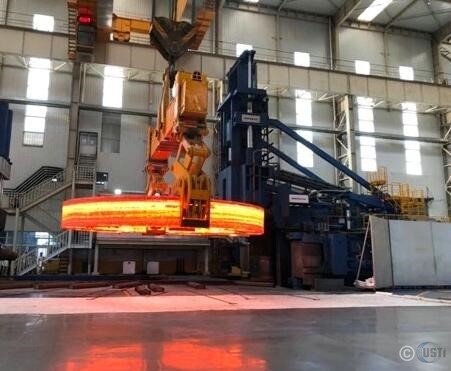
Prototyping aerospace engines demands a level of material precision that standard castings or generic, off-the-shelf billets simply cannot provide. The forging process is fundamentally different because it refines the internal grain structure of the titanium alloy. By manipulating the metal under high pressure and controlled temperatures, manufacturers create a continuous grain flow that follows the component's contour. This structural refinement significantly enhances fatigue resistance and overall structural integrity compared to machining from a solid block or utilizing cast parts.
* Optimized Mechanical Performance: Forging minimizes internal voids and porosity, which are common failure points in castings. This process ensures that every prototype engine component can withstand the intense pressures and thermal cycles experienced during flight testing or bench trials.
* Design Flexibility: By working with a custom forging partner, engineers can specify exact geometries, grain directionality, and precise alloy compositions—such as Ti-6Al-4V or high-temperature capable Ti-6242—tailored specifically to the unique needs of the prototype engine.
* Weight Reduction Strategy: Aerospace engineers are constantly striving to reduce weight without compromising safety. Titanium is roughly 60% the weight of steel, offering nearly 40% less weight for a given volume. Custom titanium forgings allow for optimized material usage, enabling the creation of lighter engine assemblies that drastically improve fuel efficiency and performance metrics.
* Long-Term Reliability: Even in a prototype phase, using materials that meet aerospace-grade standards ensures that the test data collected is accurate and reflective of final production-grade hardware, reducing the "re-spin" cycles often seen in engineering development.
When designing for next-generation aircraft engines, the manufacturing process is as important as the design itself. Utilizing specialized forging techniques—such as closed-die forging or isothermal forging—allows manufacturers to achieve tight tolerances and complex shapes. This approach reduces the need for excessive post-process machining, which not only saves valuable development time but also preserves the integrity of the material's surface layer.
One of the most critical aspects of engine design is temperature management. In the compressor section of an engine, titanium is the material of choice. For instance, Ti-6Al-4V (Grade 5) is widely favored for its excellent strength-to-weight ratio; it retains excellent structural integrity up to 400°C. While certain titanium alloys and specialized protective surface treatments can push capability toward 600°C in specific environments, it is essential to distinguish this from the limits of specialized materials. If your prototype engine involves hotter zones, such as the high-pressure compressor rear or turbine sections, engineers typically transition to near-alpha high-temperature titanium alloys like IMI 834 or Ti-1100, or even nickel-based superalloys. Selecting the correct alloy during the forging stage is a vital decision that dictates the engine's operational envelope.
Sourcing components for aerospace prototypes is a high-stakes endeavor that requires meticulous planning and a focus on long-term supply chain reliability. When selecting a manufacturing partner, consider the following critical criteria:
1. Material Traceability: Ensure your supplier maintains full, transparent traceability from the raw titanium sponge to the finished forged part. This is critical for meeting stringent aerospace compliance and safety standards, such as those required by the FAA or EASA.
2. Certification and Quality Standards: Partner only with manufacturers that adhere to recognized international standards like AS9100 and ISO 9001. Experience in aerospace-specific auditing is a non-negotiable requirement.
3. Technical Expertise in Metallurgy: Look for a team that includes in-house metallurgists capable of analyzing grain flow, heat treatment effects, and fatigue behavior. These experts can advise on how the forging process will affect the final component's performance in your specific engine design.
4. Agility and Scalability: A top-tier supplier should be able to provide both small-batch prototype runs and scalable production capabilities. As your design progresses from initial experimental testing to final qualification, your partner must be able to grow with you.
As a professional supplier in the titanium industry, Shaanxi Lasting New Material (Lasting Advanced Titanium) Industry Co., Ltd. leverages over 30 years of deep industry experience to support global aerospace and defense partners. We understand that in the world of prototype engine development, there is no room for error. Our manufacturing operations are specifically designed to meet the extreme demands of flight-critical hardware.
* Precision-Engineered Components: We utilize advanced forging and rolling sequences to achieve superior structural integrity and exact dimensional accuracy. This ensures that every part is optimized for its role within the assembly.
* Rigorous Quality Control: Every component we produce undergoes strict testing—including microstructure analysis, ultrasonic non-destructive testing (NDT), and mechanical property testing—to ensure absolute adherence to stringent aerospace specifications.
* Collaborative Development: We do not simply fulfill orders; we act as an extension of your engineering team. We provide critical technical insights into alloy selection, pre-form design, and forging temperatures to optimize your prototype's performance and manufacturability.
By partnering with a manufacturer that truly understands the nuances of aerospace titanium forging, you ensure that your prototype engine is built on a foundation of proven reliability, cutting-edge material science, and uncompromising quality. Whether you are developing a regional jet engine or a next-gen UAV propulsion system, our capabilities ensure your hardware performs exactly as designed.
1. [What Is Titanium Forging? Everything You Need To Know - TSM](https://www.tsm-titanium.com/info/what-is-titanium-forging-everything-you-nee-103265163.html)
2. [The Role of Titanium Forging in Next-Gen Aircraft Manufacturing - Lasting Titanium](https://www.lastingtitanium.com/the-role-of-titanium-forging-in-next-gen-aircraft-manufacturing.html)
3. [Custom Forgings & Fittings for Aerospace - R&M Forge and Fittings](https://www.rmforge.com/industries-served/custom-forgings-and-fittings-for-aerospace.html)
4. [Titanium Forgings: Strength, Precision, and Performance - Laube Technology](https://www.laube.com/titanium-forgings-strength-precision-and-performance/)
5. [Choosing Between Titanium Forgings And Titanium Billets - Lasting Titanium](https://www.lastingtitanium.com/choosing-between-titanium-forgings-and-titanium-billets.html)
Q1: Why are titanium forgings preferred over castings for aerospace engine prototypes?
A: Titanium forgings provide superior mechanical properties, including higher strength, better fatigue resistance, and increased structural reliability, by refining the grain structure through high-pressure shaping, whereas castings can have internal porosity or voids that compromise high-stress parts.
Q2: Which titanium alloys are best for aerospace engine components?
A: Ti-6Al-4V (Grade 5) is the industry standard for its strength and versatility in the compressor section. For higher temperature zones, specialized near-alpha alloys like IMI 834 or Ti-1100 are required for their superior creep resistance.
Q3: How does custom forging improve engine performance?
A: Custom forging allows for optimized grain flow alignment, which enhances the component's resistance to stress and fatigue. This enables engineers to design thinner, lighter, and more efficient engine parts that withstand extreme operational conditions.
Q4: What testing is performed on aerospace titanium forgings?
A: Components undergo rigorous quality control, including dimensional inspection, ultrasonic non-destructive testing (NDT) to identify internal flaws, and destructive mechanical testing of witness samples to verify tensile strength, hardness, and microstructure.
Q5: Can you provide small batches for prototyping purposes?
A: Yes, manufacturers like Shaanxi Lasting specialize in providing both small-batch prototype components and scalable production quantities, ensuring your design phase is supported from initial concept to full-scale manufacturing.


