

Views: 360 Author: Lasting Titanium Publish Time: 2026-01-04 Origin: Site


Content Menu
● Understanding Titanium Rolling Processes
● Key Differences Between Cold-Rolled and Hot-Rolled Titanium Sheets
● Applications of Cold-Rolled and Hot-Rolled Titanium Sheets
>> Applications of Hot-Rolled Titanium Sheets
>> Applications of Cold-Rolled Titanium Sheets
>> 1. What is the main advantage of cold-rolled titanium sheets?
>> 2. Can hot-rolled titanium sheets be used in aerospace applications?
>> 3. What is the typical thickness range for cold-rolled titanium sheets?
>> 4. How does the production temperature affect the properties of titanium sheets?
>> 5. Are cold-rolled titanium sheets more expensive than hot-rolled sheets?
Titanium is a versatile metal known for its strength, lightweight, and resistance to corrosion. It is widely used in various industries, including aerospace, medical, and automotive. The production of titanium sheets involves two primary methods: hot rolling and cold rolling. Each method has distinct processes, advantages, and applications. This article delves into the key production processes and differences between cold-rolled and hot-rolled titanium sheets.
Hot rolling is a metalworking process that involves heating titanium above its recrystallization temperature, typically between 1350°F and 1500°F (730°C to 815°C). This high temperature makes the metal more malleable, allowing it to be shaped easily into the desired form. The hot rolling process is essential for producing large, thick plates that are often used in applications requiring high strength and durability.
During hot rolling, the titanium ingots are heated in a furnace and then passed through a series of rollers. This process not only reduces the thickness of the material but also refines its grain structure, enhancing its mechanical properties. The high temperatures involved in hot rolling can also help eliminate any internal stresses that may have developed during the casting process, resulting in a more uniform material.
Hot-rolled titanium sheets are typically characterized by a rough surface finish due to the oxidation that occurs at high temperatures. This surface can be further treated or processed depending on the specific requirements of the application. The ability to produce large sheets in a single pass makes hot rolling a cost-effective method for manufacturers, especially when dealing with thicker materials.
Cold rolling, on the other hand, is performed at or near room temperature, typically below 500°F (260°C). This process involves passing the titanium through rollers to achieve the desired thickness. Cold rolling is known for producing sheets with tighter tolerances, improved surface finishes, and enhanced mechanical properties. The cold-rolled sheets are generally thinner and have a smoother surface compared to hot-rolled sheets.
The cold rolling process begins with hot-rolled sheets that are further processed to achieve the desired dimensions. As the material is rolled at lower temperatures, it undergoes significant plastic deformation, which increases its strength through a phenomenon known as strain hardening. This process not only improves the mechanical properties of the titanium but also results in a finer grain structure, which can enhance the material's overall performance in demanding applications.
Cold-rolled titanium sheets are often used in industries where precision and surface quality are critical. The smooth finish achieved through cold rolling makes these sheets ideal for applications in the medical field, electronics, and high-performance automotive components. Additionally, the tighter tolerances associated with cold rolling allow for more efficient manufacturing processes in subsequent fabrication steps.
The most significant difference between cold-rolled and hot-rolled titanium sheets is the temperature at which they are processed. Hot rolling occurs at elevated temperatures, while cold rolling is conducted at room temperature. This temperature difference affects the mechanical properties and surface characteristics of the final product.
In hot rolling, the elevated temperatures allow for easier deformation of the titanium, which can lead to a more uniform grain structure. However, the high temperatures can also result in oxidation and surface imperfections that may require additional processing. In contrast, cold rolling, performed at lower temperatures, minimizes oxidation and produces a smoother surface finish, but it requires more force to deform the material, which can lead to increased wear on the rolling equipment.
Hot-rolled titanium sheets typically exhibit lower strength and hardness compared to cold-rolled sheets. The hot rolling process can refine the grain structure of the titanium, improving its ductility. However, cold rolling introduces cold work hardening, which increases the strength and hardness of the material. As a result, cold-rolled titanium sheets are often preferred for applications requiring high strength and precision.
The mechanical properties of titanium are significantly influenced by the rolling process. Hot-rolled sheets tend to have a more isotropic grain structure, which means their mechanical properties are relatively uniform in all directions. In contrast, cold-rolled sheets may exhibit anisotropic properties, where the strength and ductility can vary depending on the direction of the applied load. This characteristic is crucial for engineers and designers when selecting materials for specific applications, as it can impact the performance and reliability of the final product.
Cold-rolled titanium sheets have a smoother surface finish compared to hot-rolled sheets. The cold rolling process minimizes surface defects and provides a more aesthetically pleasing appearance. This characteristic makes cold-rolled sheets suitable for applications where surface quality is critical, such as in the medical and aerospace industries.
The surface finish of titanium sheets can significantly affect their performance in various applications. For instance, in the medical field, implants and devices require a high level of surface quality to ensure biocompatibility and reduce the risk of infection. Cold-rolled sheets, with their smooth surfaces, are often treated with additional processes such as polishing or anodizing to further enhance their properties and appearance.
Hot-rolled titanium sheets are generally thicker and larger than their cold-rolled counterparts. The hot rolling process allows for the production of thicker plates, which can be advantageous in applications requiring substantial material strength. In contrast, cold-rolled sheets are often thinner, with thicknesses as low as 0.18 mm, making them ideal for precision applications.
The ability to produce thicker sheets through hot rolling is particularly beneficial in industries such as aerospace and construction, where structural integrity is paramount. However, the thinner cold-rolled sheets are increasingly being used in applications where weight savings are critical, such as in automotive and aerospace components. The choice of thickness and dimensions ultimately depends on the specific requirements of the application and the desired mechanical properties of the titanium.
Hot-rolled titanium sheets are typically less expensive to produce than cold-rolled sheets. The hot rolling process is more straightforward and requires less energy, resulting in lower production costs. However, the choice between hot-rolled and cold-rolled sheets should also consider the specific requirements of the application, as the benefits of cold-rolled sheets may justify the higher cost.
While hot-rolled sheets may offer cost advantages in terms of production, the overall cost-effectiveness of cold-rolled sheets can be realized through their superior mechanical properties and surface finishes. In applications where performance and reliability are critical, the investment in cold-rolled titanium may lead to lower maintenance costs and improved product longevity.
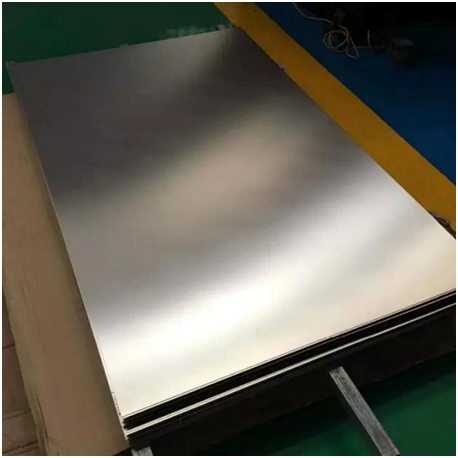
Hot-rolled titanium sheets are commonly used in applications where high strength and durability are essential. Some typical applications include:
- Aerospace Components: Hot-rolled titanium is often used in aircraft structures, engine components, and landing gear due to its high strength-to-weight ratio and resistance to corrosion.
- Structural Parts in Construction: The durability and strength of hot-rolled titanium make it suitable for use in structural applications, including bridges and buildings.
- Marine Applications: Hot-rolled titanium is resistant to seawater corrosion, making it ideal for marine environments, including shipbuilding and offshore structures.
- Power Generation Equipment: The high-temperature resistance of hot-rolled titanium makes it suitable for components in power plants, including turbines and heat exchangers.
Cold-rolled titanium sheets are preferred in industries that require precision and high-quality surface finishes. Common applications include:
- Medical Devices and Implants: The biocompatibility and smooth surface finish of cold-rolled titanium make it ideal for surgical implants, dental devices, and prosthetics.
- Electronics and Telecommunications: Cold-rolled titanium sheets are used in electronic components and housings, where precision and surface quality are critical for performance.
- Automotive Components: The lightweight and high-strength properties of cold-rolled titanium make it suitable for high-performance automotive parts, including engine components and chassis.
- High-Performance Sporting Goods: Cold-rolled titanium is used in the manufacturing of high-end sporting equipment, such as bicycle frames and golf clubs, where weight savings and strength are essential.
In summary, the choice between cold-rolled and hot-rolled titanium sheets depends on the specific requirements of the application. Hot rolling is suitable for producing large, thick plates with good ductility, while cold rolling offers superior strength, surface finish, and dimensional accuracy. Understanding the key production processes and differences between these two methods is crucial for selecting the right titanium sheet for your project.
Cold-rolled titanium sheets offer higher strength, better surface quality, and more precise dimensions compared to hot-rolled sheets, making them ideal for precision applications.
Yes, hot-rolled titanium sheets are commonly used in aerospace applications due to their high strength and durability.
Cold-rolled titanium sheets can be produced with thicknesses as low as 0.18 mm, making them suitable for applications requiring thin materials.
The production temperature significantly influences the mechanical properties and surface characteristics of titanium sheets. Hot rolling occurs at elevated temperatures, resulting in lower strength and hardness, while cold rolling at room temperature enhances strength and surface finish.
Yes, cold-rolled titanium sheets are generally more expensive to produce due to the more complex processing involved, but their superior properties may justify the higher cost for certain applications.


