

Views: 360 Author: Lasting Titanium Publish Time: 2026-06-06 Origin: Site


Content Menu
● The Physics of Performance: Why Structural Weight Reduction Matters
● Why Titanium Plates are the "Ocean Metal"
>> Key Advantages of Titanium in Marine Applications
● Strategic Implementation: Selecting the Right Grade
● FAQ
In the modern maritime industry, the pursuit of fuel efficiency and environmental sustainability is driving a revolution in material science. For shipbuilders, brand owners, and logistics professionals, Titanium Plates for shipbuilding have emerged as a high-performance solution to combat the persistent challenges of vessel weight and high operational costs. By leveraging the unmatched strength-to-weight ratio and corrosion resistance of titanium, modern vessels can achieve superior efficiency and longevity [1, 2, 5].
At Shaanxi Lasting New Material (Lasting Advanced Titanium) Industry Co., Ltd., we recognize that the future of maritime transport relies on balancing structural integrity with lightweight design. This article analyzes how integrating titanium plates into marine construction optimizes performance and delivers long-term economic advantages.
Reducing the lightweight tonnage or structural mass of a ship directly correlates to improved fuel efficiency. A lighter vessel requires less energy to displace water, resulting in lower power requirements for propulsion [1, 2, 5].
* Improved Efficiency: Reducing overall structural mass lowers the energy required for movement, directly translating to lower fuel consumption [1, 2, 5].
* Greater Payload Capacity: By saving weight through advanced materials like titanium, shipbuilders can increase the vessel's cargo-carrying capacity—improving actual DWT (Deadweight Tonnage) without exceeding displacement limits [5, 11].
* Enhanced Performance: Lighter ships benefit from improved speed, agility, and shallower draft capabilities, which are critical for various specialized maritime applications [2].
Titanium is uniquely qualified for marine environments where saltwater corrosion is the primary enemy of structural durability. Unlike carbon or stainless steel, which requires heavy anti-corrosion coatings and frequent maintenance, titanium plates provide inherent, long-term protection [1, 3, 5].
| Feature | Titanium Alloys | Carbon/Stainless Steel |
|---|---|---|
| Weight | ~45% lighter at equivalent strength [7, 12] | Baseline (Heavier) |
| Corrosion Resistance | Virtually immune to seawater [3, 5] | Susceptible, requires maintenance |
| Maintenance | Minimal (no anti-corrosion coating) [5] | Frequent inspections & re-coating |
| Strength-to-Weight | Superior [14] | Moderate |
To maximize the benefits of titanium plates for shipbuilding, engineers must focus on an integrated design approach, matching the alloy to specific marine conditions:
* Commercially Pure (Gr.1 / Gr.2): Standard choice for excellent formability and total immunity to seawater corrosion.
* Ti-6Al-4V (Grade 5): The go-to for high-strength applications where structural load-bearing is critical.
* Grade 12 (Ti-0.3Mo-0.8Ni): Specifically engineered for elevated temperature stability and resistance in acidic or crevice-prone marine environments.
* Grades 16 / 17: Frequently utilized for thin-walled structural components requiring high weldability and corrosion resistance.
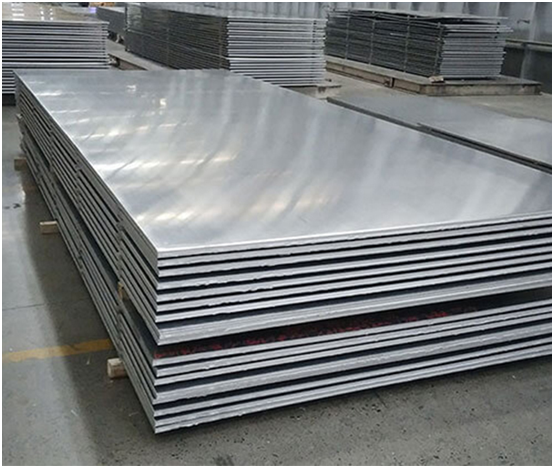
As a specialized manufacturer, we prioritize adherence to international standards. When sourcing titanium plates, ensure your products meet the rigorous specifications required for marine reliability, such as ASTM B265 [1, 5, 9].
Furthermore, for global maritime projects, compliance is non-negotiable. Lasting Advanced Titanium can supply plates with certifications from major Class Societies, including ABS, DNV, BV, LR, and RINA, upon request. This ensures our material meets the stringent safety requirements of international maritime authorities [18].
Transitioning to titanium plates for shipbuilding is a strategic investment in the future of the maritime industry. While the initial material cost is higher than traditional steel, the operational savings—achieved through drastic fuel reduction, minimal maintenance, and extended service life—make titanium the most cost-effective choice for modern, high-performance vessels.
Ready to enhance your maritime designs with industry-leading titanium solutions? [Contact Shaanxi Lasting New Material (Lasting Advanced Titanium) Industry Co., Ltd. today](https://www.lastingtitanium.com) to consult with our experts on the best material specifications and class certifications for your shipbuilding projects.
1. [Application of Titanium in the Maritime Industry - Chalco Titanium](https://www.chalcotitanium.com/industries/shipbuilding-titanium)
2. [Why is titanium used in shipbuilding? - Facebook Discussion](https://www.facebook.com/groups/webuildships/posts/2223910201334673)
3. [Titanium for Marine Applications - ResearchGate](https://www.researchgate.net/publication/229567583_TITANIUM_FOR_MARINE_APPLICATIONS)
4. [How Is Titanium Used in Marine? - Stanford Advanced Materials](https://www.samaterials.com/blog/how-is-titanium-used-in-marine.html)
5. [Why are marine engineers turning to titanium for corrosion resistance? (PDF)](https://www.alliedtitanium.com/technical/Why%20are%20marine%20engineers%20turning%20to%20titanium%20for%20corrosion%20resistance.pdf)
6. [4 advantages of titanium and its alloys for shipbuilding - Metal-Ti](https://www.metal-ti.com/news/4-advantage-of-titanium-alloy-for-shipbuilding-85103974.html)
7. [What are the advantages of titanium plate? - STRX Metal Material](https://www.strx-titanium.com/blog/what-articles-the-advantages-of-titanium-plate-2628706.html)
1. How do titanium plates contribute to fuel efficiency in ships?
By being approximately 45% lighter than steel at equivalent strength, titanium plates reduce the overall vessel lightweight, which decreases the energy needed for propulsion and, consequently, reduces fuel consumption [2, 7, 12].
2. Does using titanium allow for more cargo?
Yes. By reducing the structural mass (lightweight tonnage) of the vessel, naval architects can optimize the design to carry more cargo within the same displacement limits, effectively increasing the vessel's Deadweight Tonnage (DWT) capacity [5, 11].
3. What grades of titanium are best for marine environments?
Grade 2 is standard for corrosion resistance, Grade 5 for high-strength structural parts, and Grade 12 or 16/17 for specialized chemical/acidic marine conditions [1, 10].
4. Can you provide Class Society certifications?
Yes, our titanium plates can be supplied with certifications from major bodies such as ABS, DNV, BV, LR, and RINA upon request to meet international maritime safety standards [18].
5. How does titanium resist saltwater corrosion?
Titanium naturally forms a stable, self-healing oxide film (titanium dioxide) when exposed to oxygen, providing virtual immunity to saltwater corrosion that carbon and stainless steels cannot match [5, 8, 9].


