

Views: 380 Author: Lasting Titanium Publish Time: 2026-09-28 Origin: Site


Content Menu
>> What is Grade 2 titanium sheet?
>> Why consider Grade 2 titanium for chemical equipment?
>>> Corrosion resistance must match the process
>>> Formability supports fabricated components
>>> Weight and lifecycle considerations
>> Typical applications in chemical processing
>> Choosing Grade 2 sheet: a practical engineering checklist
>> Fabrication and quality considerations
>> Common procurement pitfalls—and how to avoid them
>> How to prepare a useful RFQ for Grade 2 titanium sheet
>> Working with Shannxi Lasting New Material
>>> 1. What standard should I specify for Grade 2 titanium sheet?
>>> 2. Is Grade 2 titanium suitable for all acids?
>>> 3. Can Grade 2 titanium sheet be formed?
>>> 4. What documents should I request from a supplier?
>>> 5. Does an MTR guarantee corrosion performance in my equipment?
>>> 6. What information should I include in a quotation request?
>> References
Grade 2 titanium sheet is a commercially pure titanium product widely considered for chemical processing equipment where corrosion resistance, formability, and low weight matter. It may be used in components such as heat-exchanger parts, vessel linings, tanks, and process-system internals, provided the actual chemical environment and design conditions are suitable. ASTM B265 is a relevant specification for titanium and titanium-alloy sheet, strip, and plate; buyers should confirm the exact product form, grade, and applicable edition in the purchase documents. [aemmetal] [cndmmetal]
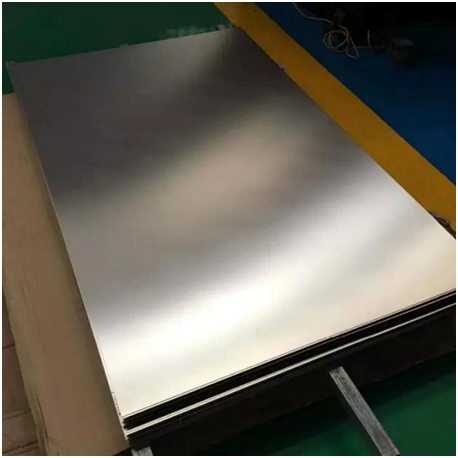
Grade 2 is a commercially pure (CP) titanium grade commonly specified as UNS R50400. It is selected when a project needs a practical balance of corrosion resistance, ductility, and ease of forming. For chemical equipment, those characteristics can make it a candidate for sheet-formed parts and fabricated assemblies.
Grade 2 is not interchangeable with every other titanium grade. For example, Grade 1 is generally chosen when greater formability is a priority, while higher-strength grades may be appropriate where mechanical requirements dominate. Final selection should be based on the governing specification and design calculations—not grade name alone. [cndmmetal]
Titanium forms a protective oxide film that supports its corrosion resistance in many service environments. However, no material is universally resistant. The process fluid's chemistry, operating temperature, concentration, aeration, velocity, and presence of deposits or crevices can all change corrosion behavior.
For that reason, engineers should evaluate the complete operating envelope: normal operation, startup and shutdown, cleaning, upset conditions, and maintenance. If the equipment will handle mixed chemicals or changing concentrations, do not rely on a broad claim such as "acid resistant." Obtain process data and seek corrosion-engineering review or representative testing before committing to a material.
Grade 2's ductility makes it suitable for many forming and fabrication operations. This can be useful for sheet components that need bending, rolling, or shaping. Actual results still depend on thickness, tooling, bend radius, surface condition, and the forming procedure. Trial bends or fabrication qualification may be prudent for tight radii or critical parts.
Titanium's relatively low density compared with many common engineering metals can help reduce component weight. In chemical plants, lifecycle decisions should also consider inspection, maintenance, replacement intervals, and the consequences of leakage or downtime. A higher initial material cost may be justified in some applications, but that conclusion requires a project-specific total-cost comparison—not a generic material claim.
Grade 2 titanium sheet may be considered for:
- Heat-exchanger components: Where the wetted-side chemistry and operating conditions are compatible.
- Vessel linings and cladding: When the design accounts for attachment, differential expansion, and inspection.
- Tanks and process equipment: For fabricated parts exposed to a verified suitable environment.
- Chemical plant internals: Where material compatibility and mechanical design have been checked.
- Custom sheet-fabricated parts: Such as covers, baffles, or other formed components, subject to drawings and qualification.
These are application categories, not blanket endorsements. A material that performs well in one plant or fluid may not be suitable in another. The decision must be tied to the exact process conditions and applicable design code.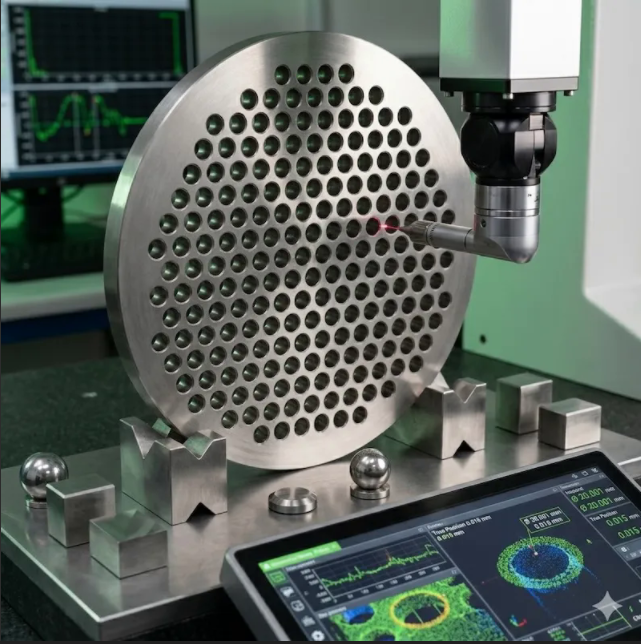
Before specifying or ordering Grade 2 titanium sheet, align the material request with the equipment's actual design and service conditions.
1. Define the process environment. Record each chemical, concentration range, temperature range, pressure, flow conditions, and any cleaning or flushing agents. Include credible upset scenarios, not only steady-state operation.
2. Identify the governing product standard. State the required specification and edition, product form, grade, dimensions, and any supplementary requirements. ASTM B265 is commonly referenced for titanium sheet, strip, and plate; verify the standard's scope and project requirements before ordering. [aemmetal]
3. Confirm mechanical and fabrication needs. Check design loads, forming operations, joining method, finished thickness, and tolerance requirements. Specify surface condition and edge requirements where they affect fabrication or inspection.
4. Request traceable inspection documentation. Ask for a material test report (MTR) linked to the delivered material, including the required chemical and mechanical test results. Where the project requires additional inspection, define it contractually rather than assuming it is included.
5. Review the fabrication plan. Titanium fabrication requires controls appropriate to the work, particularly to prevent contamination during welding and handling. Have the fabricator confirm qualified procedures, cleanliness practices, and inspection criteria for the component.
6. Evaluate service compatibility. Obtain corrosion-engineering input or testing if the environment is uncertain, mixed, unusually hot, or subject to deposits and crevices. Do not treat a material certificate as evidence that the material is suitable for every process fluid.
A sound material selection can still fail if fabrication or service conditions are poorly controlled. The project team should agree on how sheet will be cut, formed, joined, cleaned, inspected, and stored. For welded equipment, specify the applicable welding procedure and inspection requirements in the project documentation.
During procurement, distinguish material compliance from application suitability. An MTR helps verify that material meets stated requirements; it does not prove that the grade will resist a particular chemical mixture in service. Similarly, a supplier's typical product range or marketing description is not a substitute for the project's engineering specification.
For quality assurance, buyers can request:
- Grade and product-standard confirmation.
- Heat or lot traceability on documents and material markings.
- Dimensional and thickness inspection records, when required.
- Surface condition and packaging requirements.
- MTRs and any project-specific test reports.
- A documented process for resolving nonconformances.
Ordering by grade name alone can leave critical details undefined. A complete inquiry should include standard, edition, dimensions, tolerances, surface condition, quantity, inspection requirements, packaging, and destination.
Assuming "ASTM B265" settles every requirement is another risk. The purchase specification should clarify the required grade and product form and identify any supplemental inspection, documentation, or acceptance criteria.
Choosing material based only on price can overlook fabrication costs, lead time, yield, testing, and service-life risk. Compare qualified offers on a like-for-like basis, including documentation and delivery terms.
Relying on generic corrosion claims can lead to the wrong grade or an unsuitable design. Provide the supplier and corrosion specialist with the actual process data and request a technically reviewed recommendation.
A well-prepared request for quotation helps suppliers provide comparable offers and reduces avoidable clarification.
Include:
- Material: Grade 2 / UNS R50400, with the required standard and edition.
- Product form and size: Sheet or plate, thickness, width, length, and quantity.
- Technical requirements: Tolerances, surface finish, edge condition, and any special requirements.
- Quality documents: MTR, traceability, inspection records, and acceptance criteria.
- Application context: Intended component and service conditions, where appropriate.
- Commercial terms: Delivery location, packaging, schedule, and quotation validity.
For custom components, attach approved drawings and identify which dimensions are critical. For chemical service, share the process-fluid and temperature data needed for a responsible compatibility review.
Shannxi Lasting New Material (Lasting Advanced Titanium) Industry Co., Ltd. supplies titanium materials to overseas brand owners, wholesalers, and manufacturers. When requesting a quotation for Grade 2 titanium sheet, buyers can improve the technical review by sharing a clear specification, drawings if applicable, required documentation, and the intended application.
CTA: Send your Grade 2 titanium sheet requirements—including grade, standard, dimensions, quantity, delivery destination, and inspection documents—to the Shannxi Lasting team to request a quotation and discuss project fit. For chemical-service applications, include the process conditions so that material selection can be reviewed against the actual use case.
ASTM B265 is a commonly referenced specification for titanium and titanium-alloy sheet, strip, and plate. State the required grade, product form, and applicable edition in the purchase documents, and confirm that any additional project requirements are included. [aemmetal]
No. Suitability depends on the specific acid, concentration, temperature, contaminants, flow, and equipment geometry. Ask a corrosion specialist to review the actual process conditions; testing may be needed when compatibility is uncertain.
Grade 2's ductility makes it a candidate for many forming operations, but achievable shapes depend on sheet thickness, tooling, bend radius, and the fabrication procedure. Confirm the fabricator's process and qualify demanding forming operations as needed.
At minimum, define the required material test report and traceability. Depending on the project, also specify dimensional inspection, surface condition, packaging, and any supplementary tests or acceptance criteria.
No. An MTR documents specified material test results; it does not establish compatibility with every chemical environment. Corrosion performance must be assessed against the real service conditions and equipment design.
Provide grade, standard and edition, dimensions, quantity, tolerances, surface requirements, inspection documents, delivery destination, and schedule. For chemical processing equipment, add the operating chemistry and temperature range so the application can be assessed responsibly.
1. [ASTM B265 titanium grades and industrial applications overview]. General reference on ASTM B265 product forms and titanium applications. Confirm the current standard text and project-specific requirements directly with ASTM or the governing code.
2. [Grade 2 titanium plate and sheet product overview]. Supplier overview of Grade 2 / CP-2 titanium sheet and plate, including ASTM B265 references.
3. [ASTM B265 titanium properties and applications]. Secondary technical overview; verify design data against recognized standards and project specifications.


