

Views: 325 Author: Lasting Titanium Publish Time: 2026-10-14 Origin: Site


Content Menu
● Titanium Bar and Titanium Forging: What Is the Difference?
● How Forging Direction and Microstructure Affect Performance
>> Grain flow must be considered alongside the component's load path
>> Forging temperature and heat treatment affect microstructure
>> Inspection evidence is part of the route decision
● Alloy and Material Condition Matter as Much as Product Form
● When Titanium Bar May Be the Better Starting Route
● When Titanium Forging Is Worth Evaluating
● Compare Total Cost, Not Just Material Price
● A Practical Titanium Manufacturing Route Selection Checklist
● Common Buyer Mistakes When Comparing Titanium Bar and Forgings
>> Assuming all bar is "unforged"
>> Assuming every forging has superior fatigue performance
>> Comparing quotations with different specifications
>> Selecting a standard without locking its edition
● Conclusion: Choose the Route That Fits the Part and Its Evidence Requirements
>> 1. Is titanium bar the same as un-forged titanium?
>> 2. Is a titanium forging always stronger than a titanium bar?
>> 3. When should I compare a forging with bar stock?
>> 4. What is the difference between ASTM B348/B348M and ASTM B381?
>> 5. What information should a titanium material inquiry include?
>> 6. Does a forged preform always reduce total cost?
Choosing between titanium forging and titanium bar is not simply a choice between "stronger" and "weaker." The right route depends on the alloy and condition, part geometry, load direction, production volume, machining allowance, inspection requirements, lead time, and total cost.
One important point is often overlooked: titanium bar is not necessarily "unforged." Many bars are made from ingots through operations such as forging, rolling, heat treatment, and final sizing. The practical comparison is usually between machining a part from standard bar stock and producing a part-specific forged preform before finish machining—not between "forged" and "non-forged" material.
This guide is for engineers, buyers, and manufacturers evaluating those routes. It explains the technical differences, identifies what to ask suppliers, and offers a practical method for comparing proposals.
> Scope note: This is general manufacturing guidance, not design approval or a guarantee of component performance. The responsible design, quality, and purchasing teams should confirm that the selected material, manufacturing route, inspection, and documentation meet the part's requirements.
Titanium bar is a standard product form supplied in specified cross-sections and lengths. It can be machined into a component or used as stock for further processing.
Titanium forging is a shape formed by compressive force, often to create a preform closer to the component's final geometry. Forgings are commonly machined afterward to meet final dimensions and tolerances.
ASTM B348/B348M covers titanium and titanium-alloy bars and billets. ASTM B381 covers titanium and titanium-alloy forgings. During preparation of this article, ASTM's publicly accessible product pages identified ASTM B348/B348M-19 and ASTM B381-13(2019) as active versions. ASTM's committee listings and product pages can show different or later activity, so purchasers should verify the current status and use the edition required by the contract and applicable approvals. A newer edition does not automatically replace the one approved for a contract, purchase order, or qualified part. State the standard, edition, additional requirements, and any approved deviations in the purchasing documents. [astm] [astm]
| Consideration | Titanium bar | Titanium forging |
|---|---|---|
| Starting form | Standard stock, cut to a blank and machined. | A shaped preform, commonly followed by machining. |
| Process history | May already have been forged, rolled, heat-treated, or sized. | Forging is used to produce a particular preform or shape. |
| Potential advantage | A direct route when the part fits available stock dimensions and can be machined efficiently. | May better approximate the finished shape and reduce excess machining stock. |
| Cost factors | Stock size, machining time, material removed, and inspection. | Tooling, forging setup, preform design, heat treatment, machining, and inspection. |
| Key question | Is standard stock an efficient and technically acceptable starting form? | Does a part-specific preform justify the added process and qualification work? |
Neither product form guarantees a particular fatigue life or performance advantage. Results depend on alloy, material condition, processing history, orientation, component geometry, service environment, and acceptance evidence.
Forging can align deformation flow with part geometry more effectively than simply machining a shape from standard stock. But any benefit depends on the forging process, degree of deformation, die and preform design, forging direction, and final heat treatment. A forging with unsuitable orientation, insufficient deformation, or poorly controlled temperature may not achieve the intended microstructure or properties.
Engineers should consider how the forging direction relates to principal loads. Axial, transverse, and radial properties may differ, and the relevant direction depends on the part geometry, sampling location, and specification. "Grain flow" is therefore a process consideration—not proof by itself of fatigue life, fracture toughness, or suitability for service.
For alpha-beta alloys such as Ti-6Al-4V, working in the alpha-beta region versus above the beta transus can result in different microstructures and property trade-offs. Depending on the process and heat treatment, the final structure may be equiaxed, bimodal, or transformed lamellar. These labels alone do not establish performance: the finished product must meet specified mechanical and metallurgical requirements.
Section size, deformation history, cooling conditions, and post-forging heat treatment all matter. "Forged" is not a substitute for a specified material condition, test result, or approved manufacturing route. For fatigue-critical parts, the engineering and quality teams should determine the required mechanical tests, metallurgical evaluations, and inspection.
Depending on the component and governing specification, inspection may include mechanical testing, macrostructure or microstructure evaluation, and nondestructive examination such as ultrasonic testing. The required method, coverage, acceptance criteria, and records should be stated for the application; they should not be inferred from the words "bar" or "forging."
For fatigue-critical parts, the design authority should establish applicable design allowables and qualification evidence for the alloy, condition, product form, orientation, and service environment. A supplier's general claim about grain flow cannot replace design allowables, validated test data, or required nondestructive inspection.
"Titanium" is not a complete material specification. Commercially pure titanium and titanium alloys serve different design needs. Depending on the application, corrosion resistance, formability, strength, and other requirements may influence grade selection.
Ti-6Al-4V in an annealed condition, a solution-treated-and-aged condition, or an ELI grade should not be treated as interchangeable. Properties can also vary with product form, heat treatment, sampling location, and test direction. A specification's minimum tensile requirements do not mean that every product form has identical fatigue performance or design allowables.
Before requesting quotations, define:
- Alloy and grade required by the design.
- Material condition and any heat-treatment requirements.
- Product form—bar, billet, or forging—and applicable standard.
- Test orientation and sampling requirements, where relevant.
- Mechanical, metallurgical, and nondestructive testing requirements.
- Traceability, certification, and acceptance criteria.
Medical, aerospace, and pressure-related applications may have additional regulatory, qualification, traceability, or customer-specific requirements. The responsible technical and quality teams should identify them; they cannot be inferred from a general comparison of bar and forgings.
Bar is worth evaluating when the part can be machined efficiently from standard stock and the material condition meets the design requirements. Shafts, pins, spacers, and other components may be suitable candidates if required stock dimensions are available and the machining plan is practical.
A bar route may also be attractive for prototypes or lower-volume work where forging tooling or process setup is difficult to justify. This is a commercial consideration, not a rule: the result depends on order size, stock availability, machining effort, inspection requirements, and supplier capability.
Consider bar when:
- The starting blank is close to the finished envelope. This can limit material removal.
- The geometry is accessible to machining. A part that can be produced reliably from standard stock may not need a shaped preform.
- The order is small or design changes are expected. A bar-based route may be easier to adapt, subject to material availability.
- The purchase specification clearly defines the product. State grade, condition, dimensions, applicable standard and edition, traceability, and required tests.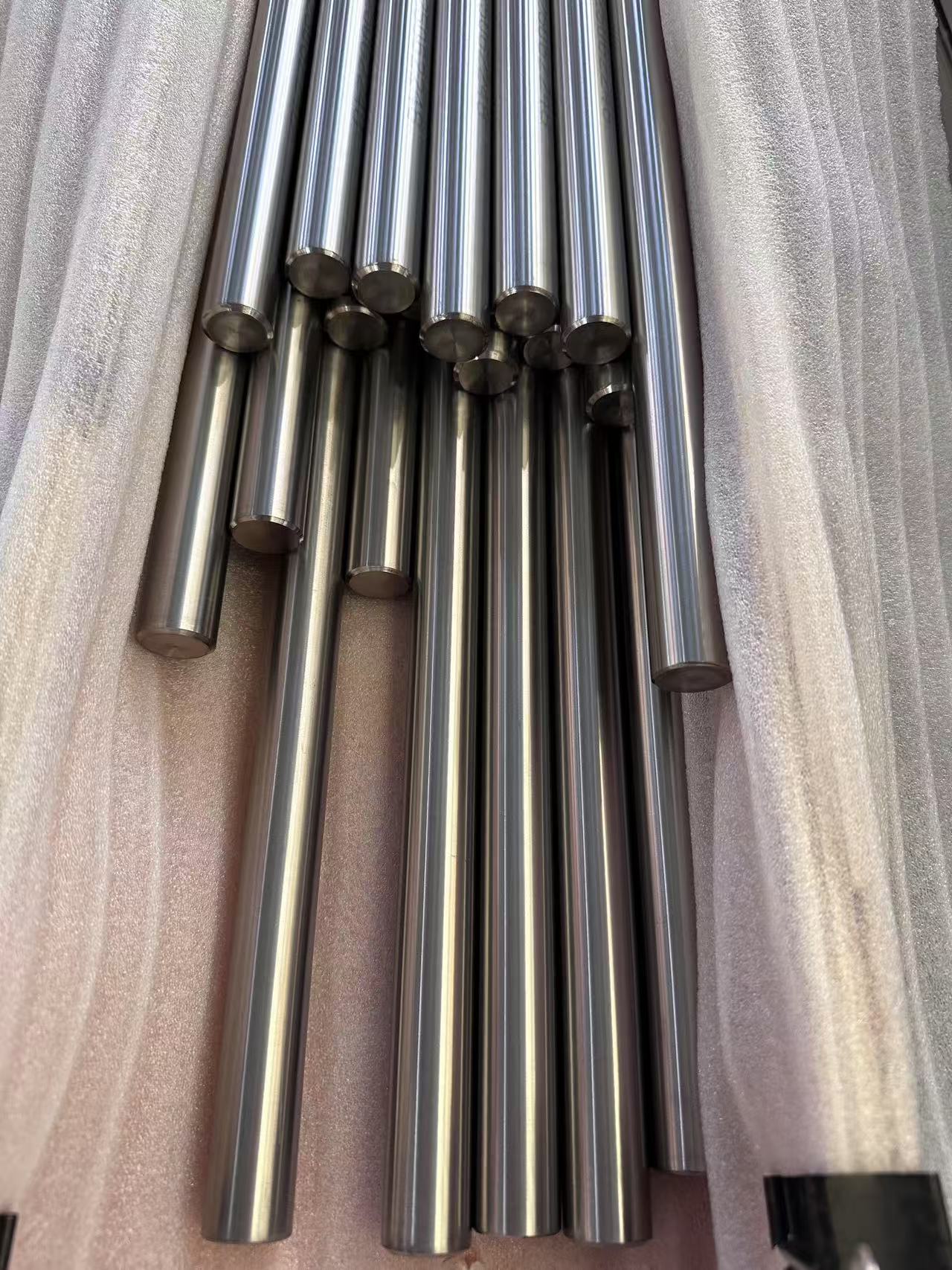
Forging deserves consideration when the component shape is poorly matched to available stock or when a shaped preform could improve material utilization or suit the design's manufacturing requirements. Forged products may include rings, discs, shafts, and blocks. [3](#S? )
A forging is not automatically cheaper or stronger. The route may add tooling, process planning, forging allowances, heat treatment, machining, and inspection. Evaluate its value against the whole manufacturing route and the part's actual requirements.
Consider forging when:
- The part differs substantially from standard bar stock. A closer preform may reduce the volume removed during machining.
- The component is large or has a complex envelope. Confirm that a supplier can make the required dimensions and process route.
- A design or customer specification requires a forging. Do not substitute another product form without formal approval.
- Production demand is stable enough to evaluate tooling economics. Ask suppliers to itemize tooling and setup costs rather than assume a universal break-even quantity.
- Performance depends on orientation or process history. Request evidence for the specific product and manufacturing route.
A fair comparison is not "price per kilogram of bar versus price per kilogram of forging." It is the cost of delivering the same finished part to the same specification.
Ask suppliers to quote against one controlled drawing, material condition, acceptance criteria, and documentation package. Compare:
1. Material and conversion: Bar blank versus forged preform, including conversion charges.
2. Material utilization: Finished-part yield and the material removed as chips or process scrap.
3. Tooling and setup: One-time charges and how they are allocated across the order.
4. Machining: Time, setups, tolerance capability, and tooling needs.
5. Heat treatment and finishing: All specified downstream processes.
6. Inspection and documents: Equivalent tests, traceability, certification, and acceptance criteria.
7. Lead time and supply risk: Availability, capacity, approval steps, and realistic delivery dates.
8. Design-change exposure: Effects on tooling, stock, work in progress, and qualification.
If quotations assume different conditions—for example, different heat treatments, test scopes, or documentation—they are not directly comparable, even if they refer to the same part.
1. Define the function and load case. Record static or cyclic loading, operating environment, critical failure modes, and any damage-tolerance requirements.
2. Specify the material. Identify alloy, grade, condition, product form, and applicable standard and edition.
3. Identify orientation-sensitive requirements. Establish whether axial, transverse, or radial properties matter, and define sampling and test direction where required.
4. Review geometry and machining allowance. Compare available bar sizes with a realistic forging preform and machining plan.
5. Set inspection and documentation requirements. State required testing, traceability, certificates, acceptance criteria, and any customer approvals.
6. Obtain comparable route proposals. Ask qualified suppliers to quote bar-based and forging-based routes against the same controlled specification.
7. Review the evidence and economics. Have the responsible design, quality, and purchasing functions assess performance requirements, compliance, delivery, and total cost.
Bar can have a substantial manufacturing history before it reaches the buyer. Ask about the product form and required condition rather than treating "bar" as proof that the material was never forged or worked.
A forging's value depends on the process, orientation, microstructure, heat treatment, inspection, and design. The word "forging" alone does not demonstrate fatigue life or damage tolerance.
A lower quote may exclude required tests, inspection, heat treatment, or documentation. Normalize the specification and scope before comparing prices.
A standard number without an edition may leave room for different interpretations. Confirm the applicable contract version and state any supplementary or customer-specific requirements in the purchase documents.
Titanium bar can be the practical route when standard stock suits the geometry and the part can be machined efficiently. Titanium forging can be worth evaluating when a shaped preform better fits the part, material-use targets, or specified manufacturing requirements. Neither route is automatically superior.
Make the decision using the actual alloy and condition, load path, dimensions, production volume, machining plan, inspection requirements, delivery needs, and comparable total-cost quotations. For a specific part, obtain written route proposals from qualified suppliers, then have the responsible design, quality, and purchasing functions review material condition, test scope, traceability, lead time, and cost.
No. Titanium bar may already have undergone forging, rolling, heat treatment, or sizing. The route comparison is usually between machining standard bar stock and using a part-specific forged preform.
No. Performance depends on the alloy, condition, process, orientation, heat treatment, geometry, and acceptance evidence. The word "forged" alone does not establish fatigue life or suitability for service.
Compare both routes when the part geometry, material utilization, production demand, or specification makes the choice uncertain. Request quotes against the same drawing, material condition, inspection scope, and documentation requirements.
ASTM B348/B348M covers titanium and titanium-alloy bars and billets; ASTM B381 covers titanium and titanium-alloy forgings. Confirm the applicable edition and requirements against the contract and customer approvals. [astm] [astm]
Include the drawing, alloy and grade, condition, product form, dimensions, applicable standard and edition, required testing, traceability, acceptance criteria, quantity, delivery schedule, and any customer-approved requirements.
No. It may reduce machining stock, but tooling, setup, forging allowances, heat treatment, machining, inspection, and lead time also affect the total. Compare complete route quotations rather than raw-material unit prices.
1. ASTM International, [ASTM B348/B348M, Standard Specification for Titanium and Titanium Alloy Bars and Billets]. The ASTM product page accessed during preparation identified B348/B348M-19 as the active version. Confirm current status and the contractually applicable edition before purchasing. [astm]
2. ASTM International, [ASTM B381, Standard Specification for Titanium and Titanium Alloy Forgings]. The ASTM product page accessed during preparation identified B381-13(2019); committee activity may include revision work. Confirm current status and the contractually applicable edition before purchasing. [astm]
3. HELE Titanium, [Custom Titanium Forgings: Rings, Discs, Shafts & Blocks]. Product-form examples are supplier information and should not be treated as a design or performance guarantee.
</p>


