

Views: 320 Author: Lasting Titanium Publish Time: 2026-09-11 Origin: Site


Content Menu
● What Are Ti-6Al-4V and Ti-6Al-4V ELI?
● The Main Difference: Chemistry and Interstitial Element Limits
● Why Ti-6Al-4V ELI Is Often Preferred for Surgical Implants
● Mechanical Properties: Strength Is Only One Part of the Decision
● Is Ti-6Al-4V ELI More Biocompatible Than Ti-6Al-4V?
● Which Alloy Is Better for Different Surgical Applications?
>> Orthopedic fixation and load-bearing implants
>> Dental implants and abutments
>> Patient-specific and additively manufactured components
● ASTM F136, ASTM F1472, and Why the Standard Matters
● How to Verify a Medical Titanium Bar Supplier
● A Practical Supplier-Qualification Process for Surgical Titanium
>> Step 1: Define the material requirement clearly
>> Step 2: Request representative documentation
>> Step 3: Confirm lot traceability
>> Step 4: Evaluate process and inspection capability
>> Step 5: Conduct a sample order
>> Step 6: Establish a quality agreement
● Common Mistakes When Comparing Ti-6Al-4V and Ti-6Al-4V ELI
● Recommended Visual Content for Better User Experience
● FAQ: Ti-6Al-4V and Ti-6Al-4V ELI for Surgery
>> Is Ti-6Al-4V ELI the same as Grade 23 titanium?
>> Is Ti-6Al-4V suitable for surgical implants?
>> Why is ASTM F136 important for medical titanium?
>> Is Ti-6Al-4V ELI stronger than regular Ti-6Al-4V?
>> Is Ti-6Al-4V ELI more biocompatible?
>> What documents should I request from a medical titanium bar supplier?
>> Can Ti-6Al-4V ELI be CNC machined?
>> How should I choose between Ti-6Al-4V and Ti-6Al-4V ELI?
● Conclusion: Which Titanium Alloy Should You Choose for Surgery?
When selecting titanium for surgical implants, dental components, orthopedic instruments, or other medical applications, one of the most important material decisions is understanding the difference between Ti-6Al-4V and Ti-6Al-4V ELI. Both alloys contain aluminum and vanadium, both offer an excellent strength-to-weight ratio, and both have strong corrosion resistance. However, Ti-6Al-4V ELI has lower limits for certain interstitial elements, especially oxygen, nitrogen, carbon, and iron, giving it improved ductility and fracture toughness for demanding medical applications.
In simple terms, Ti-6Al-4V is the conventional Grade 5 titanium alloy, while Ti-6Al-4V ELI is the extra-low-interstitial version, commonly designated Grade 23. For surgical use, the correct choice is not determined by the alloy name alone. It depends on the implant design, loading conditions, applicable material standard, regulatory pathway, manufacturing process, surface treatment, sterilization requirements, and the final device manufacturer's risk assessment.
This article explains the difference between Ti-6Al-4V and Ti-6Al-4V ELI for surgery, including chemistry, mechanical behavior, biocompatibility considerations, standards, manufacturing requirements, documentation, and practical supplier-selection advice. It is intended for medical-device manufacturers, orthopedic and dental brands, engineers, purchasing teams, and distributors sourcing medical titanium bar, titanium alloy rod, and precision titanium blanks.
Ti-6Al-4V and Ti-6Al-4V ELI are alpha-beta titanium alloys containing approximately 6% aluminum and 4% vanadium, with titanium making up the balance. Their basic alloying systems are therefore very similar. The key difference is that Ti-6Al-4V ELI has tighter limits on interstitial and residual elements, particularly oxygen, nitrogen, carbon, and iron.
The term ELI means Extra Low Interstitial. Interstitial elements occupy spaces within the titanium crystal structure and can significantly influence strength, ductility, toughness, and fatigue behavior. Lowering these elements generally produces a more ductile and damage-tolerant material, although exact performance depends on the product form, heat treatment, microstructure, grain structure, surface condition, and manufacturing history.
Ti-6Al-4V is commonly associated with ASTM Grade 5, while Ti-6Al-4V ELI is commonly associated with ASTM Grade 23. In medical implant supply chains, Ti-6Al-4V ELI is frequently specified to ASTM F136, a standard for wrought titanium-6 aluminum-4 vanadium ELI alloy for surgical implant applications. FDA-cleared dental and implant-device documentation frequently identifies implant components as Ti-6Al-4V ELI manufactured to ASTM F136, demonstrating how widely this material is used in regulated medical products.
Although Grade 5 and Grade 23 share the same principal alloying elements, a buyer should never assume that a Grade 5 certificate automatically satisfies an ASTM F136 requirement. The material grade, product standard, manufacturing condition, and documentation must match the finished medical-device specification.
The most important technical difference between Ti-6Al-4V and Ti-6Al-4V ELI is the control of interstitial elements and certain residual elements.
The exact limits depend on the applicable standard and product form, but Ti-6Al-4V ELI generally requires lower maximum levels for oxygen, nitrogen, carbon, and iron than conventional Ti-6Al-4V. These differences may appear small on a chemical certificate, but they can influence the alloy's mechanical response and suitability for high-reliability implant applications.
| Characteristic | Ti-6Al-4V | Ti-6Al-4V ELI |
|---|---|---|
| Common designation | Grade 5 | Grade 23 |
| Principal alloying elements | Aluminum and vanadium | Aluminum and vanadium |
| Interstitial control | Conventional limits | Extra-low limits |
| Typical material behavior | High strength and good corrosion resistance | Improved ductility and fracture toughness |
| Common medical relevance | May be used where permitted by the device specification | Frequently selected for implant applications |
| Common medical standard | Depends on application and specification | ASTM F136 is widely used |
| Typical supply form | Bar, plate, sheet, billet, tube, forgings | Bar, plate, sheet, billet, tube, forgings |
| Regulatory suitability | Must be verified for the exact device | Must still be verified for the exact device |
The table provides a practical comparison, but it should not be used as a substitute for the applicable material standard. In medical manufacturing, the specification named on the purchase order and technical drawing controls the material requirement.
A supplier should provide a complete certificate showing the actual chemistry rather than simply stating that the material is "medical titanium." The certificate should identify the grade, standard, heat number, product form, heat-treatment condition, chemical composition, mechanical properties, and manufacturer or mill.
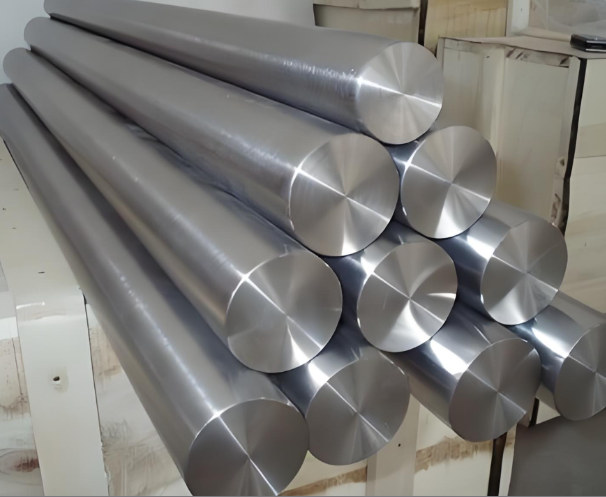
Ti-6Al-4V ELI is often selected for surgical implants because its lower interstitial content can provide higher ductility, improved fracture toughness, and greater tolerance to certain forms of mechanical damage. These characteristics are particularly valuable when an implant must tolerate cyclic loading, impact, bending, insertion forces, or stress concentrations around holes, threads, grooves, and transitions.
Orthopedic implants may experience repeated loading over many years. Dental implants and abutments may be exposed to complex combinations of axial, lateral, and torsional forces. Spinal components, trauma plates, bone screws, and fixation systems may contain small features that concentrate stress. In these situations, material toughness and process consistency are important parts of the overall design strategy.
That does not mean Ti-6Al-4V ELI is automatically the correct material for every surgical device. Medical-device performance depends on much more than the nominal alloy. Design geometry, surface roughness, notch sensitivity, residual stress, machining marks, heat treatment, grain structure, cleaning, passivation, sterilization, and packaging can all influence device performance.
From an industry perspective, the strongest reason to select Ti-6Al-4V ELI is usually not that it is universally "stronger." Rather, it offers a more controlled and damage-tolerant material condition that is often better aligned with the requirements of implantable products and medical-device standards.
Both Ti-6Al-4V and Ti-6Al-4V ELI provide high specific strength and excellent corrosion resistance. However, their actual mechanical properties depend on the material standard, product size, heat-treatment condition, manufacturing route, and test direction.
Typical engineering discussions compare tensile strength, yield strength, elongation, reduction of area, and fracture toughness. Ti-6Al-4V ELI may provide improved elongation and toughness compared with conventional Grade 5 material when the products are manufactured and tested under comparable conditions. Nevertheless, exact values should always be taken from the applicable certificate and standard instead of relying on generic online data.
For surgical products, designers should consider:
- Tensile and yield strength, especially for load-bearing structures.
- Elongation and ductility, which indicate the material's ability to deform before fracture.
- Fracture toughness, which is important where cracks or defects could initiate.
- Fatigue performance, because many implants experience repeated loading.
- Elastic modulus, which affects load transfer and structural behavior.
- Surface condition, because machining marks and defects can influence fatigue life.
- Microstructure, which depends on forging, rolling, heat treatment, and cooling history.
A common mistake is to compare only the tensile strength of Grade 5 and Grade 23. In surgical applications, a material with slightly different strength but better ductility, toughness, traceability, and standard compliance may be the more appropriate engineering choice.
Both alloys are widely recognized as important titanium materials for medical and surgical applications, but it is too simplistic to say that Ti-6Al-4V ELI is automatically "more biocompatible" in every finished-device situation.
Biocompatibility is a property of the finished medical device in its intended clinical context, not just a property of the raw alloy. The result can be affected by surface chemistry, oxide condition, contamination, polishing, blasting, coating, cleaning, sterilization, wear debris, manufacturing residues, and contact with other materials.
Ti-6Al-4V ELI is often chosen for implant applications because its controlled chemistry and established medical standards support a well-defined material supply chain. However, device manufacturers must still conduct the appropriate biological evaluation and risk assessment. The U.S. Food and Drug Administration's medical-device framework evaluates devices according to their intended use, materials, patient contact, processing, and overall risk rather than approving a material name in isolation. FDA-cleared device records commonly identify Ti-6Al-4V ELI to ASTM F136 as the material for dental implant systems and related components.
For this reason, the correct statement is:
> Ti-6Al-4V ELI is widely used and commonly specified for surgical implants, but the biocompatibility of a finished device must be demonstrated through the device manufacturer's complete evaluation process.
There is no universal answer that applies to every surgical product. The appropriate material should be selected according to the device design, loading environment, applicable standard, manufacturing process, and regulatory requirements.
For orthopedic fixation systems, trauma implants, bone plates, screws, and other load-bearing components, Ti-6Al-4V ELI is often considered because its lower interstitial content and favorable ductility can support demanding fatigue and fracture-resistance requirements. The final selection must also consider the implant geometry, surface finish, thread form, machining marks, anodizing or coating, sterilization, and expected clinical loading.
Ti-6Al-4V ELI is widely used in dental implant systems and abutment components. Public FDA device documentation includes examples of dental implant systems and abutments identified as Ti-6Al-4V ELI manufactured to ASTM F136. [accessdata.fda] [accessdata.fda] Dental manufacturers still need to control machining accuracy, connection geometry, surface treatment, cleaning, packaging, and sterilization compatibility. Small deviations in thread, taper, platform, or mating surfaces can affect clinical performance even when the raw alloy is correct.
Surgical instruments may not always require the same material selection as permanently implanted devices. The choice may depend on strength, hardness, corrosion resistance, sterilization cycles, wear, cleaning chemicals, and contact duration. Ti-6Al-4V or Ti-6Al-4V ELI may be suitable in different situations, but the decision should be based on the instrument's intended function and applicable requirements rather than using "implant grade" as a general marketing term.
For patient-specific and additively manufactured devices, powder quality, oxygen and nitrogen pickup, porosity, surface condition, heat treatment, build orientation, and post-processing become especially important. The designation "ELI" alone does not guarantee a reliable additive-manufacturing result. The complete production route must be validated, including powder control, build parameters, stress relief, hot isostatic pressing where applicable, machining, cleaning, and inspection.
Medical titanium purchasing can become confusing because several standards may refer to similar alloy chemistries but different applications and product forms.
ASTM F136 is widely associated with wrought Ti-6Al-4V ELI alloy for surgical implant applications. It is commonly referenced for medical-grade titanium bar, plate, sheet, and other wrought forms used in implant manufacturing.
ASTM F1472 is associated with wrought titanium-6 aluminum-4 vanadium alloy for surgical implant applications. It applies to conventional Ti-6Al-4V material and should not be treated as interchangeable with ASTM F136 without confirmation from the device specification and regulatory documentation.
Other standards may apply to titanium products used in aerospace, general engineering, dental products, additive manufacturing, or other applications. The important point is that grade, standard, product form, and intended use must be aligned.
Before purchasing, a medical-device manufacturer should identify:
1. The exact alloy designation.
2. The applicable ASTM, ISO, or customer specification.
3. The required product form, such as bar, plate, tube, billet, or forging.
4. The required heat-treatment condition.
5. The required mechanical-property values.
6. The required chemical and interstitial-element limits.
7. The necessary traceability and inspection documentation.
8. Any additional requirements for cleaning, surface condition, or packaging.
A supplier that offers "ASTM F136 titanium" should be able to provide a certificate that clearly identifies ASTM F136, the heat number, the actual chemical analysis, mechanical test results, and the product condition. Marketing language alone is not sufficient.
When purchasing titanium bar for surgical or dental products, the supplier evaluation should cover both material quality and manufacturing reliability.
First, confirm the supplier's ability to provide the exact grade and standard required by your drawing or quality agreement. Ask whether the material is produced by an approved mill, whether the heat number is preserved through cutting, and whether the supplier can provide original or verifiable mill certificates.
Next, review the supplier's quality-management system. For medical-device supply chains, purchasers commonly expect documented procedures for incoming inspection, material identification, nonconforming-product control, calibration, corrective action, and record retention. The supplier should be able to explain how it prevents material mixing and how it handles discrepancies between purchase requirements and supplied certificates.
It is also important to inspect the bar surface and dimensional condition. Medical titanium bar may be supplied as ground, peeled, centerless ground, rough-turned, descaled, or another specified condition. Surface defects, laps, seams, deep scratches, excessive ovality, or inconsistent diameter can create problems during subsequent CNC machining or forging.
Finally, review delivery performance and communication. A supplier can provide a technically correct certificate and still create production problems through inconsistent packaging, incorrect labeling, delayed documentation, or unstable lead times. For international customers, the supplier should communicate clearly about production schedules, export packaging, shipping documents, and changes to material availability.
At Shannxi Lasting New Material, also known as Lasting Advanced Titanium, the practical objective should be to support customers with reliable titanium material supply, clear technical communication, and documentation that enables downstream manufacturers to control their own production and regulatory processes. Buyers should still verify the exact grade, standard, and documentation required for each project before order confirmation.
A structured qualification process helps buyers avoid comparing suppliers only on price. The following approach can be adapted for titanium bar, rod, billet, plate, or semi-finished medical components.
Prepare a written specification that identifies the alloy, standard, product form, dimensions, tolerance, surface condition, heat-treatment condition, quantity, and required documentation. Avoid using only the phrase "medical titanium," because it does not define the exact technical requirement.
Ask for a sample certificate for the same or equivalent grade and product form. Review the heat number, chemical composition, mechanical properties, standard designation, test method, and issuing organization. If the supplier cannot provide a complete example, treat this as a documentation risk.
Ask the supplier to explain how a bar is identified after cutting and how the resulting pieces are linked to the original heat certificate. The system should remain intact through storage, machining, inspection, packaging, and shipping.
If the supplier also performs machining, request information about CNC equipment, tooling, coolant control, workholding, dimensional inspection, calibration, and first-article approval. If the supplier only provides titanium bar, evaluate its material inspection, surface control, straightness, dimensional inspection, and packaging systems.
A sample order is often more informative than a sales presentation. Review the received material for dimensions, surface condition, identification, packaging, certificate accuracy, and delivery performance. Record any discrepancies before approving the supplier for larger volumes.
For ongoing supply, define requirements for changes in mill source, material grade, heat treatment, inspection methods, packaging, documentation, nonconforming products, and notification of process changes. This creates a clear framework for long-term cooperation.
One common mistake is assuming that ELI means the alloy is suitable for every implant automatically. ELI describes a chemical and material grade condition, but it does not replace device validation, biological evaluation, process control, or regulatory review.
Another mistake is comparing price without comparing the complete material package. Ti-6Al-4V ELI may cost more because of tighter chemistry, more controlled production, medical documentation, smaller qualified supply chains, and additional testing. A lower-priced offer may involve a different grade, a different standard, incomplete traceability, or documentation that cannot support the customer's quality system.
A third mistake is treating the material certificate as the only evidence of quality. A certificate is essential, but the finished product can still be affected by surface defects, incorrect storage, contamination, machining damage, poor cleaning, or mixed lots. Material quality and process quality must be evaluated together.
A fourth mistake is using "implant grade" as a vague marketing phrase. Buyers should always request the exact standard, product form, heat number, and certificate. The phrase itself has no value unless it is connected to verifiable technical requirements.
To improve engagement and make the technical differences easier to understand, the article can include a side-by-side chemistry and application comparison chart immediately after the section explaining Grade 5 and Grade 23. A second visual could show the medical titanium supply chain, beginning with melting and forging, followed by bar processing, inspection, machining, cleaning, packaging, and final device manufacturing.
A short technical video could demonstrate how titanium bars are inspected, identified, cut, and prepared for CNC machining. Another useful image would show a sample ASTM F136 material certificate with sensitive commercial information removed, highlighting the heat number, chemical composition, mechanical properties, and specification designation.
Visual content should be accurate and technically relevant. Avoid generic photographs of surgical operations unless they directly support the subject, because the article is primarily about material selection and supplier qualification rather than clinical treatment.
Ti-6Al-4V ELI is commonly designated as Grade 23 titanium. It has the same principal alloying elements as Grade 5 titanium but tighter limits on interstitial and residual elements. The exact requirements must be confirmed against the applicable material standard and product certificate.
Ti-6Al-4V may be suitable for certain surgical applications when it meets the required standard, material condition, processing requirements, and regulatory documentation. It should not be assumed to be acceptable simply because it is a titanium alloy. The device manufacturer must confirm the correct material specification for the intended product.
ASTM F136 is widely used to specify wrought Ti-6Al-4V ELI for surgical implant applications. It defines requirements related to chemistry and mechanical properties. However, the device manufacturer must still validate the complete finished device and comply with applicable regulatory requirements.
Not necessarily in every product form or processing condition. Ti-6Al-4V ELI is often valued for improved ductility and fracture toughness rather than simply higher tensile strength. Actual properties depend on the standard, dimensions, heat treatment, microstructure, and manufacturing route.
Ti-6Al-4V ELI is widely used in medical and implantable products, but biocompatibility belongs to the finished device and its intended clinical use. Surface treatment, cleaning, contamination, sterilization, wear, and manufacturing residues must also be evaluated.
Request the applicable material certificate, heat or lot number, chemical analysis, mechanical test results, product specification, dimensions, surface-condition information, certificate of conformity, and traceability records. Additional documents may be required depending on the device, customer quality system, and regulatory market.
Yes. Ti-6Al-4V ELI can be CNC machined, but titanium requires appropriate tooling, cutting parameters, coolant control, workholding, and inspection. The supplier should demonstrate experience with the required geometry and tolerances rather than relying only on general CNC capability.
Begin with the device specification and applicable regulatory requirements. If the project requires ASTM F136 or another ELI-specific specification, conventional Grade 5 material should not be substituted. If both grades are technically permitted, compare fatigue requirements, fracture toughness, manufacturing risk, documentation, supply stability, and total cost.
The difference between Ti-6Al-4V and Ti-6Al-4V ELI for surgery is primarily related to chemical control, especially the lower limits for interstitial elements in Ti-6Al-4V ELI. This can support improved ductility and fracture toughness, which is one reason Grade 23 titanium is widely specified for implant applications under standards such as ASTM F136.
However, the best material choice cannot be made by alloy name alone. Medical-device manufacturers must consider the complete system, including design, loading, fatigue, surface condition, machining, cleaning, sterilization, traceability, documentation, and regulatory requirements.
If you are sourcing Ti-6Al-4V or Ti-6Al-4V ELI titanium bar for surgical, dental, orthopedic, or medical-device production, contact Shannxi Lasting New Material (Lasting Advanced Titanium) with your required grade, standard, dimensions, quantity, surface condition, and documentation requirements. A technically detailed inquiry allows the supplier to recommend the correct product form and provide a quotation based on your actual application rather than a generic material description.
1. [U.S. FDA 510(k) Summary K181138 — Dental implant system using Ti-6Al-4V ELI to ASTM F136]
2. [U.S. FDA 510(k) Summary K220253 — Dental implant system using Ti-6Al-4V ELI to ASTM F136]
3. [U.S. FDA 510(k) Summary K210903 — Multi-unit dental components using Ti-6Al-4V ELI to ASTM F136]
6. [ASTM International — Medical Applications of Titanium and Its Alloys]
7. [U.S. Food and Drug Administration — Biocompatibility Evaluation Guidance for Medical Devices]
8. [ISO — ISO 10993-1, Biological evaluation of medical devices]


