

Views: 365 Author: Lasting Titanium Publish Time: 2026-07-30 Origin: Site


Content Menu
● The Science of "Ocean Metal": Why Titanium Excels
● Expertise and Quality: Industry-Leading Standards
● Strategic Implementation: Best Practices for Marine Engineers
● Industry Case Study: The Shift Toward Lifecycle Value
● Ensuring Quality Through Rigorous Testing
● Future Trends in Marine Propulsion
● Frequently Asked Questions (FAQ)
Marine environments are among the most unforgiving industrial settings on Earth. For components like propeller shafts, which are constantly submerged in highly corrosive, chloride-rich saltwater, the choice of material is not merely a design decision—it is a critical factor for vessel safety, operational longevity, and lifecycle costs. While traditional materials like stainless steel have long been the industry standard due to their accessibility, titanium bars have emerged as the superior, high-performance solution for modern marine engineering. By providing unmatched corrosion resistance and a superior strength-to-weight ratio, titanium is redefining the standard for what is possible in maritime propulsion systems.
Engineers and materials scientists frequently refer to titanium as "ocean metal" because it possesses an almost innate immunity to saltwater corrosion. Unlike standard marine alloys that rely on surface coatings, painting, or chemical inhibitors to fight off the elements, titanium's resistance is entirely intrinsic and self-sustaining.
The Passive Oxide Layer:
Upon even momentary exposure to oxygen—whether in the atmosphere or dissolved within seawater—titanium instantly forms a continuous, stable, and highly adherent titanium dioxide (TiO₂) passive film. This film is not a coating applied in a factory; it is a fundamental chemical transformation of the surface itself. This layer is remarkably robust and possesses the unique ability to "self-heal." If the surface is scratched or mechanically damaged during operation, it reacts instantaneously with the oxygen in the water to reform the protective barrier, preventing any further degradation.
Chloride Resistance:
The primary enemy of marine metals is the chloride ion found in abundance in seawater. While metals like 316 stainless steel are prone to pitting and crevice corrosion in stagnant or chloride-rich marine conditions, titanium remains highly resistant. This is because the TiO₂ film acts as a dense, impenetrable barrier that prevents chloride ions from penetrating the metal surface. Even when marine deposits, barnacles, or biological growth (biofouling) form on the surface, the titanium beneath remains virtually unaffected, proving its reliability in long-term subsea applications where inspection and cleaning are logistically difficult or impossible.
1. Unmatched Strength-to-Weight Ratio
Titanium offers a strength-to-weight ratio that exceeds many high-performance steels. For propeller shafts, this is a game-changer. Reduced shaft weight results in reduced rotational inertia, which translates into lower mechanical stress on supporting bearings and engines. Furthermore, a lighter shaft allows for greater design flexibility in the engine room, contributing to improved vessel efficiency, reduced fuel consumption, and higher agility in maritime operations.
2. Immunity to Pitting and Crevice Corrosion
In marine propulsion systems, the areas around seals, couplings, and mounting fittings are notorious "hot spots" for crevice corrosion due to restricted oxygen circulation. In these low-oxygen zones, stainless steel often loses its protective film and begins to corrode. Titanium is virtually immune to this phenomenon. This ensures that critical shaft sections do not experience localized thinning or sudden, catastrophic failure, providing peace of mind for deep-sea and long-endurance naval operations.
3. Superior Fatigue Life and Corrosion-Fatigue Resistance
Propeller shafts are subject to continuous, high-intensity cyclic loading. Many metals suffer from "corrosion-fatigue," where the simultaneous action of corrosive saltwater and repetitive stress causes micro-cracks to propagate significantly faster than they would in a dry environment. Titanium's excellent fatigue strength in corrosive environments ensures that shafts maintain their structural integrity over much longer service cycles compared to traditional materials that degrade due to these combined interactions.
Sourcing the right titanium is as vital as the material itself. High-performance titanium bars require precision manufacturing and rigorous technical oversight to ensure that the material properties are optimized for the demanding marine environment.
Integrated Manufacturing Excellence:
The production cycle for marine-grade titanium must be comprehensive, covering every stage from vacuum arc remelting and precision forging to rolling and CNC machining. This integrated system allows manufacturers to maintain strict oversight of the microstructure of the titanium, ensuring that every bar meets the most rigorous international standards, including ISO, AMS, and ASTM specifications.
Quality Assurance and Reliability:
In marine propulsion, failure is not an option. Industry-leading quality control protocols include advanced non-destructive testing (NDT), such as ultrasonic and dye-penetrant inspections, to guarantee that titanium bars are free from internal defects before they are commissioned. These measures ensure that the material performs predictably, even in the most hostile ocean depths.
Customization and Alloy Versatility:
No two vessels are alike. A full range of grades is required, including Grade 2 for applications requiring superior weldability and ductility, and Grade 5 (Ti-6Al-4V) for applications demanding maximum tensile strength and fatigue resistance. Aligning specified bar dimensions and mechanical properties with the propulsion design is essential for success.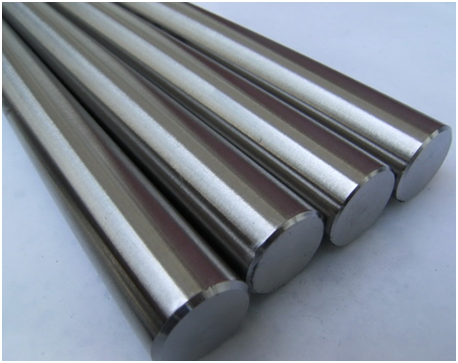
To maximize the benefits of titanium in marine shafts, engineers must move beyond the material itself and focus on systems-level integration. Proper installation is the key to lifetime performance.
Mitigating Galvanic Corrosion:
While titanium is highly resistant to corrosion, it is a noble metal in the galvanic series. If an uninsulated titanium shaft is directly connected to a less noble metal, such as carbon steel or standard aluminum alloys in a seawater electrolyte, it will cause the less noble metal to corrode rapidly. To prevent this, engineers must use non-conductive bushings, isolation gaskets, or specialized marine-grade coatings at connection points. This ensures the titanium does not inadvertently compromise the integrity of the broader propulsion assembly.
Informed Grade Selection:
Selecting the correct alloy grade is vital for the operational environment:
* Grade 2 (Commercially Pure Titanium): Highly recommended for components where ductility and maximum corrosion resistance are the primary requirements. It is an excellent choice for structural marine fittings.
* Grade 5 (Ti-6Al-4V): This is the undisputed "gold standard" for propeller shafts and high-stress fasteners. Its high strength and excellent fatigue resistance are essential for handling the torque and cyclic stresses inherent in high-performance propeller systems.
Long-term Maintenance Planning:
One of the greatest benefits of transitioning to titanium is the radical reduction in maintenance intervals. However, "maintenance-free" does not mean "abandoned." Engineers should continue to perform periodic inspections of seals, stern tube bearings, and alignment. Because the titanium shaft itself is highly resistant, any issues with shaft vibration or seal leakage can be addressed without the fear of finding deep-pitting or shaft wastage, which significantly simplifies the overhaul process.
The industry is currently witnessing a massive shift from "Initial Acquisition Cost" to "Total Lifecycle Cost." When traditional steel shafts are used, they often require replacement every 5 to 7 years due to corrosion-fatigue and pitting. In contrast, titanium propeller shafts have demonstrated the capability to last for the entire operational life of the vessel (20+ years).
For fleet operators, this means the initial higher investment in titanium bars is typically recouped within the first two dry-docking cycles through the elimination of shaft replacement costs, reduced downtime, and lower labor expenses. Furthermore, the weight savings provided by titanium can often lead to a 1-3% improvement in overall fuel efficiency, which for large commercial vessels, represents significant long-term savings.
Integrity of a shaft begins in the laboratory. Essential testing procedures for marine-grade titanium bars include:
1. Chemical Analysis: Using Optical Emission Spectroscopy to ensure precise alloying elements meet ASTM/AMS requirements.
2. Mechanical Testing: Conducting tensile and hardness testing to ensure the material can withstand the specific torque loads of the propeller.
3. Microstructural Inspection: Using metallographic analysis to ensure a uniform grain structure, which is crucial for preventing crack initiation in high-fatigue environments.
4. Surface Finish Control: Ensuring the surface roughness is optimized to prevent stress concentrators, which is vital for long-term endurance.
As the industry moves toward greener, more fuel-efficient shipping, the demand for lightweight, durable materials will only increase. We are seeing a growing trend in the use of titanium in hydrofoil systems, high-speed patrol craft, and deep-sea research submersibles. Titanium's ability to survive in both shallow, oxygen-rich surface waters and high-pressure deep-sea environments makes it the most versatile material for the future of maritime exploration.
* [1] Study of Titanium in Seawater, *Scribd*. [https://www.scribd.com/document/712341223/Study-of-titanium-in-seawater](https://www.scribd.com/document/712341223/Study-of-titanium-in-seawater)
* [2] The "Ocean Metal": Titanium in Marine Engineering, *Stanford Advanced Materials*. [https://www.samaterials.com/content/the-ocean-metal-titanium.html](https://www.samaterials.com/content/the-ocean-metal-titanium.html)
* [3] Titanium vs Stainless Steel: Marine Application Guide, *HonTitan*. [https://hontitan.com/titanium-marine-applications-guide](https://hontitan.com/titanium-marine-applications-guide)
* [4] Corrosion Resistance of Titanium to Sea Water, *IMarEST*. [https://library.imarest.org/record/1937/files/1964.pdf](https://library.imarest.org/record/1937/files/1964.pdf)
* [5] Tribocorrosion and Surface Protection of Titanium Alloys, *NCBI*. [https://pmc.ncbi.nlm.nih.gov/articles/PMC10779822](https://pmc.ncbi.nlm.nih.gov/articles/PMC10779822)
* [6] About Us, *Shaanxi Lasting New Material Industry Co., Ltd.* [https://www.lastingtitanium.com/what-makes-shaanxi-lasting-a-leading-titanium-forging-manufacturer.html](https://www.lastingtitanium.com/what-makes-shaanxi-lasting-a-leading-titanium-forging-manufacturer.html)
1. Does titanium ever rust in saltwater?
Titanium is highly resistant to saltwater corrosion. It is virtually immune to standard oxidation because it immediately forms a protective, self-healing titanium dioxide (TiO₂) film that blocks chloride ions, which are the primary cause of rust in other metals.
2. Why is titanium better than 316 stainless steel for shafts?
While 316 stainless steel is common, it suffers from pitting and crevice corrosion in stagnant seawater, particularly around seals. Titanium is highly resistant to these localized corrosion mechanisms, offering significantly longer service life and lower lifetime maintenance costs.
3. Which titanium grade should I use for a propeller shaft?
Grade 5 (Ti-6Al-4V) is the recommended standard for propeller shafts. It offers an optimal balance of high tensile strength, excellent fatigue resistance, and the required corrosion immunity to withstand the high-torque, cyclic stress environments of marine propulsion.
4. Does titanium require any special maintenance?
Titanium is essentially maintenance-free regarding corrosion. The most important operational consideration is managing "galvanic coupling"—you must use insulating materials when connecting the titanium shaft to less noble metals (like carbon steel) to prevent those metals from corroding.
5. How can I ensure the quality of sourced titanium bars?
Quality is paramount. Work with established, ISO-certified manufacturers that provide detailed material testing reports (including chemical, physical, and non-destructive testing) for every batch to ensure the material meets international marine engineering standards.


