

Views: 350 Author: Lasting Titanium Publish Time: 2025-12-18 Origin: Site


Content Menu
● Understanding Titanium Forging
>> Benefits of Titanium Forging
● Quality Control Measures at Shaanxi Lasting
>> 2. Advanced Manufacturing Techniques
>> 3. In-Process Quality Control
>> 4. Non-Destructive Testing (NDT)
>> 5. Certification and Compliance
● The Role of Research and Development
● Customer Feedback and Continuous Improvement
>> 1. What types of titanium products does Shaanxi Lasting manufacture?
>> 2. How does Shaanxi Lasting ensure the quality of its raw materials?
>> 3. What certifications does Shaanxi Lasting hold?
>> 4. What non-destructive testing methods are used at Shaanxi Lasting?
>> 5. How does customer feedback influence quality at Shaanxi Lasting?
Shaanxi Lasting New Material Industry Co., Ltd., located in the heart of China's titanium valley, Baoji, is renowned for its commitment to quality in titanium forging. With over 30 years of experience, the company has established itself as a leader in the titanium industry, providing high-quality products for various applications, including aerospace, medical, and military sectors. This article delves into the comprehensive quality control measures employed by Shaanxi Lasting to ensure the consistency and reliability of its titanium forgings.
Titanium forging is a manufacturing process that involves shaping titanium metal through the application of compressive forces. This process enhances the material's strength and durability, making it ideal for high-performance applications. The forging process can be performed at various temperatures, including hot, warm, and cold forging, depending on the desired properties of the final product. Hot forging, for instance, allows for greater deformation and improved ductility, while cold forging can enhance surface finish and dimensional accuracy.
The unique properties of titanium, such as its high strength-to-weight ratio and excellent corrosion resistance, make it a preferred choice in industries where performance and reliability are critical. The forging process not only improves the mechanical properties of titanium but also allows for the creation of complex shapes that are often required in specialized applications.
- High Strength-to-Weight Ratio: Titanium is known for its exceptional strength while being lightweight, making it suitable for aerospace and automotive applications. This characteristic allows manufacturers to create components that are both strong and lightweight, contributing to overall fuel efficiency and performance.
- Corrosion Resistance: Titanium exhibits excellent resistance to corrosion, which is crucial for components exposed to harsh environments. This property is particularly beneficial in marine applications and chemical processing, where materials are often subjected to aggressive substances.
- Biocompatibility: Titanium is biocompatible, making it a preferred material for medical implants and devices. Its compatibility with human tissue reduces the risk of rejection and enhances the longevity of implants, making it a staple in orthopedic and dental applications.
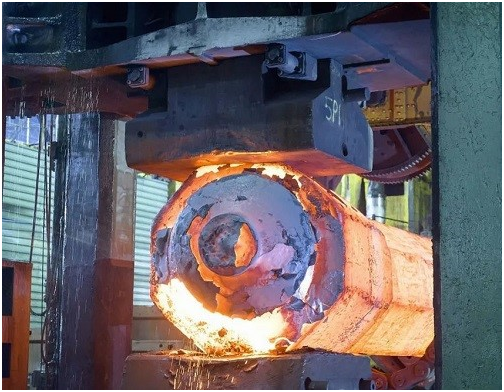
Shaanxi Lasting employs a multi-faceted approach to quality control, ensuring that every product meets stringent industry standards.
The quality of titanium forgings begins with the selection of raw materials. Shaanxi Lasting sources high-grade titanium alloys from reputable suppliers. The company conducts thorough inspections and tests on incoming materials to verify their composition and quality. This initial step is critical, as the properties of the final product are heavily influenced by the quality of the raw materials used.
Shaanxi Lasting prioritizes transparency and traceability in its supply chain, ensuring that all materials meet the required specifications. By establishing strong relationships with suppliers, the company can maintain a consistent supply of high-quality titanium alloys, which is essential for meeting customer demands and maintaining production schedules.
Shaanxi Lasting utilizes state-of-the-art manufacturing techniques to produce titanium forgings. The company invests in advanced machinery and technology, including:
- Computer Numerical Control (CNC) Machines: These machines ensure precision in machining processes, reducing the risk of defects. CNC technology allows for intricate designs and complex geometries to be produced with high accuracy, which is essential for components that require tight tolerances.
- Forging Presses: High-capacity forging presses are used to shape titanium under controlled conditions, enhancing the material's properties. The use of hydraulic and mechanical presses enables the company to produce large volumes of forgings efficiently while maintaining quality.
The integration of automation and robotics in the manufacturing process further enhances efficiency and consistency. By minimizing human error and optimizing production workflows, Shaanxi Lasting can achieve higher output rates without compromising quality.
Throughout the manufacturing process, Shaanxi Lasting implements in-process quality control measures. This includes:
- Visual Inspections: Operators conduct regular visual inspections to identify any surface defects or irregularities. These inspections are crucial for catching issues early in the production process, preventing defective products from moving further down the line.
- Dimensional Checks: Measurements are taken at various stages to ensure that components meet specified tolerances. This step is vital for ensuring that the final products fit correctly in their intended applications, especially in industries like aerospace and medical, where precision is paramount.
In-process quality control not only helps in maintaining product quality but also contributes to overall operational efficiency. By identifying and addressing issues in real-time, Shaanxi Lasting can reduce waste and improve production timelines.
To ensure the integrity of the titanium forgings, Shaanxi Lasting employs various non-destructive testing methods, including:
- Ultrasonic Testing: This method detects internal flaws and ensures that the material's structure is sound. Ultrasonic testing is particularly effective in identifying issues such as voids, inclusions, and other internal defects that could compromise the performance of the forgings.
- X-ray Inspection: X-ray imaging is used to identify any hidden defects that may compromise the quality of the forgings. This technique allows for a thorough examination of the internal structure without damaging the product, providing valuable insights into the material's integrity.
The use of NDT techniques is essential for industries that require high reliability and safety standards. By ensuring that each forging meets stringent quality criteria, Shaanxi Lasting can confidently supply products for critical applications.
Shaanxi Lasting is committed to maintaining high standards of quality and safety. The company holds several certifications, including:
- ISO 9001: This certification demonstrates the company's adherence to international quality management standards. It reflects a commitment to continuous improvement and customer satisfaction.
- AS9100: This certification is specific to the aerospace industry, ensuring that products meet rigorous safety and performance standards. Compliance with AS9100 is crucial for companies operating in the aerospace sector, as it helps to mitigate risks associated with product failures.
By obtaining and maintaining these certifications, Shaanxi Lasting not only enhances its credibility in the market but also assures customers of its commitment to quality and safety.
Shaanxi Lasting invests significantly in research and development to innovate and improve its forging processes. The R&D team focuses on:
- Material Science: Exploring new titanium alloys and composites to enhance performance. This research is essential for developing products that meet the evolving needs of various industries, particularly in high-tech applications.
- Process Optimization: Developing more efficient manufacturing techniques to reduce waste and improve product quality. Continuous improvement initiatives are implemented to streamline operations and enhance productivity.
The company's commitment to R&D ensures that it remains at the forefront of technological advancements in the titanium industry. By fostering a culture of innovation, Shaanxi Lasting can adapt to changing market demands and maintain its competitive edge.
Shaanxi Lasting values customer feedback as a vital component of its quality assurance process. The company actively seeks input from clients to identify areas for improvement and to ensure that products meet their specific needs. This proactive approach to customer engagement helps to build strong relationships and fosters loyalty.
- Surveys and Reviews: Regular surveys are conducted to gather customer opinions on product quality and service. This feedback is analyzed to identify trends and areas for improvement, allowing the company to make informed decisions.
- Quality Improvement Initiatives: Based on feedback, the company implements initiatives aimed at enhancing product quality and customer satisfaction. These initiatives may include training programs for employees, process adjustments, or investments in new technology.
By prioritizing customer feedback, Shaanxi Lasting demonstrates its commitment to meeting and exceeding customer expectations. This focus on continuous improvement not only enhances product quality but also strengthens the company's reputation in the market.
Shaanxi Lasting New Material Industry Co., Ltd. exemplifies excellence in titanium forging through its rigorous quality control measures, advanced manufacturing techniques, and commitment to continuous improvement. By prioritizing quality at every stage of production, the company ensures that its titanium products meet the highest standards, making them suitable for critical applications across various industries. The combination of advanced technology, skilled personnel, and a customer-centric approach positions Shaanxi Lasting as a leader in the titanium forging market.
Shaanxi Lasting produces a wide range of titanium products, including ingots, bars, plates, and custom forgings for various applications. The company specializes in both standard and bespoke solutions to meet the diverse needs of its clients.
The company sources high-grade titanium alloys from reputable suppliers and conducts thorough inspections upon receipt. This rigorous selection process is crucial for maintaining the quality of the final products.
Shaanxi Lasting is certified to ISO 9001 and AS9100 standards, ensuring compliance with international quality management and aerospace industry requirements. These certifications reflect the company's commitment to quality and safety.
The company employs ultrasonic testing and X-ray inspection to detect internal flaws and ensure the integrity of its titanium forgings. These methods are essential for maintaining high safety and performance standards.
Customer feedback is actively sought and used to identify areas for improvement, leading to initiatives aimed at enhancing product quality and customer satisfaction. This proactive approach helps the company adapt to changing market demands.


