

Views: 360 Author: Lasting Titanium Publish Time: 2026-07-20 Origin: Site


Content Menu
● The Fundamental Difference: Coils vs. Sheets in Stamping
● Strategic Insights: When to Retain Titanium Sheets
● Selecting the Right Grade for Your Stamping Project
● Partnering for Success: Shaanxi Lasting New Material
● Conclusion: Making the Strategic Choice
● Frequently Asked Questions (FAQ)
In the highly competitive arena of modern precision manufacturing, material selection is not merely a procurement task; it is a fundamental strategic decision that dictates the entire operational efficiency of your production line. For manufacturers and wholesalers dealing in titanium materials, the choice between titanium coils and titanium sheets is pivotal. This decision influences everything from the throughput capacity of your press machines and labor requirements to scrap rates and overall manufacturing costs.
As global industries—from automotive and aerospace to medical device manufacturing—increasingly demand high-performance titanium components, understanding the nuances of how these two material forms perform in high-volume stamping environments is essential for maintaining a competitive edge and ensuring profitability.
To optimize your production, you must first distinguish between the mechanical and operational roles of coils and sheets.
* Titanium Coils: These consist of continuous, long strips of titanium wound tightly around a spool or reel. Coils are meticulously engineered for high-speed, automated production lines. In an industrial stamping facility, a coil is fed into a "decoiler" or "straightener," which then advances the metal continuously into the press. They are the ideal partner for progressive die stamping, a process where a single strip of metal moves through multiple stations within a die, performing various operations—cutting, bending, drawing, and forming—in a single sequence of strokes [metalstampingparts] [proleanmfg].
* Titanium Sheets: These are pre-cut, individual flat plates of titanium, often manufactured to specific standard dimensions. They are typically employed in manual or robotic blank-fed stamping operations. In this setup, individual pieces of metal—or "blanks"—are loaded into the press one at a time, or in small, manageable stacks, by an operator or a robotic arm. This process is inherently more discrete and less continuous than coil-fed systems [metalstampingparts].### Why Titanium Coils Dominate High-Volume Production.
For manufacturers tasked with producing thousands or millions of parts, titanium coils offer three primary efficiency advantages that sheets simply cannot replicate:
1. Continuous Production Flow: Coils eliminate the significant downtime associated with loading and unloading individual sheets. By running a continuous strip, your stamping press can operate at its maximum cycles-per-minute rating, drastically increasing throughput and overall equipment effectiveness (OEE).
2. Progressive Die Optimization: Titanium coils enable the full utilization of progressive die technology. This process is a strategic philosophy that front-loads complexity into the die design. By performing multiple sequential operations—blanking, punching, bending, and forming—in a single continuous pass, manufacturers achieve unparalleled speed and consistency across every single part produced.
3. Superior Material Utilization: When using coils, engineers can apply advanced nesting algorithms to arrange part designs across the strip width. This precision layout significantly reduces the "skeleton" waste left over after stamping, leading to substantial cost savings when dealing with expensive materials like titanium.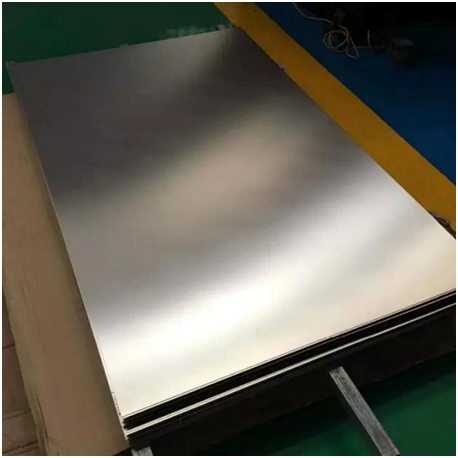
Despite the dominance of coils in mass production, titanium sheets remain a critical asset for manufacturers under specific circumstances:
* Low to Mid-Volume Batches: If your total production run does not justify the high initial capital investment required for progressive die tooling and automatic feeding infrastructure, using sheets offers a much lower barrier to entry.
* Highly Complex or Large Geometries: Some parts—especially those with large footprints or unconventional drawing requirements—are geometrically unsuitable for feeding through a standard progressive strip.
* Prototyping and Engineering Iterations: For R&D teams, the ability to test designs using individual blanks (sheets) provides the necessary flexibility to make adjustments without committing to expensive, permanent high-volume tooling.
The efficiency of your stamping process is heavily dependent on selecting the correct titanium grade. Using a material that is too hard can damage your dies and slow production, while a grade that is too soft may not meet the final mechanical performance standards of your component.
- Grade 1 (CP-Ti): Known as the softest and most ductile grade, it offers outstanding formability and is the premier choice for complex deep-drawing and intricate cold-forming operations where high strength is not the primary requirement .
- Grade 2 (CP-Ti): Often called the "workhorse" of the industry, it provides a balanced combination of excellent ductility, moderate strength, and superior corrosion resistance, making it the most common and cost-effective choice for a wide range of industrial stamping applications .
- Grade 9 (Ti-3Al-2.5V): This grade acts as a "middle ground," offering a significant increase in strength over CP-Ti grades while still maintaining enough formability for challenging high-performance components often required in automotive or aerospace industries .
For global brands, wholesalers, and manufacturers, efficiency is not just about the machinery; it is about the quality, consistency, and traceability of the raw material. As an industry-leading Chinese manufacturer, Shaanxi Lasting New Material (Lasting Advanced Titanium) Industry Co., Ltd. specializes in providing high-quality titanium raw materials—including both coils and sheets—engineered to meet stringent international standards such as ASTM and AMS.
When you partner with us, we ensure that your titanium supply adheres to precise gauge tolerances, optimized surface finishes, and the necessary mechanical properties required for your specific stamping environment. Whether you are scaling a production line or developing a prototype, our expertise in titanium supply chain management ensures your operations remain efficient and your parts remain world-class [metalstampingparts].
The decision between titanium coils and sheets is a fundamental balancing act between your production scale, capital equipment, and part complexity. For high-volume stamping, titanium coils are the gold standard for throughput, labor efficiency, and material utilization. However, titanium sheets continue to provide unmatched flexibility for low-volume and prototype needs. By choosing the right titanium grade and partnering with a reliable, expert-driven supplier like Lasting Advanced Titanium, you can ensure your manufacturing process is both efficient and scalable, positioning your business for long-term success.
- [1] Lasting Titanium Industry Co., Ltd. - Official company expertise, material specs, and supply chain solutions for titanium coils and sheets. [https://www.lastingti.com]
- [2] Prolean MFG: Progressive Stamping: A Comprehensive Guide to Automated Manufacturing. [https://proleanmfg.com/blog/progressive-stamping]
- [3] Ulbrich: Titanium Grades Guide—Understanding Formability, Strength, and Selection for Precision Strip Applications. [https://www.ulbrich.com/blog/titanium-grades-everything-manufacturers-need-to-know-about-titanium-strip-for-precision-applications]
1. Q: Why are coils more cost-effective for large-scale production?
A: Coils enable automated, high-speed progressive die stamping. This drastically reduces labor costs, minimizes machine downtime, and allows for optimized material nesting to reduce scrap, making them highly cost-effective at high volumes.
2. Q: Can I use the same die for both coil and sheet stamping?
A: Typically, no. Progressive dies are designed specifically for the continuous feeding of strips (coils). Sheets usually require simpler, single-action, or robotic-transfer dies for blank-fed operations.
3. Q: Which titanium grade is best for deep drawing?
A: Grade 1 titanium is the most ductile, making it the premier choice for complex cold-forming and deep-drawing operations where formability is the primary requirement.
4. Q: How does material thickness affect the choice between coils and sheets?
A: Thinner materials are often supplied in coils for high-speed feeding. Very thick, heavy plate or sheet materials are usually processed as individual blanks due to the difficulty and cost of coiling and decoiling thick stock.
5. Q: How do I ensure my titanium coil is of high enough quality for stamping?
A: Work with an experienced supplier like Lasting Advanced Titanium to specify tight gauge tolerances, consistent mechanical properties (e.g., yield strength, elongation), and required surface finish to ensure reliability in high-speed automated presses.


