

Views: 305 Author: Lasting Titanium Publish Time: 2026-11-27 Origin: Site


Content Menu
● Why Use Titanium Pipe Fittings in Heat Exchanger Systems?
● Standards: Specify the Fitting Separately from the Tube
● Choosing a Titanium Grade for Heat Exchanger Connections
● How to Match Fittings to the Heat Exchanger Layout
● Welding and Fabrication: Protect the Titanium Surface
● Common Specification and Procurement Mistakes
>> 1. Confusing tube and fitting standards
>> 3. Leaving out the joining details
>> 4. Treating corrosion resistance as a substitute for design review
>> 5. Accepting incomplete traceability
● A Practical Pre-Order Checklist
● Quality Assurance and Receiving Inspection
● Requesting a Quote for Titanium Heat Exchanger Fittings
>> 1. Which standards should I specify for titanium heat exchanger tubes, fittings, and flanges?
>> 2. Is Grade 2 titanium suitable for every heat exchanger connection?
>> 3. What details should I send for a fitting quotation?
>> 4. Can titanium fittings be welded to other titanium components?
>> 5. How do I avoid installation delays?
>> 6. What documents should accompany the order?
Titanium pipe fittings for heat exchanger connections help connect piping, nozzles, and equipment in systems exposed to seawater, chlorides, and other corrosive fluids. Choosing the right titanium elbow, tee, reducer, or other connection is not simply a matter of matching pipe size: the component must also suit the design pressure, temperature, fluid chemistry, joining method, and applicable code. Flanges are related connection components, but they are generally specified separately from B363 butt-welding fittings. This guide explains how to specify ASTM B363 titanium fittings, B338 heat exchanger tube connections, a Grade 2 butt-weld elbow, or a titanium stub end flange—and how to reduce material, fabrication, and procurement risks. Meta description: Specify ASTM B363 titanium fittings for B338 heat exchanger tube connections, including a Grade 2 butt-weld elbow or titanium stub end flange. Review standards, dimensions, welding, inspection, and RFQ requirements.
Heat exchangers can expose connections to challenging combinations of temperature, flow, pressure, and corrosive media. In seawater cooling, desalination, offshore, and chemical-process duties, corrosion-related leakage or shutdowns can be costly. Titanium is often considered for these services because of its strong corrosion resistance in many chloride-containing environments.
Material selection still depends on the exact operating conditions. No alloy is universally corrosion-proof, and the performance of a complete system depends on details such as fluid composition, temperature, velocity, deposits, crevices, and fabrication quality. A fitting should be selected as part of the whole pressure boundary—not as an isolated corrosion-resistant component.
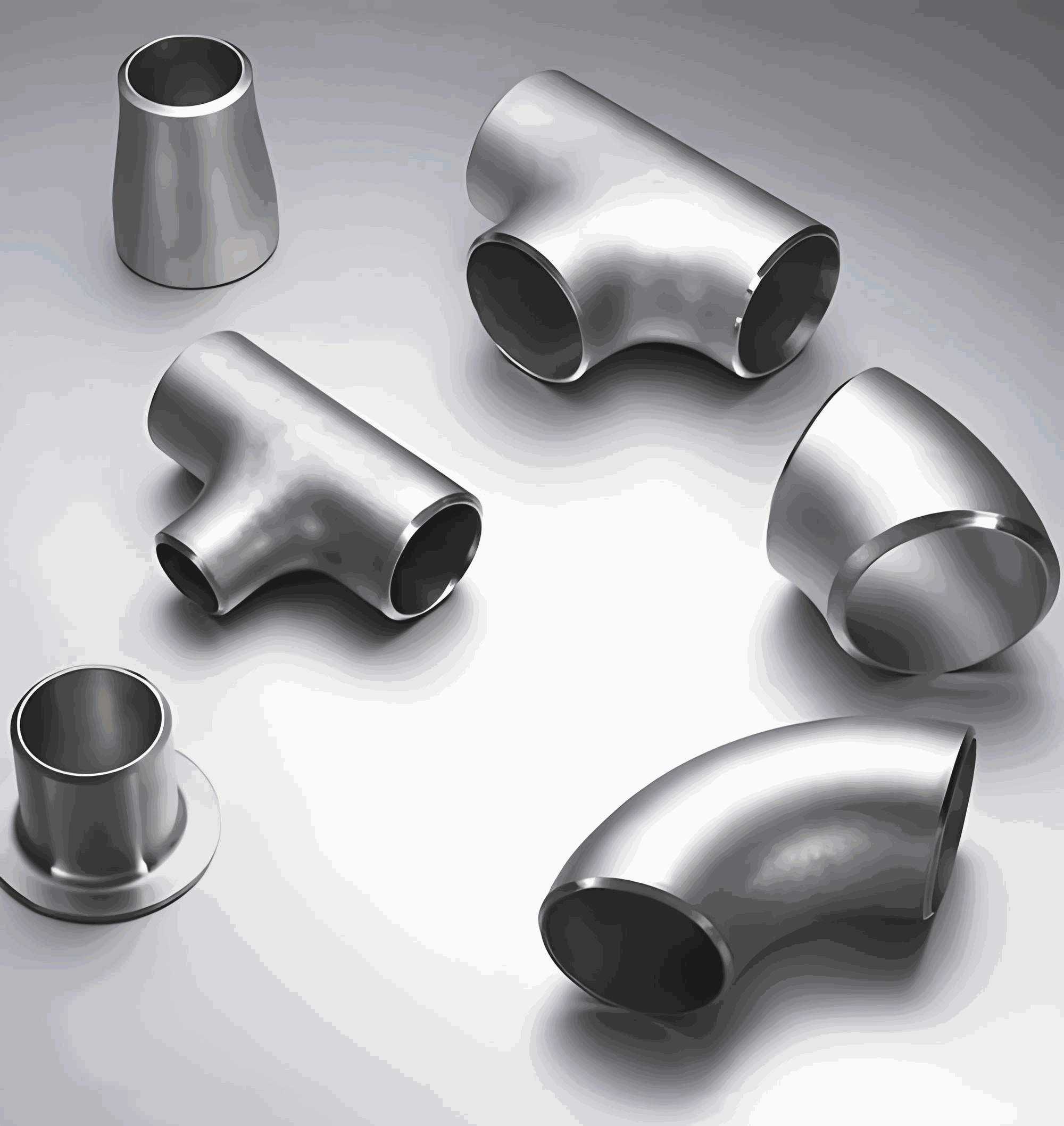
Common titanium fitting types used around heat exchangers include:
- Elbows: Change pipe direction at the inlet, outlet, or within connected process piping.
- Tees: Split or combine flow in distribution and bypass arrangements.
- Reducers: Connect pipes of different diameters, often near exchanger nozzles.
- Caps and end closures: Close a branch or line where the design requires it.
- Stub ends: May be specified as B363 butt-welding fittings and used with a separate flange for a detachable connection.
- Flanges: Normally purchased to ASTM B381 or B265 material requirements together with the applicable ASME B16.5 requirements—not as B363 fittings. Confirm the exact product form, material, pressure class, facing, and project code.
The required configuration depends on the piping layout and the exchanger's nozzle details. Confirm the design with the responsible piping or mechanical engineer before finalizing the purchase specification.
A frequent procurement error is to use the tube standard as though it also defines the fittings. These are different product forms and may be governed by different specifications. ASTM B338 covers titanium and titanium-alloy tubes for condensers and heat exchangers. ASTM B363 is titled "Standard Specification for Seamless and Welded Unalloyed Titanium and Titanium Alloy Welding Fittings" and applies to welding (butt-welding) fittings—not every type of pipe connection. For geometry, B363 fittings are commonly dimensioned to ASME B16.9 where applicable; wall thickness should be stated by Schedule, the applicable dimensional specification, or the purchaser's drawing. Flanges are generally specified separately, commonly to ASTM B381 or B265 material requirements with ASME B16.5 dimensions and ratings. Verify current editions and project requirements before ordering. [1](#S14) [1](#S1)
A purchase specification may need to state:
1. Fitting standard and edition, including supplementary project requirements and the applicable geometry standard.
2. Material grade and product form, such as Grade 2 wrought butt-welding fitting.
3. Dimensions and tolerances, including nominal size, Schedule or specified wall thickness, center-to-end dimensions, and end preparation.
4. Design basis, stating MAWP, design temperature, and governing code (for example, ASME VIII Division 1, ASME B31.3, or EN 13480).
5. Examination and testing, as required by the governing specification and project.
6. Documentation, such as material test reports, traceability, and inspection records.
7. Connection details, including bevels, flange type, facing, and mating material.
Do not assume that naming a standard automatically establishes the full design basis. The applicable code, project documents, and purchaser's inspection requirements control. For pressure-retaining service, the engineering team should confirm that the selected fitting dimensions and material are acceptable for the system.
Grade 2 commercially pure titanium is a common candidate for many general industrial and marine services, offering a useful balance of corrosion resistance, ductility, and weldability. It is not suitable for every chemistry: hot reducing acids such as hydrochloric acid and dilute sulfuric acid, and hot concentrated chloride crevice conditions, can cause serious attack. Depending on the specific environment, consider alloyed grades such as Grade 7 or Grade 12 only after a materials review. Confirm properties and suitability against the governing material specification and qualified technical data.
Use a service-based selection process rather than choosing by name recognition:
- Identify the fluid: Record composition, concentration, contaminants, and whether the fluid is seawater, brine, process water, or a chemical solution.
- Establish operating limits: Document normal and upset temperatures, pressure, flow velocity, and start-stop conditions.
- Assess corrosion risks: Consider deposits, crevices, stagnant areas, erosion, galvanic couples, and any cleaning chemicals.
- Review mechanical needs: Check design loads, wall thickness, forming requirements, and joining method.
- Confirm compatibility: Compare the fitting grade with the tube, flange, weld consumables, and adjoining equipment materials.
When a service contains reducing acids, unusual chemical mixtures, or elevated temperatures, a corrosion specialist should review the selection. The fact that titanium performs well in many seawater duties does not by itself prove suitability for every process stream.
The connection layout affects both hydraulic behavior and maintainability. An elbow may solve a routing problem but add a direction change; a reducer may be necessary at a nozzle but should be designed to suit the flow and mechanical arrangement. The fitting must also align with the exchanger's nozzle orientation and available space.
Before release for manufacture, verify:
- Nominal pipe size and schedule or specified wall thickness
- End-to-end and center-to-end dimensions
- Branch size and orientation for tees
- Reducer type and transition dimensions
- Flange standard, pressure class, facing, and bolt pattern
- Weld end preparation and fit-up allowance
- Clearance for insulation, supports, tools, and maintenance
- Compatibility with the exchanger nozzle and connected pipe material
A dimensional drawing is especially useful for nonstandard fittings. Ask the supplier to confirm drawing revision, tolerances, and inspection points before production. This step can prevent avoidable fit-up issues at installation.
Titanium's corrosion performance depends on maintaining a clean, sound surface and producing a suitable joint. Welding should be performed using qualified procedures and personnel, with careful control of contamination and shielding. A fitting that meets a material specification can still create service problems if it is damaged, contaminated, or improperly welded.
A practical fabrication-control plan should address:
1. Clean handling: Keep titanium separate from carbon steel and other contamination sources. Use clean tools and protected work areas.
2. Joint preparation: Confirm bevel geometry, root opening, alignment, and cleanliness against the approved procedure.
3. Welding controls: Use a qualified procedure with full argon back purging and a trailing shield to protect the hot weld and heat-affected zone. As a practical visual screen, clean silver or light-straw weld colors are generally acceptable under the approved procedure, while blue or purple discoloration indicates inadequate protection and should be rejected for evaluation and corrective action. Follow the procedure's specified acceptance criteria; color alone does not replace required inspection.
4. Surface protection: Prevent iron pickup, scratches, and embedded particles during handling and fabrication.
5. Inspection and records: Maintain required weld examination, material traceability, and documentation.
Do not use generic welding instructions in place of an approved procedure. The welding engineer should establish the necessary controls based on the grade, thickness, joint design, and applicable code.
Many connection problems originate before fabrication. Clear specifications reduce the risk of receiving a fitting that is nominally titanium but unsuitable for the project.
A heat exchanger tube standard does not automatically cover the fittings that connect piping to the exchanger. Specify the fitting product standard separately and confirm that it matches the purchase order and design documents. ASTM B338 is cited for heat-exchanger tubing, while ASTM B363 is identified for titanium pipe fittings. [1](#S14) [1](#S1)
"Grade 2 titanium" is not a complete procurement description. The buyer still needs dimensions, standard, design conditions, inspection requirements, and documentation expectations.
A fitting's ends must suit the installation. Missing information about bevels, flange facing, or mating components can delay fit-up or require rework.
Material choice does not replace pressure design, code review, or assessment of flow, temperature, and fluid chemistry. Confirm the full service envelope with the engineering team.
For critical service, define required certificates and identification before ordering. Make sure documentation can be linked to the delivered product and the project's inspection plan.
Use this checklist when requesting a quotation for titanium pipe fittings for heat exchanger connections:
| Item | Information to provide |
|---|---|
| Service | Fluid composition, concentration, contaminants, and cleaning media |
| Operating conditions | Design and operating pressure, temperature, and flow conditions |
| Product | Fitting type, grade, size, wall thickness, and quantity |
| Standard | Applicable fitting standard and edition, plus project requirements |
| Geometry | Dimensions, orientation, end preparation, and drawing revision |
| Connections | Mating tube or pipe, nozzle, flange, and material details |
| Inspection | Required examinations, tests, witness points, and acceptance criteria |
| Documentation | Material certificates, traceability, and inspection records |
| Delivery | Packaging, marking, quantity split, and required delivery schedule |
A sound quality plan connects the approved specification to the delivered fittings. Before production, agree on the inspection documents and acceptance criteria. At receiving, verify product identification, quantity, dimensions, condition, and accompanying records against the purchase order.
Depending on the product form, standard edition, and project specification, inspection may include document review, dimensional checks, visual examination, and specified testing or examination. For WPT-W fittings, project specifications commonly require 100% radiographic testing (RT) of longitudinal welds; confirm the precise extent against the current B363 edition and purchaser specification. Do not treat this as an unconditional requirement for every fitting or every weld. The purchaser and project engineer should establish the acceptance criteria and inspection scope.
Pay particular attention to:
- Material identity and traceability
- Correct fitting type and dimensions
- End preparation and flange details
- Surface condition and handling damage
- Consistency between markings, certificates, and purchase documents
- Completeness of required inspection records
When deviations are found, record them and obtain formal disposition before installation. Do not resolve a material or dimensional discrepancy through informal substitution.
For international buyers, technical communication is part of quality assurance. Send controlled drawings and service details, and ask the supplier to identify assumptions or deviations in the quotation. Confirm revision control, inspection scope, and shipment documentation before production. The RFQ checklist above provides the key information needed to evaluate the request.
Specify product forms separately: ASTM B338 for heat-exchanger tubes; ASTM B363 for welded (butt-welding) titanium fittings; and, where applicable, ASME B16.9 for fitting geometry. State wall thickness by Schedule or drawing. Specify flanges separately—commonly to ASTM B381 or B265 material requirements and ASME B16.5 dimensions and ratings. Verify current editions and project requirements.
No. Grade 2 is a common option, but suitability depends on fluid chemistry, concentration, temperature, pressure, flow, fabrication, and code requirements. Unusual or aggressive services may require a more detailed materials review.
Provide the fitting type, grade, size, wall thickness, standard, design conditions, drawing, end preparation, mating components, inspection requirements, documentation needs, and delivery expectations. Include the fluid and operating environment so the supplier can identify issues that a size-only inquiry would miss.
Yes, provided the grade pairing is compatible—for example, Grade 2 to Grade 2 or Grade 2 to Grade 12—with filler metal selected for the joint and qualified to the applicable requirements, such as AWS A5.16. Use GTAW with full argon shielding, back purging, and a trailing shield, following a qualified welding procedure and its acceptance criteria.
Approve dimensional drawings before manufacture, confirm the exchanger nozzle and mating-pipe details, and verify flange and weld-end specifications. At receiving, check dimensions and documentation against the purchase order before installation.
Specify the required material certificates, traceability, inspection records, and test documentation in the purchase order. The exact documents depend on the governing standard, project specification, and inspection plan.
Selecting titanium pipe fittings for heat exchanger connections requires more than choosing a corrosion-resistant grade. The product standard and form, service chemistry, dimensions, joining method, inspection scope, and documentation must align with the design. Distinguishing B363 butt-welding fittings from separately specified flanges—and defining the applicable geometry and design code—helps prevent procurement and installation errors.
For a project-specific quotation or technical discussion, contact Shaanxi Lasting New Material (Lasting Advanced Titanium) Industry Co., Ltd. with your drawings, service conditions, applicable standards, and inspection requirements.
> About the supplier: Shaanxi Lasting New Material (Lasting Advanced Titanium) Industry Co., Ltd. provides titanium-material services for overseas brands, wholesalers, and manufacturers. Confirm product scope and project-specific capabilities against the company's current quotation and technical documentation.
1. Beiyu Titanium, [ASTM B338 Titanium Tube Guide]. Secondary overview; verify requirements against the current ASTM standard.
2. TitaniumSeller, [ASTM B363 Titanium Pipe Fittings Guide]. Secondary overview; consult the current ASTM B363 text and purchaser specification for binding requirements.
3. ASTM International, [ASTM B338: Standard Specification for Seamless and Welded Titanium and Titanium Alloy Tubes for Condensers and Heat Exchangers]. Confirm the currently applicable edition.
4. ASTM International, [ASTM B363: Standard Specification for Seamless and Welded Unalloyed Titanium and Titanium Alloy Welding Fittings]. Confirm the currently applicable edition.
5. ASTM International, [ASTM B265: Standard Specification for Titanium and Titanium Alloy Strip, Sheet, and Plate]. Confirm the currently applicable edition.
6. ASTM International, [ASTM B381: Standard Specification for Titanium and Titanium Alloy Forgings]. Confirm the currently applicable edition.
7. ASME, [B16.9 Factory-Made Wrought Buttwelding Fittings].
8. ASME, [B16.5 Pipe Flanges and Flanged Fittings].
9. AWS, [A5.16/A5.16M Specification for Titanium and Titanium-Alloy Welding Electrodes and Rods].
10. American Welding Society, [AWS D10.6/D10.6M: Recommended Practices for Gas Tungsten Arc Welding of Titanium Pipe].


