

Views: 369 Author: Lasting titanium Publish Time: 2025-08-24 Origin: Site


Content Menu
● Understanding Titanium Forging and Its Applications
● Key Mechanical Properties of Titanium Forgings
>> Hardness and Wear Resistance
● Critical Considerations in Forging Tolerances for Titanium Parts
>> Dimensional Tolerances: Definition and Importance
>> Typical Tolerance Ranges in Titanium Forging
>> Influencing Factors on Forging Tolerances
● Design and Process Strategies to Manage Tolerances
>> Die Design and Forging Process Optimization
>> Post-Forging Machining and Finishing
>> Heat Treatment Effects on Properties and Tolerances
>> Inspection and Quality Control Methods
● Challenges and Common Defects Affecting Tolerances in Titanium Forging
● Emerging Technologies and Trends in Titanium Forging
Titanium forging is increasingly vital in the manufacturing of components used in aerospace, automotive, medical, and industrial applications due to titanium's unique combination of strength, corrosion resistance, and light weight. For engineers involved in the design, production, or quality control of titanium forged parts, understanding tolerances and material properties is crucial to ensure optimal performance, safety, and cost-efficiency. This article explores in detail the key considerations engineers must know about titanium forging tolerances and mechanical properties, covering the entire process from design to final inspection.
Titanium forging is a metalworking process where titanium alloys are heated and reshaped by compressive forces into desired shapes. This process enhances the mechanical performance of components by refining their grain structure and minimizing porosity. The forged titanium parts are widely used in applications demanding high strength-to-weight ratios and exceptional corrosion resistance.
Examples of critical industries using titanium forgings include aerospace for structural airframe components, biomedical implants, high-performance automotive parts, and energy sectors such as offshore wind turbines and chemical processing plants.
Forged titanium alloys exhibit outstanding tensile strength and ductility compared to cast or machined titanium parts. The forging process refines grain size and aligns the grain flow with the part geometry, significantly enhancing the load-bearing capabilities of the material.
For engineers, knowing the specific strength levels of different commercially available titanium alloys (such as Grade 2, Grade 5 Ti-6Al-4V, and others) helps in selecting the right alloy for structural demands. Forged titanium often outperforms cast counterparts in tensile strength and fatigue resistance, making it ideal for high-stress situations.
Forged titanium usually has superior hardness relative to other manufacturing methods. This hardness contributes to enhanced wear resistance, essential for components exposed to friction or abrasive environments, such as medical implants or aerospace hardware.
Titanium's natural oxide layer provides excellent corrosion resistance in harsh environments, including seawater, chemicals, and bodily fluids. Forging does not adversely affect this protective layer, ensuring long-term durability for applications like marine hardware or implantable medical devices.
Titanium has relatively low thermal conductivity but excellent heat resistance, making it suitable for applications where thermal expansion and high temperatures are factors, such as turbine engines or heat exchangers.
Tolerance defines the allowable deviation from nominal dimensions on a manufactured part. For titanium forged components, maintaining tight tolerances is essential because it affects part fit, function, assembly, and performance, particularly in aerospace and medical fields where precision is critical.
Titanium forgings generally have tighter dimensional tolerance standards compared to other metals. Typical tolerances include:
- Linear dimensions with ±0.05 to ±0.15 mm, depending on forging size and complexity
- Angular tolerances within 0.5 to 2 degrees
- Surface finish tolerances to ensure functional interfaces
These tolerances are influenced by forging temperature, die design, equipment precision, and secondary machining processes.
- Forging temperature: Higher temperatures increase material plasticity but can lead to slight dimensional variations. Optimal forging temperature selection balances malleability and dimensional control.
- Tool and die wear: Over time, dies degrade, which can increase tolerance variations and surface defects if not monitored and maintained.
- Material flow: The metal flow during forging affects dimensional stability. Proper die design ensures metal flow is controlled, minimizing excess flash and distortion.
- Post-forging machining: Many titanium forgings require precise machining after forging to achieve final dimensions and tight tolerances.
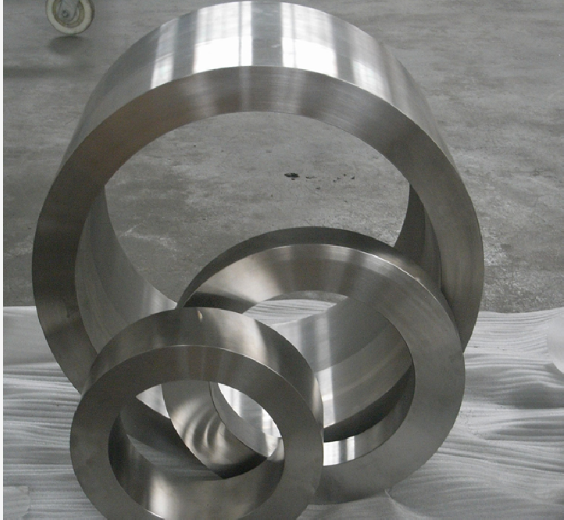
Careful die design tailored to the part geometry ensures uniform metal flow and minimizes forging defects. Computer simulations are frequently used in the design stages to predict material behavior and tolerance outcomes.
Batch-to-batch consistency is also crucial and can be managed through automated control systems that monitor temperature, pressure, and timing throughout the forging cycle.
Since forged titanium components often need to meet exact engineering standards, post-forging machining is common. Processes like CNC milling, grinding, and polishing refine dimensions and surface finishes to precise levels.
Engineers must consider machinability when designing forged parts. Titanium's toughness can cause tooling wear, so machining parameters and tool materials must be carefully selected to maintain tolerances without damaging components.
Heat treatments such as annealing or aging modify the microstructure, improving mechanical properties like strength and toughness. However, heat treatment can induce dimensional changes like warping or shrinkage that must be addressed through compensation during design or secondary machining.
Maintaining forging tolerances requires rigorous inspection practices throughout manufacturing. Common techniques include:
- Coordinate measuring machines (CMM) for dimensional verification
- Ultrasonic testing for internal defects
- Surface roughness measurement devices
- Hardness testers
Engineers use statistical process control (SPC) to monitor manufacturing trends and detect deviations early, reducing scrap rates and ensuring product reliability.
Excess metal squeezed out during forging forms flash—thin, unwanted material that can affect surface finish and dimension accuracy if not removed properly through trimming or machining.
Titanium's strong elastic recovery post-forging can cause parts to warp or distort, especially in thin or complex geometries. Engineers must plan to control cooling rates, tooling support, and stress relief treatments to minimize these effects.
Although forging reduces porosity compared to casting, improper parameters can still cause internal voids or cracks. These defects jeopardize mechanical properties and dimensional stability, necessitating rigorous process control.
Tool degradation leads to dimensional inaccuracies and increased surface defects. Scheduled die maintenance and monitoring extend die life and maintain forging quality.
Additive manufacturing combined with near-net-shape forging provides innovative ways to reduce material waste and machining time while improving tolerance control. Advanced simulation software incorporating artificial intelligence helps engineers optimize forging parameters to enhance precision.
Additionally, the development of new titanium alloys tailored for specific applications is expanding the possibilities in tolerance achievements and mechanical performance.
*
Q1: What is the typical tolerance range for titanium forging dimensions?
Titanium forging tolerances typically range from ±0.05 to ±0.15 mm for linear dimensions and about 0.5 to 2 degrees for angular measurements, varying with part complexity and size.
Q2: How does forging temperature affect titanium part tolerances?
Forging temperature influences material plasticity and flow; higher temperatures make forging easier but can cause dimensional deviations, making precise temperature control critical for tolerance maintenance.
Q3: Why is post-forging machining important in titanium forging?
Because titanium forging alone may not achieve final precise dimensions or surface finishes, post-forging machining refines parts to meet tight engineering specifications.
Q4: How are dimensional tolerances inspected in titanium forgings?
Inspection is performed using coordinate measuring machines for dimensional checks, ultrasonic testing for internal defects, and surface roughness measurement tools, ensuring parts meet specifications.
Q5: What common defects should engineers watch for in titanium forging?
Major defects include flash formation, warping, porosity, cracking, and tool wear-related surface imperfections, all of which can affect tolerances and require process controls to mitigate.


