

Views: 310 Author: Lasting Titanium Publish Time: 2026-03-27 Origin: Site


Content Menu
>> The Foundation of Biocompatibility and Material Integrity
>> Core ASTM and ISO Specifications for Medical Titanium
>> The Crucial Importance of "Extra Low Interstitial" (ELI)
>> Surface Treatment and Manufacturing Quality
>> Advanced Metallurgy: Grain Size and Microstructural Control
>> Regulatory Compliance and Documentation
>> The Future of Medical Titanium Procurement
>> Conclusion
>> Relevant Questions and Answers
In the high-stakes world of medical device manufacturing, the integrity of raw materials is not just a commercial requirement—it is a life-critical necessity. Titanium wire, favored for its exceptional strength-to-weight ratio, superior corrosion resistance, and, most importantly, its unparalleled biocompatibility, serves as the backbone for countless surgical implants, orthodontic appliances, and cardiovascular devices. However, the path from raw titanium ore to an implantable-grade wire is strictly regulated. For manufacturers and exporters, navigating the complex landscape of international standards—primarily those set by ASTM International and the International Organization for Standardization (ISO)—is mandatory. Failure to comply does not merely result in supply chain disruptions; it compromises patient safety and incurs severe regulatory liability. In an era where regulatory scrutiny by bodies such as the FDA and EMA is at an all-time high, understanding these standards is the fundamental differentiator for any supplier operating in the high-end medical materials sector.
Medical-grade titanium is distinguished from industrial or aerospace-grade counterparts by its extreme purity levels and controlled trace element chemistry. The human body is a chemically aggressive environment; fluids, enzymes, and the constant stress of physiological movement require materials that do not leach toxic substances, resist oxidation, and integrate seamlessly with bone and tissue. Titanium's ability to form a stable, protective oxide layer—passivation—is what makes it bio-inert. However, if the chemistry is not balanced correctly, or if impurities are introduced during the melting or drawing phases, this protective layer can be compromised.
The standards defining these materials focus on critical parameters: chemical composition (especially interstitial elements like oxygen, nitrogen, carbon, and iron), mechanical properties (tensile strength, yield strength, and ductility), and surface finish quality. When titanium wire does not meet these stringent requirements, the risk of fatigue failure, implant rejection, or metallic ion release increases exponentially, turning a life-saving device into a clinical risk. Engineers must evaluate not only the static strength of the material but its performance under the complex multi-axial loading conditions encountered in human anatomy, which necessitates a deep understanding of metallurgical stability.
The industry relies on a consensus of standards to ensure global interoperability and safety. For the medical professional or engineer, these documents are the definitive "rulebook." These specifications serve as the baseline for quality assurance protocols, dictating everything from ingot production to final wire winding and packaging.
- ASTM F67: This is the gold standard for Commercially Pure (CP) titanium. It defines the chemical and mechanical requirements for four grades of CP titanium. These grades are selected based on the specific strength requirements of the application, with Grade 4 offering the highest strength among them. CP titanium is primarily used in applications where high ductility and corrosion resistance are required, such as dental implants and surgical fixations.
- ASTM F136: This standard covers the wrought Ti-6Al-4V Extra Low Interstitial (ELI) alloy. Often referred to as "Grade 23," this is the most widely utilized alloy for load-bearing implantable devices. The "ELI" designation is critical, as it ensures lower levels of interstitial elements, significantly enhancing fracture toughness and fatigue resistance compared to standard aerospace-grade Ti-6Al-4V. It is the material of choice for hip and knee replacements where the device must withstand decades of continuous wear.
- ASTM F1472: Similar to F136, this specification covers wrought Ti-6Al-4V, but it focuses on applications where standard interstitial levels are acceptable, though it is frequently superseded by the ELI grade for critical implants. Engineers must be careful to distinguish between these to ensure that the material chosen is fit for the specific clinical intended use.
While ASTM is heavily favored in North America, international medical device manufacturers frequently align their quality management and material selection with ISO standards. ISO 5832 series is the direct international equivalent to many ASTM medical titanium specifications. For example, ISO 5832-3 provides the requirements for wrought titanium 6-aluminium 4-vanadium ELI alloy, mirroring the core principles of ASTM F136. Compliance with these ISO standards is often a prerequisite for obtaining CE marking, which is essential for market entry in the European Union and many other global territories. Navigating the nuances between ASTM and ISO is critical for exporters who serve a global client base, as subtle differences in test methods or tolerance specifications can impact compliance verification.
For any insider in the titanium industry, the distinction between standard and ELI grades is fundamental. The "interstitial" elements—specifically oxygen, nitrogen, and carbon—occupy the spaces between the atoms of the titanium crystal lattice. While these elements provide interstitial strengthening—increasing the tensile strength of the metal—they also drastically reduce ductility and fracture toughness.
In an implantable device—such as a spinal rod, a bone screw, or a cardiovascular stent—brittleness is the enemy. The human body subjects these devices to millions of cycles of mechanical loading and unloading. An ELI-grade material, with its tightly controlled, low interstitial chemistry, ensures that the component can withstand these cyclic stresses without sudden, catastrophic fatigue fracture. When procuring for medical projects, assuming "Grade 5" is sufficient without verifying the "ELI" designation is a frequent, yet critical, error that can jeopardize the clinical success of the final device. The metallurgical processing of ELI grades requires vacuum melting techniques, often double or triple VAR (Vacuum Arc Remelting), to maintain these ultra-low impurity levels, adding complexity and cost that the end user must be prepared to absorb for the sake of safety.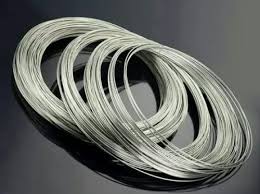
The standard to which the material is produced is only one half of the equation; the surface condition is the other. Bio-interface is paramount. Surface roughness, residual stress from the drawing process, and the presence of lubricants or metallic contaminants are strictly governed.
Manufacturers must utilize specialized cleaning and passivation processes to ensure the titanium oxide layer is uniform and free of organic residue. Many medical-grade wires require specific surface finishing, such as electropolishing or specialized cold-drawing techniques, to achieve the exact diameter tolerance and surface finish required for automated medical device manufacturing equipment. Surface integrity is not just about aesthetics; it is about how the material interacts with the host environment. Improper surface conditions can promote the adhesion of bacteria, leading to biofilm formation, or interfere with the osseointegration process, ultimately leading to implant loosening or chronic inflammation.
Beyond chemistry, the physical microstructure of the wire plays a vital role in its performance. For medical titanium wire, the grain size must be tightly controlled through careful cold-working and annealing cycles. A fine, uniform, equiaxed grain structure is typically desired to provide a balance between strength and ductility. Any significant variation in grain size can create localized stress concentrations, leading to unpredictable failure modes under high-cycle fatigue. Leading manufacturers use scanning electron microscopy (SEM) and other advanced metallurgical testing to confirm that the microstructure is consistent throughout the entire diameter of the wire. This level of quality control is what differentiates high-end medical material suppliers from general industrial suppliers.
For the exporter and the manufacturer, the product is only as good as its documentation. Regulatory bodies like the FDA (USA) and competent authorities in the EU mandate rigorous traceability. Every spool of wire must be accompanied by a comprehensive Mill Test Report (MTR).
The MTR must provide verifiable data confirming:
- Chemical composition analysis: Verified using Inductively Coupled Plasma (ICP) spectroscopy or combustion analysis to ensure adherence to the specified grade limits.
- Mechanical property testing results: Standard tensile tests carried out according to ASTM E8/E8M to verify that yield strength, ultimate tensile strength, and elongation meet the requirements of the specific material standard.
- Microstructure verification: Providing documented evidence of grain size and phase distribution, ensuring that heat treatment protocols were effective.
- Compliance statement: A clear declaration of conformity against the relevant ASTM/ISO standard, signed by the quality assurance authority of the production facility.
Traceability must extend back to the titanium sponge from which the ingot was forged. Any break in this documentation chain renders the material "non-compliant," potentially leading to the immediate rejection of finished medical devices in a clinical or regulatory audit. Furthermore, international exporters must maintain robust Quality Management Systems (QMS), such as ISO 13485, which is the specific standard for medical devices. This ensures that every step of the supply chain—from procurement of raw titanium to the final shipping of the wire—is documented, controlled, and verifiable.
As medical technologies evolve, the demand for even tighter tolerances, thinner wires for micro-invasive procedures, and enhanced surface coatings will continue to rise. Suppliers must invest in high-precision drawing lines, cleanroom packaging environments, and advanced inspection technologies to stay relevant.
We are witnessing a significant paradigm shift in material science. The adoption of β-type titanium alloys, such as Ti-15Mo or Ti-Nb-Zr systems, is gaining momentum due to their lower modulus of elasticity, which more closely mimics human bone, thereby reducing the "stress shielding" effect commonly seen with traditional alpha-beta alloys. Furthermore, the rapid growth of additive manufacturing (AM) has necessitated specialized feedstock standards. While wire is traditionally wrought, advancements in wire-feed laser additive manufacturing (a form of 3D printing) are now pushing the industry to adopt new specifications, such as ASTM F3001, which governs the requirements for Ti-6Al-4V alloy feedstock intended for additive manufacturing, signaling a move toward more versatile and site-specific material properties.
The production and export of medical-grade titanium wire is a discipline where precision is not an optional virtue, but a fundamental requirement. By adhering strictly to ASTM and ISO standards, manufacturers ensure that their materials meet the rigorous demands of human implantation. For industry professionals, mastering the nuances of material grades, the critical nature of the ELI designation, and the absolute necessity of rigorous documentation is what separates a reliable, high-tier supplier from the rest. The commitment to these standards is not merely about fulfilling a purchase order; it is about guaranteeing the integrity of the medical devices that enhance and sustain patient lives. As the global medical device market continues to grow, the reliance on high-quality titanium will only intensify, making the role of compliant, transparent, and technically competent suppliers more critical than ever before.
Q1: What is the primary difference between Grade 5 and Grade 23 (Grade 5 ELI) titanium wire?
A: Both are Ti-6Al-4V alloys, but Grade 23 (ELI) has lower interstitial element content—specifically oxygen, nitrogen, and carbon. This specific chemistry drastically improves the alloy's fracture toughness and fatigue resistance. Consequently, Grade 23 is the required choice for most critical load-bearing, long-term implantable devices, whereas standard Grade 5 is often restricted to less critical or short-term medical applications.
Q2: Can I use ASTM B863 for medical-grade titanium wire?
A: ASTM B863 is a general-purpose industrial specification for titanium and titanium alloy wire. While it provides a structural baseline, it does not mandate the specialized requirements for biocompatibility or the ultra-strict control of trace elements found in medical-specific standards like ASTM F67 or F136. For any device meant to be implanted in the human body, you must strictly adhere to medical-specific standards to avoid regulatory failure and clinical risk.
Q3: Why is the Mill Test Report (MTR) so critical in this industry?
A: The MTR is the foundational document that proves a specific batch of material conforms to the chemical and mechanical properties defined by the standard. Regulatory bodies and internal quality management systems require this report to establish full traceability, linking the final medical device back to the original raw titanium sponge. Without an accurate and authenticated MTR, the material cannot be validated for clinical use.
Q4: What are the primary concerns when selecting titanium wire for cardiovascular stents?
A: The primary concerns for cardiovascular applications are fatigue resistance and surface quality. These devices must endure billions of heart-beat cycles without failure. Additionally, the surface must be perfect—free of microscopic nicks, burrs, or contaminants—to prevent thrombosis (blood clotting) or unwanted tissue response. Achieving this requires highly specialized, clean-room level processing that exceeds the requirements of standard orthopedic wire.
Q5: Are ASTM and ISO standards for medical titanium interchangeable?
A: ASTM and ISO standards operate as two independent systems of documentation, though they are technically aligned in terms of performance requirements and safety criteria. While a material meeting one may theoretically satisfy the technical needs of the other, manufacturers should consult both if targeting both North American (ASTM) and international (ISO) markets. Each jurisdiction may have specific testing nuances, data formatting requirements, or sampling frequencies that must be satisfied to ensure seamless regulatory approval and full cross-compliance.


