

Views: 360 Author: Lasting titanium Publish Time: 2025-07-21 Origin: Site


Content Menu
● Why Titanium Fasteners Are Essential in Aerospace
● Popular Titanium Alloys Used in Aerospace Fasteners
>> Grade 5 Titanium (Ti-6Al-4V)
>> Commercially Pure Titanium (Grades 1–4)
>> Beta Titanium Alloys (Example: TB2, TB3)
● Manufacturing Techniques for Aerospace Titanium Fasteners
● Key Aerospace Fastener Types Made from Titanium
>> Rivets
● Advantages of Titanium Fasteners in Aerospace and Aviation
● Industry Trends and Future Directions
Titanium fasteners have become indispensable in the aerospace and aviation sectors, where performance, durability, and weight reduction are critical. Known for their exceptional strength-to-weight ratio, corrosion resistance, and excellent high-temperature tolerance, titanium fasteners optimize aircraft safety and fuel efficiency. This article delves into the best titanium fasteners for aerospace applications, exploring material grades, manufacturing innovations, uses, and future trends. Rich visuals and video content illustrate key concepts and applications.
Titanium and its alloys are extensively valued in aerospace for a set of remarkable properties that perfectly meet the high demands of aviation environments. First and foremost is their lightweight nature, with titanium possessing roughly 40% of the density of steel while maintaining comparable strength. This reduction in weight is critical in the aerospace industry because every kilogram saved contributes to increased fuel efficiency, extended flight ranges, and higher payload capacity.
Beyond being light, titanium also exhibits high strength and toughness. Aircraft structures undergo immense mechanical stress during takeoff, flight turbulence, and landing, as well as thermal and vibrational loads from engines and environmental conditions. Titanium fasteners hold joints securely under these challenges, ensuring structural integrity is maintained with minimal risk of failure.
Titanium's superior corrosion resistance is another major advantage. Unlike many metals that degrade when exposed to moisture, salt sprays, and chemicals, titanium forms a strong passive oxide layer that prevents further surface oxidation. This ability extends component lifespans, reduces maintenance cycles, and guarantees safe operation in diverse climatic and chemical exposure scenarios, including marine or coastal airbases.
Additionally, titanium fasteners perform exceptionally in high-temperature settings, such as near jet engines and exhaust systems, where other materials may soften or lose their mechanical properties. Their non-magnetic nature also minimizes interference with sensitive avionics and radar systems onboard modern aircraft, maintaining both safety and functionality.
Collectively, these qualities make titanium fasteners an ideal choice for the aviation sector, where reducing downtime, maintenance costs, and operational risks directly impact commercial and defense success.
Grade 5 titanium alloy, also known as Ti-6Al-4V, stands out as the most commonly used titanium alloy in aerospace fasteners due to its unique combination of high strength, corrosion resistance, and heat tolerance. It contains 6% aluminum and 4% vanadium, enhancing strength while maintaining workability. Many aircraft use this alloy in critical load-bearing joints where failure is not an option.
Its outstanding tensile strength, often surpassing 900 MPa and sometimes exceeding 1100 MPa with advanced processing techniques, allows designers to replace heavier steel fasteners to reduce overall aircraft weight without compromising safety. Further, its excellent fatigue resistance means these fasteners withstand countless stress cycles caused by flight vibrations and pressure fluctuations over years of service.
Grade 5 titanium fasteners are also favored because they can be precisely heat-treated to tailor mechanical properties for specific aerospace zones. For example, fasteners near engines require enhanced thermal stability, while those in fuselage assemblies may prioritize ductility or corrosion resistance.
Because of these factors, Ti-6Al-4V fasteners are standard on commercial aircraft such as Boeing and Airbus, as well as military fighters and helicopters.
While Grade 5 boasts highest strength, commercially pure titanium (Grades 1 to 4) offers superior corrosion resistance and formability, albeit at lower strength levels. Grade 2 is most frequently used among these due to its balance between corrosion resistance and moderate strength, especially in applications exposed to marine environments or aggressive chemical atmosphere where rust and corrosion pose risks.
Pure titanium fasteners excel where flexibility and ductility matter more than strength, such as in brackets, clamps, and interior components not subjected to heavy mechanical loads. Their excellent weldability and cold workability also make them suitable for customized fabrication during aircraft manufacturing and repair processes.
This group of titanium grades is particularly important in aerospace parts that require long-term durability in salty coastal airfields, such as where seaplanes or maritime patrol aircraft operate. The corrosion resistance of these pure grades prevents galvanic corrosion when joined with other metals, ensuring reliability over extended periods.
Beta phase titanium alloys offer a different set of advantages based on their metallurgical structure that allows more flexibility in design and manufacturing. These alloys can be heat-treated to achieve very high strength while maintaining good cold-formability and weldability. Among aerospace fasteners, beta alloys like TB2 and TB3 find niches where ultra-high strength and easier forming are needed.
TB2 (Ti-3Al-8Cr-5Mo-5V) is prized for making rivets due to its reliable shear strength and fatigue resistance while enabling cold heading processes. Similarly, TB3 (Ti-10Mo-8V-1Fe-3.5Al) pushes tensile strengths beyond 1100 MPa, suitable for fasteners demanding more from a compact form factor.
These alloys expand aerospace engineers' options for lightweight and strong fastening solutions, especially in advanced composite-airframe assemblies or specialty retrofit applications.
Producing titanium fasteners for aerospace requires specialized manufacturing techniques that maintain precise mechanical and dimensional standards.
Cold forging and cold heading are the main processes used to shape rivets and bolts from titanium rods or wire. These methods enhance strength through work hardening and ensure tight tolerances necessary for uniform load distribution in aerospace joints. This is crucial as even small imperfections can introduce stress risers that compromise safety.
After shaping, fasteners generally undergo heat treatments such as solution treating and aging, which further enhance strength by refining the alloy's microstructure. This combination of cold work and heat treatment strikes a balance between hardness, ductility, and fatigue resistance—qualities critical under cyclic aerospace loading.
Surface treatments play a critical role in preventing corrosion and mechanical galling—a common issue when titanium fasteners rub against mating metal parts. Cadmium plating, anodizing, or newer environmentally friendly coatings are applied to improve longevity and ease of maintenance while maintaining tight friction coefficients for reliable torque application.
In advanced manufacturing setups, bimetallic or composite fasteners are emerging, where titanium heads are joined with rods made from alloys optimized for specific properties like ductility or machinability, combining the strengths of multiple alloys within a single component.
These manufacturing innovations ensure that titanium fasteners meet or exceed aerospace industry standards for strength, safety, and reliability.
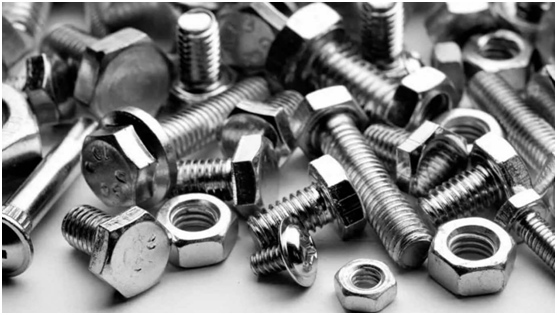
Titanium bolts and screws remain the backbone of aircraft assembly. They connect primary and secondary structures such as wing spars, fuselage frames, control surfaces, and engine mounts. Their unique ability to withstand immense tensile, shear, and vibrational stresses while remaining lightweight is essential for ensuring aircraft integrity.
High-performance titanium bolts such as those made from Timetal 5553 support extreme stress conditions and elevated temperatures, making them suitable inside engine compartments and landing gear assemblies where exposure to chemicals, heat, and mechanical loading is intense.
Titanium screws are also favored in avionics and interior fixtures because they resist corrosion and electromagnetic interference, contributing to system dependability.
Rivets made from titanium alloys are extensively used for joining thin aircraft skins to frames, providing aerodynamic surfaces and structural stiffness. Titanium's corrosion resistance increases the lifespan of these joints, especially in outdoor environments where moisture and salt exposure are risks.
Dual-metal rivets, combining Ti-6Al-4V rods and titanium-niobium alloy heads, offer a blend of strength and ductility that facilitates easier installation without compromising joint safety. These rivets maintain strong interlocking connections under thermal expansion differences between metals and composites.
Titanium rivets also contribute to weight reduction over traditional steel rivets, enhancing overall aircraft efficiency.
Used together with bolts, titanium nuts and washers must match the corrosion resistance and mechanical strength to avoid galvanic effects and ensure joint security over time. They contribute to consistent torque distribution and reduce loosening, which affects aircraft performance and safety.
Titanium nuts often receive protective coatings to improve wear resistance, making them suitable for repeated assembly and disassembly during maintenance schedules.
The advantages of titanium fasteners in aerospace stretch far beyond their material properties. Their use enables substantial aircraft weight savings, with estimates showing major wide-body aircraft like the Boeing 747 saving up to 1814 kilograms just by replacing steel fasteners with titanium alternatives. This directly correlates to reduced fuel consumption, lower emissions, and improved environmental footprint that airlines increasingly prioritize.
Titanium's long-term reliability reduces unexpected maintenance and increases intervals between inspections. This minimizes aircraft downtime and operational disruptions.
With higher fatigue resistance and resistance to stress corrosion cracking compared to steels or aluminum alloys, titanium fasteners ensure consistent mechanical performance throughout the aircraft lifecycle, providing confidence in structural safety.
From fuel efficiency to thermal performance near jet engines, titanium excels where traditional metals fall short, enabling manufacturers to push design limits while complying with evolving regulations.
Finally, the maintenance, repair, and overhaul (MRO) benefits are significant. Corrosion-resistant titanium fasteners require less frequent replacements, reducing aircraft lifecycle costs and improving turnaround times—key economic factors for commercial freight and passenger operations.
The aerospace titanium fastener market continues to grow robustly, influenced by expanding global air travel and increasingly demanding aircraft regulations that emphasize sustainability and performance. The market size is projected to surpass several billion dollars by the later 2020s as manufacturers and airlines seek more advanced materials for next-generation aircraft.
Emerging trends include the development of next-generation titanium alloys with even higher strengths, such as Timetal 5553, which pushes tensile performance beyond 1300 MPa. These advances allow for lighter yet stronger fasteners that meet future aerospace demands.
There is also strong interest in beta titanium alloys for their formability and strength combinations, suited for integration with novel composite materials that dominate modern airframe design.
Sustainability shapes future manufacturing as well, with increasing attention to recyclable titanium feedstock, waste reduction during production, and fastener designs promoting longer service life and easier recycling at aircraft end-of-life.
Unmanned aerial vehicles (UAVs) and electric air taxis represent fast-growing segments driving titanium fastener innovations tailored to new aerospace mobility concepts focusing on lightweight, strength, and environmental compatibility.
Q1: Why is Grade 5 titanium preferred in aerospace fasteners?
Grade 5 titanium offers an optimal mix of high strength, corrosion resistance, and heat tolerance, ideal for critical load-bearing aerospace components. Its versatility and performance enable safer, lighter aircraft designs.
Q2: Can titanium fasteners be used in marine aerospace environments?
Yes, commercially pure grades such as Grade 2 resist saltwater corrosion effectively, making them excellent choices for aerospace parts exposed to marine conditions, extending component life and reliability.
Q3: What are the advantages of titanium rivets over steel rivets?
Titanium rivets provide significant weight reduction, superior corrosion resistance, and maintain strength under extreme temperatures, enhancing aerodynamic efficiency and structural longevity.
Q4: Are titanium fasteners compatible with composite materials?
Absolutely. Titanium's corrosion resistance, similar thermal expansion, and mechanical strength make it highly compatible with composite airframes, ensuring joint integrity without galvanic corrosion or mismatch issues.
Q5: How does the cost of titanium fasteners compare to steel?
Titanium fasteners are costlier due to raw material expense and specialized manufacturing, but the benefits in weight saving, durability, and maintenance reduction justify their use in high-performance aerospace applications.


