

Views: 399 Author: Lasting Titanium Publish Time: 2024-12-05 Origin: Site


Content Menu
● Properties of Titanium Nut Bolts
● Applications of Titanium Nut Bolts
● Comparison with Other Materials
● Manufacturing Processes of Titanium Nut Bolts
>> Machining
● Benefits of Using Titanium Nut Bolts
>> Durability
>> Versatility
Titanium nut bolts are increasingly becoming a preferred choice in various industries due to their unique properties and advantages over traditional materials. This article explores the properties, applications, and benefits of titanium nut bolts, providing a comprehensive understanding of why they are essential in modern engineering and manufacturing.
Titanium is a remarkable metal known for its exceptional strength-to-weight ratio, corrosion resistance, and biocompatibility. These properties make titanium nut bolts suitable for a wide range of applications, particularly in environments where durability and reliability are critical. Understanding these properties helps engineers and manufacturers make informed decisions when selecting materials for specific applications.
One of the most significant advantages of titanium nut bolts is their high strength combined with low weight. Titanium is about 45% lighter than steel but offers comparable or even superior strength. This characteristic is particularly beneficial in industries such as aerospace and automotive, where reducing weight can lead to improved fuel efficiency and performance. The lightweight nature of titanium allows for the design of more efficient structures and components, ultimately contributing to overall system performance. Additionally, the high strength of titanium nut bolts means they can withstand greater loads and stresses, making them ideal for critical applications where failure is not an option.
Titanium exhibits excellent resistance to corrosion, making it ideal for use in harsh environments. It is highly resistant to oxidation and can withstand exposure to various chemicals, including acids and saltwater. This property ensures that titanium nut bolts maintain their integrity and performance over time, even in challenging conditions. The corrosion resistance of titanium is attributed to the formation of a stable oxide layer on its surface, which protects the underlying metal from further degradation. This characteristic is particularly important in industries such as marine and chemical processing, where components are frequently exposed to corrosive substances.
Another notable property of titanium is its biocompatibility, which means it is non-toxic and does not provoke an immune response in living tissue. This characteristic makes titanium nut bolts suitable for medical applications, such as implants and surgical instruments, where safety and compatibility with the human body are paramount. The biocompatibility of titanium allows for its use in a variety of medical devices, including orthopedic implants, dental fixtures, and cardiovascular stents. This property not only enhances patient safety but also contributes to the longevity and effectiveness of medical devices.
Titanium nut bolts can withstand high temperatures without losing their mechanical properties. This makes them suitable for applications in industries that operate under extreme conditions, such as aerospace and automotive sectors, where components are often exposed to high heat. The ability of titanium to maintain its strength and stability at elevated temperatures is crucial for applications such as jet engines and exhaust systems, where thermal stresses can be significant. This temperature resistance also allows for the use of titanium nut bolts in high-performance environments, ensuring reliability and safety.
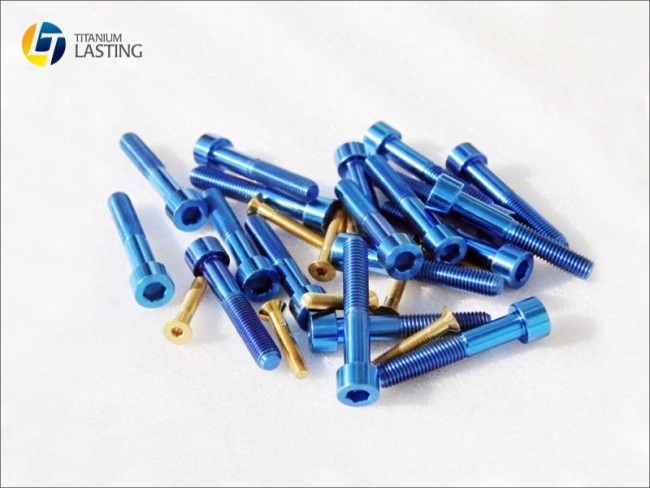
The unique properties of titanium nut bolts allow them to be used in various industries, each benefiting from their specific advantages. Understanding these applications helps highlight the versatility and importance of titanium in modern engineering.
In the aerospace sector, weight reduction is crucial for improving fuel efficiency and performance. Titanium nut bolts are extensively used in aircraft structures, engines, and landing gear due to their lightweight and strong characteristics. They help manufacturers meet stringent safety and performance standards while reducing overall aircraft weight. The use of titanium in aerospace applications not only enhances performance but also contributes to fuel savings and reduced emissions, aligning with the industry's push for sustainability. Additionally, the reliability of titanium fasteners in critical applications ensures the safety of passengers and crew.
The automotive industry also benefits significantly from titanium nut bolts. High-performance vehicles often utilize these fasteners to reduce weight without compromising strength. Titanium bolts are used in engine components, suspension systems, and exhaust systems, contributing to enhanced performance and efficiency. The lightweight nature of titanium allows for more agile vehicle designs, improving handling and acceleration. Furthermore, the durability of titanium nut bolts reduces the need for frequent maintenance and replacements, leading to lower overall ownership costs for consumers.
Due to their excellent corrosion resistance, titanium nut bolts are ideal for marine applications. They are used in shipbuilding, offshore oil rigs, and underwater equipment, where exposure to saltwater and harsh environmental conditions can lead to rapid deterioration of traditional materials. The use of titanium in marine environments not only extends the lifespan of components but also reduces maintenance costs associated with corrosion-related failures. This makes titanium an attractive option for manufacturers and operators in the marine industry, where reliability and safety are paramount.
In the medical field, titanium nut bolts are used in surgical implants and instruments. Their biocompatibility ensures that they can be safely used within the human body, making them a preferred choice for orthopedic implants, dental fixtures, and other medical devices. The use of titanium in medical applications enhances patient outcomes by providing durable and reliable solutions that integrate seamlessly with biological systems. Additionally, the lightweight nature of titanium reduces the overall burden on patients, contributing to faster recovery times and improved quality of life.
The chemical processing industry often requires materials that can withstand corrosive environments. Titanium nut bolts are used in various applications, including reactors, heat exchangers, and piping systems, where they provide durability and reliability. The ability of titanium to resist corrosion in aggressive chemical environments ensures the longevity of equipment and reduces the risk of leaks and failures. This reliability is critical in maintaining operational efficiency and safety in chemical processing facilities, where downtime can be costly.
When comparing titanium nut bolts to those made from other materials, several factors come into play, including strength, weight, corrosion resistance, and cost. Understanding these comparisons helps manufacturers choose the right materials for their specific needs.
While steel is a common material for nut bolts due to its strength and availability, titanium offers significant advantages in specific applications. Titanium is lighter and more resistant to corrosion, making it a better choice for environments where weight and durability are critical. However, titanium bolts are generally more expensive than steel, which can be a consideration for some projects. The choice between titanium and steel often depends on the specific requirements of the application, including load-bearing capacity, environmental conditions, and budget constraints.
Aluminum is another lightweight alternative to titanium. While aluminum bolts are lighter and less expensive, they do not offer the same level of strength and corrosion resistance as titanium. In applications where strength and durability are paramount, titanium is often the preferred choice. The superior mechanical properties of titanium make it suitable for high-stress applications, while aluminum may be more appropriate for less demanding environments. Additionally, the corrosion resistance of titanium provides a significant advantage in applications exposed to moisture and chemicals.
Plastic fasteners are lightweight and resistant to corrosion, but they lack the strength and temperature resistance of titanium. In high-stress applications, titanium nut bolts are far superior, providing the necessary strength and reliability. While plastic may be suitable for low-load applications, it cannot match the performance of titanium in demanding environments. The choice between titanium and plastic often comes down to the specific requirements of the application, including load capacity, environmental exposure, and temperature conditions.
The manufacturing of titanium nut bolts involves several processes to ensure they meet the required specifications and standards. Understanding these processes is essential for manufacturers looking to produce high-quality titanium fasteners.
The first step in manufacturing titanium nut bolts is selecting the appropriate titanium alloy. Common grades include Grade 2, which is commercially pure titanium, and Grade 5, which is an alloy of titanium, aluminum, and vanadium. The choice of grade depends on the specific application and required properties. Each grade of titanium offers different mechanical properties, corrosion resistance, and weldability, making it crucial to select the right material for the intended use.
Once the material is selected, the titanium is machined into the desired shape. This process can be challenging due to titanium's hardness and tendency to work-harden. Specialized tools and techniques are often required to achieve precise dimensions and finishes. Advanced machining methods, such as CNC machining, are commonly used to ensure high accuracy and repeatability in the production of titanium nut bolts. The machining process must be carefully controlled to prevent overheating and tool wear, which can affect the quality of the final product.
After machining, titanium nut bolts may undergo heat treatment to enhance their mechanical properties. This process can improve strength and ductility, making the bolts more suitable for demanding applications. Heat treatment involves heating the titanium to a specific temperature and then cooling it at a controlled rate to achieve the desired microstructure. This process can significantly enhance the performance characteristics of titanium fasteners, making them more resilient under stress.
Surface treatments, such as anodizing or coating, can be applied to titanium nut bolts to improve their corrosion resistance and aesthetic appearance. These treatments can also enhance the bolts' performance in specific environments. Anodizing creates a protective oxide layer on the surface of the titanium, further enhancing its corrosion resistance and wear properties. Coatings can also be applied to improve lubricity and reduce friction, making titanium nut bolts easier to install and use in various applications.
The use of titanium nut bolts offers numerous benefits that make them an attractive option for various applications. Understanding these benefits helps manufacturers and engineers appreciate the value of titanium in their projects.
Titanium nut bolts are known for their exceptional durability. Their resistance to corrosion and wear ensures that they maintain their performance over time, reducing the need for frequent replacements and maintenance. This durability is particularly important in critical applications where component failure can have serious consequences. The long lifespan of titanium fasteners contributes to overall system reliability and reduces lifecycle costs for manufacturers and operators.
The lightweight nature of titanium allows for significant weight savings in applications where every gram counts. This is particularly important in industries like aerospace and automotive, where reducing weight can lead to improved efficiency and performance. The ability to design lighter components without sacrificing strength enables engineers to create more efficient systems that consume less energy and resources. This weight savings can also lead to improved handling and maneuverability in vehicles and aircraft.
While titanium nut bolts may have a higher initial cost compared to other materials, their durability and low maintenance requirements can lead to long-term cost savings. Fewer replacements and repairs can offset the initial investment, making them a cost-effective choice in the long run. Additionally, the reliability of titanium fasteners reduces the risk of costly downtime and failures, further enhancing their value in critical applications.
Titanium nut bolts can be used in a wide range of applications across various industries. Their unique properties make them suitable for demanding environments, from aerospace to medical applications. This versatility allows manufacturers to standardize on titanium fasteners for multiple projects, simplifying inventory management and reducing costs associated with sourcing different materials for different applications.
In high-performance applications, the use of titanium nut bolts can lead to improved overall performance. Their strength and lightweight characteristics contribute to better efficiency and effectiveness in critical systems. The ability to withstand extreme conditions without degradation ensures that titanium fasteners perform reliably under stress, enhancing the performance of the entire system.
Titanium nut bolts are a vital component in modern engineering and manufacturing, offering a unique combination of strength, lightweight, and corrosion resistance. Their applications span various industries, including aerospace, automotive, marine, medical, and chemical processing. While they may come at a higher cost than traditional materials, the long-term benefits and performance enhancements they provide make them an excellent investment for many applications. As industries continue to seek innovative solutions to improve efficiency and performance, the demand for titanium nut bolts is likely to grow, solidifying their place as a key material in the future of engineering.
1. What are the main advantages of using titanium nut bolts? Titanium nut bolts offer high strength-to-weight ratios, excellent corrosion resistance, biocompatibility, and the ability to withstand high temperatures, making them ideal for various demanding applications.
2. In which industries are titanium nut bolts commonly used? Titanium nut bolts are widely used in aerospace, automotive, marine, medical, and chemical processing industries due to their unique properties.
3. How do titanium nut bolts compare to steel bolts? Titanium nut bolts are lighter and more corrosion-resistant than steel bolts, making them preferable in applications where weight and durability are critical, although they are generally more expensive.
4. What manufacturing processes are involved in producing titanium nut bolts? The manufacturing processes include material selection, machining, heat treatment, and surface treatment to enhance their properties and performance.
5. Are titanium nut bolts worth the investment? Yes, while they may have a higher initial cost, their durability, low maintenance requirements, and long-term cost efficiency make them a worthwhile investment for many applications.


