

Views: 400 Author: Lasting Titanium Publish Time: 2024-10-19 Origin: Site


Content Menu
● Introduction to Titanium Fasteners in Aerospace
>> The Rise of Titanium in Aerospace
● Properties of Titanium Fasteners
● Applications of Titanium Fasteners in Aerospace
● Manufacturing Processes for Titanium Fasteners
>> Machining
>> Forging
>> Cold Heading
● Advantages of Titanium Fasteners in Aerospace
>> Galvanic Corrosion Prevention
>> Thermal Expansion Compatibility
● Challenges and Future Developments
>> Surface Treatments and Coatings
The aerospace industry has always been at the forefront of technological innovation, constantly seeking materials and components that can withstand extreme conditions while maintaining optimal performance. Among these critical components, titanium fasteners have emerged as a game-changer, revolutionizing the way aircraft and spacecraft are designed and built. This article delves into the world of titanium fasteners in aerospace, exploring their properties, applications, manufacturing processes, and the immense impact they have on the industry.
Titanium has become an indispensable material in the aerospace sector, thanks to its unique combination of properties that make it ideal for high-performance applications. As the demand for lighter, stronger, and more efficient aircraft continues to grow, titanium fasteners have become a crucial element in meeting these requirements. The journey of titanium in aerospace began several decades ago, but its importance has only increased with time, as engineers and designers recognize its potential to solve complex challenges in aircraft and spacecraft construction.
One of the most significant advantages of titanium fasteners in aerospace applications is their exceptional strength-to-weight ratio. Titanium alloys used in fastener production offer strength comparable to steel but at just 60% of its weight. This characteristic is crucial in the aerospace industry, where every gram of weight saved translates to improved fuel efficiency and increased payload capacity. Titanium fasteners allow engineers to design aircraft structures that are both robust and lightweight, contributing to overall performance improvements.
Corrosion is a major concern in aerospace applications, as aircraft and spacecraft are exposed to various corrosive environments, including saltwater, humidity, and extreme temperatures. Titanium fasteners excel in this aspect, offering superior corrosion resistance compared to many other metals. The natural oxide layer that forms on titanium's surface provides excellent protection against corrosive agents, ensuring that titanium fasteners maintain their integrity and performance over extended periods, even in harsh conditions.
Aerospace components often need to withstand extreme temperature fluctuations, from the frigid cold of high altitudes to the intense heat generated by engines and during re-entry. Titanium fasteners demonstrate remarkable temperature resistance, maintaining their strength and structural integrity across a wide range of temperatures. This property makes them ideal for use in critical areas of aircraft and spacecraft where temperature management is crucial.
In the dynamic environment of aerospace applications, components are subjected to constant stress and cyclic loading. Titanium fasteners exhibit excellent fatigue resistance, meaning they can withstand repeated stress cycles without failing. This property is essential for ensuring the long-term reliability and safety of aerospace structures, as it reduces the risk of component failure due to metal fatigue.
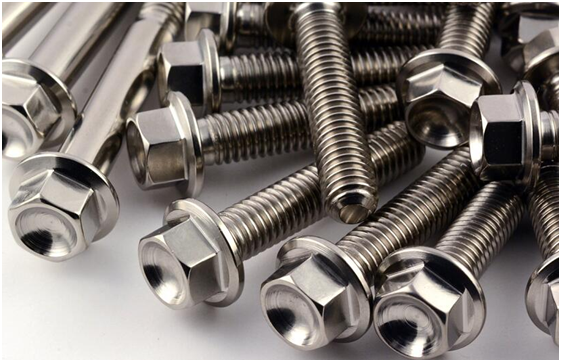
Titanium fasteners play a vital role in the construction of airframe structures. They are used extensively in areas that require high strength and low weight, such as wing attachments, fuselage sections, and landing gear components. The use of titanium fasteners in these critical areas helps to reduce the overall weight of the aircraft while ensuring structural integrity and safety.
The extreme conditions inside aircraft engines demand materials that can withstand high temperatures and stresses. Titanium fasteners are widely used in engine components, including compressor blades, turbine discs, and exhaust systems. Their ability to maintain strength at elevated temperatures makes them ideal for these applications, contributing to improved engine efficiency and performance.
In the realm of space exploration, titanium fasteners are essential components in spacecraft construction. They are used in satellite structures, space station modules, and interplanetary probes. The combination of low weight, high strength, and corrosion resistance makes titanium fasteners perfect for the harsh environment of space, where reliability and durability are paramount.
Aircraft control surfaces, such as ailerons, flaps, and rudders, require fasteners that can withstand constant movement and stress. Titanium fasteners are often chosen for these applications due to their fatigue resistance and ability to maintain tight tolerances. This ensures precise control and maneuverability of the aircraft throughout its operational life.
The production of titanium fasteners often involves precision machining processes. Computer Numerical Control (CNC) machines are used to shape titanium alloys into various fastener designs, including bolts, nuts, and screws. The machining process requires specialized tools and techniques due to titanium's hardness and tendency to work harden during cutting operations.
Forging is another common method used in the production of titanium fasteners for aerospace applications. This process involves shaping the titanium alloy through compressive forces, often at elevated temperatures. Forging can produce fasteners with improved grain structure and mechanical properties, making them suitable for high-stress applications in aircraft and spacecraft.
Cold heading is a cost-effective method for producing large quantities of titanium fasteners. This process involves forming the fastener head and shank through a series of dies at room temperature. While cold heading can be challenging with titanium due to its high strength, advancements in tooling and lubricants have made it a viable option for certain types of aerospace fasteners.
After the initial forming processes, titanium fasteners often undergo heat treatment to enhance their mechanical properties. Heat treatment can involve processes such as solution treating and aging, which can significantly improve the strength and durability of the fasteners. The specific heat treatment process depends on the titanium alloy used and the desired properties for the final product.
The use of titanium fasteners contributes significantly to weight reduction in aerospace structures. By replacing heavier steel or aluminum fasteners with titanium alternatives, engineers can achieve substantial weight savings across the entire aircraft or spacecraft. This weight reduction translates directly into improved fuel efficiency, increased payload capacity, and enhanced overall performance.
The exceptional corrosion resistance and fatigue properties of titanium fasteners result in an extended service life for aerospace components. This longevity reduces the need for frequent replacements and maintenance, leading to lower operational costs and improved reliability of aircraft and spacecraft over their lifespan.
In aerospace structures that combine different materials, galvanic corrosion can be a significant concern. Titanium's electrochemical properties make it compatible with many other metals used in aerospace, reducing the risk of galvanic corrosion. This compatibility allows for more flexible design options and improved long-term structural integrity.
Titanium's coefficient of thermal expansion is similar to that of carbon fiber composites, which are increasingly used in modern aircraft construction. This compatibility helps to minimize stress between fasteners and composite structures during temperature changes, reducing the risk of structural issues and improving the overall reliability of the aircraft.
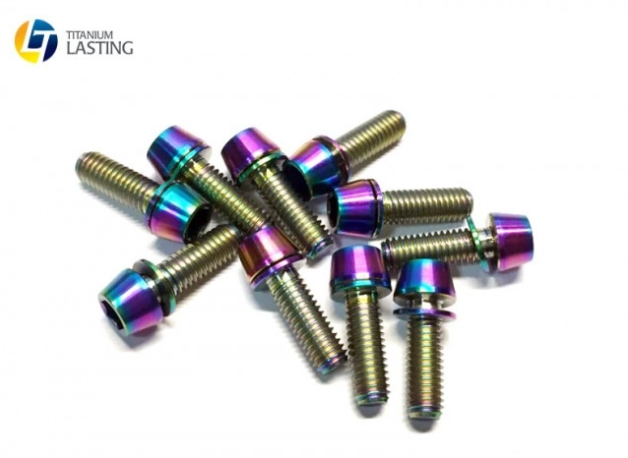
Despite its numerous advantages, the high cost of titanium remains a challenge in the widespread adoption of titanium fasteners in aerospace. The complex extraction and processing of titanium contribute to its higher price compared to other materials. However, ongoing research into more efficient production methods and the long-term benefits of using titanium fasteners are helping to offset these initial cost concerns.
Research into new titanium alloys continues to push the boundaries of what is possible with titanium fasteners. Scientists and engineers are working on developing alloys with even higher strength-to-weight ratios, improved temperature resistance, and enhanced fatigue properties. These advancements promise to further expand the applications of titanium fasteners in aerospace.
The emergence of additive manufacturing technologies, such as 3D printing, is opening new possibilities for the production of titanium fasteners. These technologies allow for the creation of complex geometries and customized fastener designs that were previously difficult or impossible to manufacture. As additive manufacturing techniques continue to evolve, they may revolutionize the production of titanium fasteners for aerospace applications.
Ongoing research into surface treatments and coatings for titanium fasteners aims to further enhance their properties. These treatments can improve wear resistance, reduce friction, and provide additional protection against extreme environments. As these technologies advance, titanium fasteners will become even more versatile and effective in aerospace applications.
Titanium fasteners have become an integral part of the aerospace industry, offering a unique combination of properties that make them indispensable in the construction of modern aircraft and spacecraft. Their high strength-to-weight ratio, corrosion resistance, and temperature tolerance have revolutionized aerospace design, enabling the creation of lighter, more efficient, and more durable flying machines.
As the aerospace industry continues to evolve, pushing the boundaries of what is possible in flight and space exploration, titanium fasteners will undoubtedly play a crucial role in shaping the future of aviation and space technology. The ongoing research and development in titanium alloys, manufacturing processes, and surface treatments promise to unlock even greater potential for these remarkable components.
The journey of titanium fasteners in aerospace is far from over. As we look to the skies and beyond, these small but mighty components will continue to be at the forefront of innovation, enabling us to reach new heights and explore the furthest reaches of our universe. The future of aerospace is bright, and titanium fasteners will be there, holding it all together.


