

Views: 398 Author: Lasting titanium Publish Time: 2025-10-11 Origin: Site


Content Menu
● Leading Players in the Global Titanium Fastener Market
>> Würth Group: A Powerhouse in Fastening Solutions
>> Illinois Tool Works (ITW): Innovation and Performance
>> Alcoa Corporation: Metallurgical Expertise
● Specialized Aerospace Titanium Fastener Manufacturers
>> Howmet Aerospace (formerly RTI International Metals)
>> Skybolt Aerospace Fasteners
● ISO-Certified and Quality-Focused Manufacturers
>> Yi Heng
>> HASM
● Advanced Manufacturing Technologies in Titanium Fastening
>> Precision Machining and CNC Processing
>> Surface Treatments and Coatings
● Global Market Trends and Key Industry Metrics
>> Regional Manufacturing Hubs
>> Consolidation and Innovation
>> 1. What certifications should I look for in a titanium fastener manufacturer?
>> 2. Which industries rely heavily on titanium fasteners?
>> 3. How do advanced manufacturing methods improve titanium fasteners?
>> 4. Are titanium fasteners more expensive than aluminum?
>> 5. How do global manufacturers ensure supply chain reliability?
Titanium fasteners play a pivotal role in industries where safety, strength, and longevity cannot be compromised, such as aerospace, automotive, marine, and medical fields. These tiny yet critical components are responsible for holding complex assemblies together, often under extreme conditions including high stress, temperature variations, and corrosive environments. Hence, the choice of manufacturer is crucial as it directly influences the quality, precision, and reliability of the fasteners.
Leading global manufacturers of titanium fasteners combine years of metallurgical expertise, cutting-edge machinery, and strict quality management systems to produce fasteners that meet or exceed industry requirements. Such manufacturers continually innovate by adopting new alloy formulations, refining forging and machining techniques, and integrating comprehensive testing protocols. This ensures their fasteners perform reliably over the lifetime of the assemblies they serve, often in life-critical applications such as aircraft frames, medical implants, or offshore platforms.
This article canvases the global landscape of titanium fastener manufacturers, highlighting major players, their technological strengths, certifications, and the role they play in advancing titanium fastener technology. By understanding who these trusted manufacturers are and their unique capabilities, industries can make informed procurement decisions that balance performance with cost-efficiency.
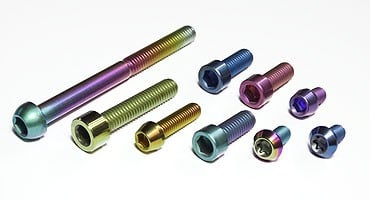
As one of the most trusted names in the fastener industry, Würth Group has built a legacy spanning decades. Operating in over 80 countries with a diversified product portfolio, Würth invests heavily in research to improve fastener materials and designs. Their titanium fasteners are engineered for the highest resilience in aerospace and automotive sectors, where minute improvements in weight and strength translate to significant operational benefits.
Würth's commitment to sustainability sees them integrate eco-conscious manufacturing processes, promoting recycling of titanium scrap and reducing energy consumption in production. This forward-thinking approach aligns with global trends pushing industries towards greener operations.
Moreover, Würth's global logistics and distribution network ensures reliable delivery and technical support worldwide, making them a preferable supplier for multinational corporations requiring consistent quality regardless of location.
Illinois Tool Works (ITW) stands out not just for its production volume but for its focus on innovation. ITW develops proprietary titanium alloys, blending elements to optimize the balance between strength, ductility, and corrosion resistance. Their high precision machining capabilities facilitate the production of titanium fasteners that meet exacting dimensional tolerances required by aerospace and medical device manufacturers.
Their investment in automation and digital quality inspection systems provides traceability and repeatability, essential for industries where component failure is not an option. ITW's customer-centric approach offers custom solutions tailored to unique project demands, including fastener material grades, sizes, and certification packages.
Alcoa Corporation's long-standing history as a leader in lightweight metal processing gives it an edge in titanium fastener manufacturing. Alcoa applies advanced metallurgical techniques such as electron beam melting and vacuum arc remelting to produce ultra-pure titanium billets that enhance mechanical properties. This purity, combined with precise forging and finishing, results in fasteners that consistently exceed performance specifications.
Their expertise extends to complex alloy development to tailor fastener characteristics for specific environmental and mechanical stresses, such as salt spray resistance for marine applications or high fatigue strength for aerospace.
Alcoa's global presence and vertically integrated supply chain—from raw titanium ore to finished fasteners—provides full control over quality and costs, ensuring efficient, reliable delivery to customers worldwide.
Precision Castparts Corp. specializes in the most demanding aerospace fasteners, often used in jet engines and fuselage assemblies that operate under extreme pressures and temperatures. Their manufacturing facilities employ advanced forging presses and specialized heat treatment processes to produce titanium bolts and nuts exhibiting superior tensile and fatigue strength.
Their comprehensive testing includes ultrasonic inspections and tensile testing to guarantee each batch meets international aerospace standards like AS9100. Precision Castparts' close partnerships with aerospace OEMs enable continuous improvement and customization of fasteners aligned with evolving aircraft designs.
Howmet Aerospace integrates the entire value chain from titanium raw material production to finished fasteners, enabling optimized control over quality and lead times. Their titanium alloys are used in landmark programs such as the Boeing 787 and Airbus A350, where weight reduction and corrosion resistance are fundamental.
Howmet's multi-national manufacturing footprint incorporates advanced computer-controlled machining and surface finishing, ensuring their fasteners maintain dimensional accuracy and resistance to environmental degradation. Furthermore, intensive research programs at Howmet focus on developing next-generation titanium alloys to meet future aerospace challenges.
Known for innovation, Skybolt Aerospace Fasteners revolutionized panel fastening with their Skytanium® system, allowing substantial weight reductions without compromising structural integrity. Their laser-measured tight tolerances and controlled heat treatment processes ensure fasteners fit perfectly, reducing installation time and maintenance.
Skybolt serves a wide spectrum from general aviation to high-performance military aircraft, supporting product certification with detailed traceability and lifecycle data. Their emphasis on speedy customization and small batch production makes them a vital partner for specialized aerospace projects.
With over two decades in the titanium fastener industry, Yi Heng has developed a manufacturing base capable of meeting stringent international quality standards like ISO 9001 and DIN certifications. Their product line encompasses a wide variety of titanium fasteners for racing, aerospace, and medical sectors, where precision and reliability are paramount.
Yi Heng implements statistical process controls and laser measurement systems to maintain consistent quality levels. Additionally, they offer value-added services such as surface treatments tailored for specific environments like marine or chemical exposure, enhancing fastener life.
HASM's adherence to AS9100D, ISO 9001:2015, and ISO 14001:2015 puts them among the top-tier manufacturers focused on comprehensive quality and environmental responsibility. The company sources premium titanium from trusted suppliers in the USA, Western Europe, and Japan, ensuring alloy consistency and traceability.
Combining raw material control with advanced CNC machining enables HASM to customize fasteners extensively while ensuring rapid turnaround times. Their dedication to customer satisfaction is evident in their willingness to work closely with clients on design adaptations and testing requirements.
Feng Yi Steel is a recognized leader in producing corrosion-resistant titanium bolts and screws with precise dimensions adhering strictly to ISO standards. Their ongoing commitment to quality assurance through multi-stage testing—including mechanical, chemical, and microstructural analyses—ensures their fasteners perform reliably even in the most aggressive environments.
Feng Yi's vertical integration from material processing to finished product inspection allows tight control over every step, minimizing defects and shortening time-to-market. Their global customer base spans aerospace, automotive, medical, and industrial sectors, highlighting their broad capabilities.
Hot forging remains the foundational process for manufacturing titanium fasteners. By heating titanium above its recrystallization temperature, the metal becomes plastically deformable, allowing it to be shaped efficiently into complex profiles with superior mechanical properties compared to machined parts from solid billets.
This process homogenizes the grain structure, improves strength and toughness, and reduces porosity. Modern forging presses are computer-controlled for precise control of temperature, force, and timing, yielding consistent product quality batch after batch. Additionally, optimized tooling extends the service life of dies, reducing production costs.
Titanium's unique physical properties pose challenges for machining, requiring specialized carbide and ceramic cutting tools, slow cutting speeds, and coolant application to avoid tool wear and overheating. CNC machining permits fabrication of intricate thread forms, countersinks, and specialty shapes that forging alone cannot achieve.
This capability is essential for aerospace fasteners requiring alignments within thousandths of an inch to maintain structural integrity and assembly compatibility. High-precision CNC centers equipped with multi-axis controls minimize human error, improve repeatability, and accelerate prototyping and production.
To enhance fastener performance, manufacturers apply surface treatments post-forging and machining. Anodizing thickens and strengthens the protective oxide layer on titanium, improving corrosion resistance and wear properties. Passivation removes surface contaminants and stabilizes oxide growth, increasing longevity.
Dry-film lubricants reduce friction during installation, preventing galling and thread damage while ensuring accurate torque application. Specialized coatings like TiN (Titanium Nitride) provide additional hardness and chemical resistance for extreme applications.
The titanium fastener market is expanding rapidly due to increasing demand from aerospace, automotive, and defense sectors focused on lightweight and corrosion-resistant materials to improve performance and fuel efficiency. Rising environmental regulations and sustainability initiatives stimulate demand for durable materials with low lifecycle impacts.
Emerging industries such as electric vehicles and advanced medical implants also contribute to market growth by adopting titanium for its biocompatibility and strength.
China has become a major manufacturing hub due to raw material availability, technological upgrades, and cost advantages. The United States retains leadership through innovation-driven firms focusing on aerospace-quality fasteners. South Korea, Japan, and Germany are crucial centers for precision machining and high-end titanium alloy development.
Collaborations and joint ventures between firms across these regions enable a resilient supply chain that balances cost, quality, and delivery time.
The industry continues consolidating as companies merge to leverage economies of scale and combined R&D expertise. Investments prioritize advanced alloy R&D, automation in production lines, and smart quality control using AI and machine learning, reducing waste and boosting throughput.
Focus is also on developing faster, greener production techniques and exploring additive manufacturing (3D printing) for titanium fasteners, promising customized parts with less material usage.
ISO 9001 ensures robust quality management processes. AS9100 is tailored to aerospace industry standards demanding heightened quality assurance. ISO 14001 confirms environmental management practices. These certifications guarantee reliable, traceable fasteners.
Beyond aerospace and automotive racing, titanium fasteners are standard in medical implants due to biocompatibility, marine vessels and offshore platforms for corrosion resistance, and chemical processing where harsh exposure occurs.
Hot forging refines mechanical properties by aligning grain structures. CNC machining achieves intricate precision needed for aerospace-grade fasteners while surface treatments defend against corrosion and wear, ensuring long service life.
Yes, but titanium's exceptional strength-to-weight ratio, corrosion resistance, and durability provide better long-term value, reducing maintenance and operational costs in critical applications.
They maintain multiple production sites across continents, hold strategic raw material inventories, perform rigorous quality audits, and employ real-time tracking systems to guarantee timely delivery and consistent product quality.
The dynamic global market for titanium fasteners is supported by a few key manufacturers distinguished by their metallurgical expertise, cutting-edge technologies, and strict quality certifications. Companies such as Würth Group, Illinois Tool Works, Alcoa Corporation, Precision Castparts Corp., Howmet Aerospace, and others lead the way by producing titanium fasteners that withstand the rigors of aerospace, automotive, medical, marine, and industrial applications.
Advanced manufacturing processes like hot forging and precision CNC machining combined with sophisticated surface treatments enable these manufacturers to meet the highest standards of strength, corrosion resistance, and dimensional accuracy. Supported by comprehensive certification and quality management systems, these manufacturers offer products trusted worldwide for safety and performance.
Choosing a verified global manufacturer is essential for sourcing titanium fasteners that deliver consistent excellence, fulfill project-specific demands, and optimize cost-effectiveness over product lifecycles. As industries evolve toward greater weight sensitivity and sustainability, titanium fasteners from these leaders will remain integral to high-performance engineering solutions.


