

Views: 360 Author: Lasting Titanium Publish Time: 2026-04-06 Origin: Site


Content Menu
>> The Engineering Rationale for Titanium in High-Pressure Service
>> Strategic Alloy Selection: Defining the Benchmarks
>> Precision Engineering of High-Pressure Fittings
>>> Advanced Connection Technologies
>>> Flow Dynamics and Erosion Control
>> Integrating Intelligence into Piping Systems
>> Navigating Qualification and Certification Protocols
>> Procurement and Quality Assurance Strategy
>> Conclusion
>> Frequently Asked Questions (FAQ)
In the increasingly complex landscape of modern industrial engineering, the selection of piping components acts as the primary determinant for the operational longevity, safety, and efficiency of critical infrastructure. As we navigate through 2026, titanium pipe fittings have firmly established themselves as the predominant choice for high-pressure applications where unparalleled corrosion resistance, exceptional strength-to-weight ratios, and long-term thermal stability are non-negotiable requirements. This technical guide explores the metallurgical considerations, alloy selection protocols, and advanced design methodologies essential for engineering professionals tasked with sourcing and implementing titanium fittings in extreme-environment piping systems.
The industrial preference for titanium over conventional austenitic stainless steels or complex nickel-based superalloys in critical piping architecture is rooted in its unique metallurgical profile. In high-pressure scenarios, materials are subjected to intense mechanical stress, cyclic fatigue, and often highly aggressive chemical media. Titanium alloys excel by maintaining structural integrity across these diverse stressors, providing a level of reliability that legacy materials struggle to match in weight-sensitive or highly corrosive environments.
- Optimized Strength-to-Weight Performance: Titanium alloys provide the mechanical strength comparable to heavy-duty structural steel while possessing significantly lower density. This attribute allows engineers to design piping networks that are lighter in total mass, which reduces structural load requirements on support frames while simultaneously enhancing the system's overall burst pressure containment capability.
- Exceptional Corrosion Resistance: The spontaneous formation of a highly stable, tenacious, and self-healing protective oxide layer renders titanium effectively resistant to localized phenomena such as pitting, crevice corrosion, and stress corrosion cracking. In environments ranging from concentrated brine in desalination plants to aggressive chemical processing streams, this resistance ensures that wall thinning—a primary cause of pressure vessel failure—is virtually eliminated.
- Robust Thermal Stability: Titanium maintains its mechanical properties across a wide operational temperature spectrum. This ensures that fittings remain ductile, avoiding the risks of brittle fracture in cryogenic applications, while also maintaining structural stiffness and fatigue life in elevated temperature service environments.
For high-pressure applications, the selection of the specific titanium alloy grade is a mission-critical decision. The industry relies on distinct metallurgical classifications, and choosing the inappropriate grade can lead to premature failure modes, regardless of the precision of the fitting's design.
- Commercially Pure (CP) Grades (Grade 1 and Grade 2): While these grades offer superior corrosion resistance and high ductility, they are characterized by lower tensile strength compared to alloyed titanium. Consequently, they are primarily reserved for moderate-pressure auxiliary lines or piping configurations where extreme cold-formability is a prerequisite.
- Grade 5 (Ti-6Al-4V): This alpha-beta alloy remains the industry benchmark for high-strength applications. It is the preferred material for high-pressure fittings, offering an exceptional balance of tensile strength, fracture toughness, and fatigue resistance. It is standard practice to specify Grade 5 for aerospace, deep-water offshore oil and gas, and specialized high-pressure chemical processing where safety margins are strictly enforced.
- Grade 9 (Ti-3Al-2.5V): This alloy represents a strategic middle ground, offering significantly higher strength than CP grades while retaining superior cold-formability and weldability compared to Grade 5. Its ability to be easily drawn into seamless tubing makes it particularly suitable for coiled tubing applications in high-pressure downhole settings or complex instrumentation piping where reliability under mechanical vibration is paramount.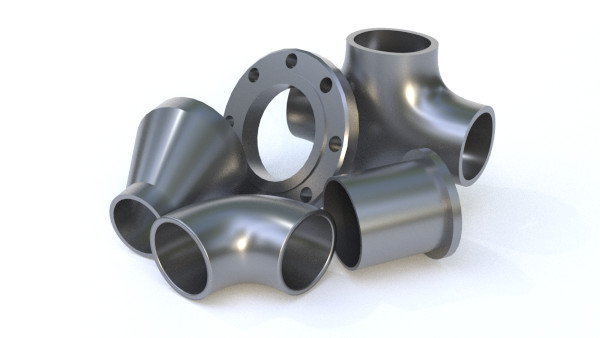
In high-pressure piping, the engineering design of the fitting—the geometry, the connection type, and the surface finish—is as critical as the material itself. Fittings must manage flow dynamics to reduce pressure drop while ensuring absolute seal integrity under extreme hydrostatic loads.
For instrumentation and high-pressure fluid conveyance, double-ferrule compression fittings have become the preferred standard. Double-ferrule systems utilize a controlled two-step swaging action that provides superior mechanical grip on the tube wall and a secondary seal point. This design is inherently more resilient than single-ferrule or standard threaded connections, minimizing the risk of gas or liquid leakage during seismic events, extreme thermal cycling, or high-frequency vibration.
Elbows, tees, and flow-direction reducers must be designed with optimized internal radii to manage fluid velocity. In high-pressure, high-velocity piping, turbulence is a primary driver of localized erosion-corrosion. Modern titanium fittings are engineered with precision-contoured internal transitions that minimize flow disturbance. By reducing turbulence, these components maintain the integrity of the protective oxide layer, even in the presence of abrasive particulates or high-velocity liquid streams.
As industrial operations digitize, we are seeing more high-pressure piping systems where titanium fittings are integrated into sophisticated networks of smart sensors. While embedding sensors directly into the structural body of a fitting remains a significant manufacturing challenge due to heat-affected zones and stress concentrations, engineers are increasingly using specialized fittings with precisely machined mounting features. These designs allow for the secure attachment of external sensors or RFID tags. These devices monitor real-time pressure, temperature, and vibration, allowing for predictive maintenance and the detection of potential fatigue-induced micro-cracks long before they threaten system integrity.
The integration of advanced manufacturing processes, such as additive manufacturing (AM), into the production of high-pressure fittings has necessitated a shift in how we approach certification. As qualification and certification protocols for such components mature within comprehensive frameworks like the ASME Boiler and Pressure Vessel Code (BPVC) Section VIII, the industry is seeing more objective, performance-based evaluation standards. Rather than viewing standards as obstacles, leading manufacturers are collaborating with regulatory bodies to ensure that AM-produced titanium components meet or exceed the performance of their forged counterparts, providing a pathway for lighter, more complex geometries in high-pressure service.
Sourcing high-pressure titanium fittings requires a rigorous focus on material traceability and surface quality. For internal piping engineers, the procurement process must demand more than just dimensional compliance.
- Surface Integrity: Internal surfaces must be free from manufacturing artifacts, such as inclusions or tool marks, which can serve as crack initiation sites under high-pressure cycling. Precision honing and electropolishing are often required for mission-critical components.
- Weldability and Joint Integrity: For butt-weld fittings, the chemical composition of the titanium must be tightly controlled to prevent porosity in the weld zone. Specifications must require strict inert-gas shielding protocols during fabrication.
- Mill Traceability: Every fitting must be fully traceable to the original titanium sponge lot through comprehensive Material Test Reports (MTRs). This ensures that the chemical composition and mechanical properties are verified according to ASTM and ASME standards, providing total accountability for the lifecycle of the pipeline.
As we move through 2026, the adoption of titanium in high-pressure piping is expanding due to its superior mechanical and chemical performance. By standardizing the use of Grade 5 and Grade 9 alloys, adopting advanced double-ferrule connection technologies, and ensuring strict adherence to maturing international certification protocols, engineers can build piping systems capable of enduring the most severe industrial environments. The path to long-term reliability in high-pressure service is paved by meticulous material selection and a commitment to precision engineering, ensuring that titanium continues to provide the safest and most efficient solution for the future of industrial fluid transport.
1. Why is Grade 5 (Ti-6Al-4V) considered the industry benchmark for high-pressure fittings?
Grade 5 is an alpha-beta alloy that provides an exceptional combination of high tensile strength, fatigue resistance, and fracture toughness. These metallurgical properties are essential for maintaining structural integrity when fittings are subjected to intense internal pressures, hydraulic shock, and cyclical mechanical loading common in high-pressure industrial environments.
2. What are the operational advantages of using double-ferrule fittings in high-pressure systems?
Double-ferrule fittings provide a superior mechanical grip on the pipe wall and enhanced sealing capability through a dual-point swaging mechanism. This design creates a more resilient joint that is highly resistant to vibration, thermal expansion, and the sudden pressure spikes often encountered in high-pressure fluid conveyance, effectively mitigating the risk of leaks in high-stakes piping networks.
3. How does titanium compare to high-performance stainless steel in corrosive high-pressure service?
Titanium develops a highly stable and self-healing oxide layer, making it far superior to most stainless steels in aggressive environments. While stainless steel may suffer from pitting, crevice corrosion, or stress corrosion cracking in chloride-rich or acidic media, titanium is highly resistant to, and in many environments effectively immune to, these phenomena, significantly extending the service life of the piping system and reducing downtime.
4. What criteria should an engineer prioritize when auditing a supplier of high-pressure titanium fittings?
An ideal supplier must provide full material traceability, including verified mill test reports (MTRs) for every heat. Furthermore, the supplier must demonstrate strict compliance with recognized international standards such as ASME BPVC or ASTM, and possess advanced manufacturing capabilities that ensure precise internal dimensions and high-quality, defect-free surface finishes.
5. How is the industry addressing the integration of smart technology into titanium piping systems?
Rather than attempting to embed sensors within the titanium body, which can compromise structural integrity, the industry is increasingly utilizing fittings with custom-machined features for the external mounting of sensors or RFID tags. This allows for the integration of smart monitoring systems—such as real-time pressure, temperature, and vibration tracking—into a wider network, enabling predictive maintenance and enhanced safety for high-pressure infrastructure.


