

Views: 300 Author: Lasting Titanium Publish Time: 2024-10-21 Origin: Site


Content Menu
● The Evolution and Significance of Titanium Alloy Bars
● Unraveling the Composition and Properties of Titanium Alloy Bars
>> The Alchemy of Titanium Alloys
>> The Remarkable Properties of Titanium Alloy Bars
● The Art and Science of Manufacturing Titanium Alloy Bars
>> From Raw Materials to Molten Metal
>> Melting and Ingot Formation: The Foundation of Quality
>> The Nuances of Heat Treatment
>> Precision Machining and Finishing
● The Diverse Applications of Titanium Alloy Bars
>> Aerospace: Reaching New Heights
>> Medical and Biomedical Engineering: Enhancing Quality of Life
>> Automotive Innovation: Driving Performance and Efficiency
>> Marine Engineering: Conquering the Seas
>> Chemical and Process Industries: Mastering Extreme Environments
● Overcoming Challenges and Shaping the Future of Titanium Alloy Bars
>> The Quest for Cost Reduction
>> Additive Manufacturing: A New Frontier
>> Pushing the Boundaries with New Alloy Development
● Conclusion: The Enduring Promise of Titanium Alloy Bars
Titanium alloy bars have emerged as a game-changing material in the landscape of modern engineering and industry. These remarkable components represent the culmination of decades of metallurgical research and development, combining the inherent strengths of titanium with carefully selected alloying elements to create a material that pushes the boundaries of what's possible in advanced applications. As we embark on this comprehensive exploration of titanium alloy bars, we'll delve deep into their composition, properties, manufacturing processes, and the myriad ways they're reshaping various sectors of technology and industry.
At the heart of titanium alloy bars lies a sophisticated blend of elements, with titanium serving as the foundation. The alloying process involves the careful addition of elements such as aluminum, vanadium, molybdenum, zirconium, and others, each chosen for its ability to enhance specific properties of the final material. This alchemical combination results in a range of alloys, each tailored to meet the demands of different applications.
Titanium alloy bars boast an impressive array of properties that set them apart in the world of materials science:
Unparalleled Strength-to-Weight Ratio: Perhaps the most celebrated feature of titanium alloy bars is their exceptional strength-to-weight ratio. They offer strength comparable to many steels but at approximately half the weight, a characteristic that opens up new possibilities in design and engineering across various fields.
Superior Corrosion Resistance: The formation of a stable, self-healing oxide layer on the surface of titanium alloy bars provides remarkable protection against corrosion. This natural defense mechanism allows these materials to maintain their integrity even in highly aggressive environments, from saltwater to industrial chemicals.
High-Temperature Performance: Many titanium alloys exhibit excellent stability and strength retention at elevated temperatures. This property makes them invaluable in applications such as aerospace engines, where materials must withstand extreme thermal conditions without compromising structural integrity.
Biocompatibility: Certain titanium alloys display outstanding biocompatibility, meaning they can coexist harmoniously with living tissue. This property has revolutionized the field of medical implants, allowing for the development of long-lasting, well-tolerated prosthetics and devices.
Dimensional Stability: The low coefficient of thermal expansion exhibited by titanium alloy bars ensures minimal dimensional changes across a wide temperature range. This stability is crucial in precision engineering applications where maintaining exact dimensions is paramount.
Fatigue Resistance: Titanium alloy bars demonstrate exceptional resistance to fatigue, allowing them to endure repeated stress cycles without failure. This property is particularly valuable in applications involving cyclic loading, such as aircraft components or high-performance automotive parts.
Cryogenic Performance: Unlike many materials that become brittle at extremely low temperatures, certain titanium alloys maintain their ductility and toughness in cryogenic conditions. This makes them suitable for use in space applications and superconducting technologies.
The production of titanium alloy bars is a complex process that combines cutting-edge technology with precise control and expertise.
The journey begins with the extraction of titanium from its ores, primarily rutile and ilmenite. The Kroll process, developed in the 1940s, remains the primary method for producing pure titanium metal. Once pure titanium is obtained, it's combined with alloying elements in precise ratios.
The alloying process takes place in sophisticated furnaces using techniques such as vacuum arc remelting (VAR) or electron beam melting (EBM). These methods ensure the highest purity and homogeneity in the alloy composition, critical for achieving consistent properties in the final product.
The solidified ingots undergo extensive forging processes, where they are heated and shaped under immense pressure. This step is crucial not only for achieving the desired bar shape but also for refining the material's grain structure, directly influencing its mechanical properties.
Heat treatment is a critical phase in the production of titanium alloy bars, allowing metallurgists to fine-tune the material's microstructure and properties. Processes such as solution treating, aging, and annealing are employed in various combinations to achieve the optimal balance of strength, ductility, and other desired characteristics.
The final stages of production involve precise machining operations to achieve the required dimensions and surface finish. Advanced CNC machines, often equipped with specialized tooling designed specifically for working with titanium alloys, are used to ensure accuracy and consistency.
Throughout the manufacturing process, titanium alloy bars undergo extensive testing and quality control measures. This includes non-destructive testing methods such as ultrasonic inspection and eddy current testing, as well as destructive testing on sample pieces to verify mechanical properties and chemical composition.
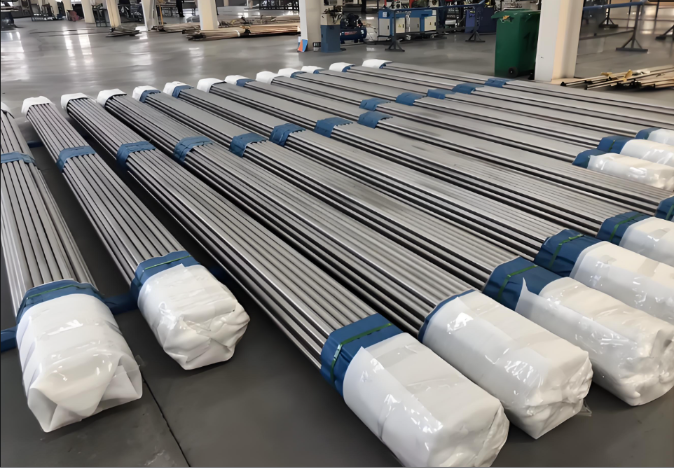
The unique properties of titanium alloy bars have led to their adoption across an impressive range of industries and applications.
In the aerospace industry, titanium alloy bars play a crucial role in pushing the boundaries of flight:
Airframe Structures: Titanium alloys are used extensively in the construction of critical airframe components, including wing structures, fuselage frames, and bulkheads.
Engine Components: The high strength and temperature resistance of titanium alloys make them ideal for jet engine parts such as fan blades, compressor discs, and turbine components.
Landing Gear: The exceptional strength-to-weight ratio of titanium alloy bars allows for the creation of robust yet lightweight landing gear systems.
Fasteners and Fittings: Specialized titanium alloy fasteners and fittings are used throughout aircraft to reduce weight while maintaining structural integrity.
The biocompatibility of certain titanium alloys has revolutionized the field of medical implants and devices:
Orthopedic Implants: Titanium alloy bars are the material of choice for hip replacements, knee joints, and spinal fusion cages, offering long-term stability and promoting bone integration.
Dental Implants: The use of titanium alloys in dental implants has dramatically improved the longevity and success rate of tooth replacements.
Cardiovascular Devices: From heart valve components to pacemaker casings, titanium alloys provide the necessary strength and biocompatibility for critical cardiac devices.
Surgical Instruments: The lightweight nature and corrosion resistance of titanium alloy instruments improve surgical precision and durability.
As the automotive industry strives for greater efficiency and performance, titanium alloy bars are finding increased application:
Engine Components: Titanium alloy connecting rods, valves, and valve springs offer weight reduction and improved high-temperature performance.
Suspension Systems: The use of titanium alloys in suspension components reduces unsprung weight, enhancing vehicle handling and ride quality.
Exhaust Systems: Titanium alloy exhaust systems provide weight savings and improved heat management, particularly in high-performance vehicles.
Racing Applications: In motorsports, titanium alloy components are widely used to maximize performance within strict weight regulations.
The corrosion resistance of titanium alloy bars makes them invaluable in marine applications:
Propulsion Systems: Titanium alloy propeller shafts and components offer superior resistance to saltwater corrosion.
Desalination Equipment: The ability to withstand aggressive chloride environments makes titanium alloys ideal for use in desalination plant components.
Offshore Structures: From oil rigs to underwater research equipment, titanium alloy bars provide durability in harsh marine conditions.
Naval Applications: Naval vessels utilize titanium alloys in various components to reduce weight and improve corrosion resistance.
In chemical processing and related industries, titanium alloy bars excel in handling aggressive substances and extreme conditions:
Heat Exchangers: The corrosion resistance and thermal properties of titanium alloys make them ideal for constructing efficient, long-lasting heat exchangers.
Reaction Vessels: Titanium alloy-lined reactors can withstand a wide range of corrosive chemicals and high temperatures.
Pumps and Valves: Components made from titanium alloy bars offer extended service life in aggressive chemical environments.
Piping Systems: Titanium alloy piping provides reliable, long-term performance in the transport of corrosive fluids.
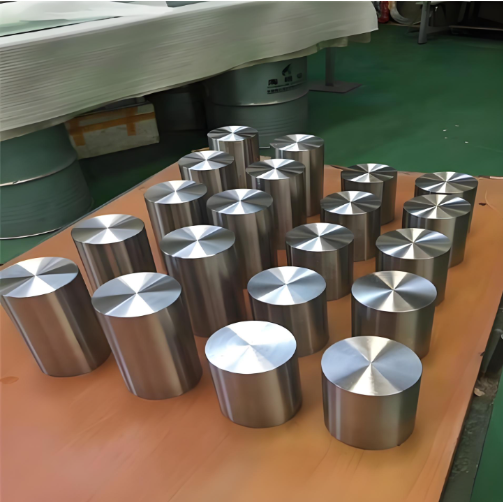
While titanium alloy bars have already made significant impacts across various industries, ongoing research and development aim to address existing challenges and unlock new possibilities.
One of the primary barriers to even wider adoption of titanium alloy bars is their relatively high cost compared to more common materials. Efforts to address this include:
Improved Extraction Methods: Research into more efficient titanium extraction processes, such as the FFC Cambridge process, aims to reduce the energy and cost associated with titanium production.
Advanced Manufacturing Techniques: The development of near-net-shape manufacturing methods, including powder metallurgy and additive manufacturing, promises to reduce material waste and processing costs.
Recycling Innovations: New techniques for recycling titanium alloy scrap and reprocessing it into high-quality material could significantly reduce raw material costs.
The rise of additive manufacturing technologies is opening up new possibilities for titanium alloy bar production and application:
Complex Geometries: 3D printing allows for the creation of titanium alloy components with intricate internal structures and optimized designs that were previously impossible to manufacture.
Customization: Additive manufacturing enables the production of bespoke titanium alloy parts, particularly valuable in medical applications for patient-specific implants.
Rapid Prototyping: The ability to quickly produce prototype parts from titanium alloys accelerates the development and testing of new designs.
Metallurgists and materials scientists continue to explore novel titanium alloy compositions to meet emerging challenges and applications:
High-Temperature Alloys: Development of titanium aluminides and other advanced alloys aims to push the temperature limits of titanium use even higher, opening up new possibilities in aerospace and industrial applications.
Bioactive Alloys: Research into titanium alloys that actively promote bone growth and tissue integration promises to enhance the performance of medical implants.
Smart Alloys: Exploration of titanium-based shape memory alloys and other functional materials could lead to new applications in actuators and adaptive structures.
As environmental concerns take center stage, the titanium alloy industry is focusing on sustainable practices:
Energy-Efficient Production: Development of low-energy smelting and refining processes aims to reduce the carbon footprint of titanium alloy production.
Closed-Loop Recycling: Advancements in recycling technologies seek to create a more circular economy for titanium alloys, reducing reliance on primary ore extraction.
Life Cycle Assessment: Increased focus on the entire life cycle of titanium alloy products, from production to end-of-life, is driving improvements in overall sustainability.
As we look to the future, it's clear that titanium alloy bars will continue to play a pivotal role in advancing technology and engineering across numerous fields. Their unique combination of properties – strength, lightness, corrosion resistance, and biocompatibility – positions them at the forefront of materials science innovation. From enabling more efficient air travel and revolutionizing medical treatments to powering the next generation of automotive technology and withstanding the harshest industrial environments, titanium alloy bars are truly a material for the modern age and beyond.
The ongoing research and development in titanium alloy technology promise to overcome current limitations and unlock even more potential applications. As production processes become more efficient and new alloy compositions are developed, we can expect to see titanium alloys penetrating further into everyday applications, bringing their exceptional properties to bear on the challenges of the 21st century and beyond.
In essence, titanium alloy bars represent more than just a material; they embody the spirit of innovation and the relentless pursuit of excellence in engineering. As we continue to push the boundaries of what's possible in technology and industry, titanium alloy bars will undoubtedly remain at the forefront, enabling breakthroughs and shaping the world around us in ways we're only beginning to imagine.


