

Views: 389 Author: Lasting titanium Publish Time: 2025-08-07 Origin: Site


Content Menu
● Understanding Titanium Tubes
>> Key Specifications to Consider
>>> 2. Dimensions
>>> 3. Length
>>> 7. Weldability
>> Applications of Titanium Tubes
>> Conclusion
Titanium tubes are widely used in various industries due to their unique properties, including high strength, low weight, and excellent corrosion resistance. When selecting titanium tubes for specific applications, it is crucial to consider several key specifications. This article will explore these specifications in detail, providing insights into their importance and applications.
Titanium is a versatile metal known for its strength-to-weight ratio and resistance to corrosion. It is often compared to other metals like steel and aluminum, but titanium stands out due to its unique combination of properties. Titanium tubes are used in aerospace, medical, marine, and chemical processing industries. The specifications of titanium tubes can significantly affect their performance in different environments. Understanding these specifications helps engineers and designers make informed decisions that enhance the reliability and efficiency of their projects.
When evaluating titanium tubes, the following specifications are essential:
Titanium comes in various grades, each with distinct properties. The most common grades include:
- Grade 1: This grade is commercially pure titanium, offering excellent corrosion resistance and ductility. It is often used in applications where high strength is not a primary concern but where corrosion resistance is critical, such as in chemical processing and marine environments.
- Grade 2: This grade provides a balance of strength and ductility, making it suitable for various applications. It is the most widely used titanium grade due to its versatility and is often found in aerospace components, medical devices, and industrial applications.
- Grade 5 (Ti-6Al-4V): An alloy that provides high strength and is commonly used in aerospace applications. This grade is known for its excellent mechanical properties and is often used in critical components that require high strength-to-weight ratios, such as aircraft frames and engine parts.
Understanding the specific properties of each grade allows engineers to select the most appropriate material for their applications, ensuring optimal performance and longevity.

The dimensions of titanium tubes, including outside diameter (OD) and wall thickness, are critical for ensuring compatibility with other components. Common dimensions include:
- Outside Diameter (OD): Ranges from a few millimeters to several inches. The choice of OD depends on the application requirements, such as flow rates in piping systems or structural support in aerospace components.
- Wall Thickness: Typically varies from 0.5 mm to several millimeters, depending on the application. Thicker walls provide greater strength and pressure resistance, while thinner walls reduce weight, which is particularly important in aerospace applications where every gram counts.
The precise dimensions of titanium tubes can significantly impact their performance, making it essential to select the right specifications for the intended use.
The length of titanium tubes can vary based on the application. Standard lengths are often available, but custom lengths can be manufactured to meet specific requirements. For instance, in aerospace applications, longer tubes may be required for structural components, while shorter lengths may suffice for medical devices. Custom lengths can help reduce waste and ensure that the tubes fit perfectly into the intended assembly, enhancing overall efficiency.
The surface finish of titanium tubes can affect their performance, especially in corrosive environments. Common finishes include:
- Polished: Provides a smooth surface that enhances corrosion resistance. Polished tubes are often used in applications where aesthetics are important, such as in architectural designs or high-end medical devices.
- Rough: May be used for applications requiring better adhesion or coating. A rough surface can improve the bonding of coatings or adhesives, making it suitable for applications in the automotive or aerospace industries where components may need to be bonded together.
The choice of surface finish can influence not only the performance of the titanium tubes but also their appearance and compatibility with other materials.
Tensile strength is a measure of how much force a material can withstand while being stretched. Titanium tubes typically have high tensile strength, making them suitable for high-stress applications.
- Grade 2: Approximately 345 MPa (50,000 psi). This strength level is adequate for many industrial applications, providing a good balance of strength and ductility.
- Grade 5: Approximately 900 MPa (130,000 psi). This high tensile strength makes Grade 5 titanium tubes ideal for critical aerospace applications where structural integrity is paramount.
Understanding the tensile strength of titanium tubes helps engineers design components that can withstand the forces they will encounter in service, ensuring safety and reliability.
Titanium is known for its excellent corrosion resistance, particularly in harsh environments. The specific grade of titanium will influence its resistance to various corrosive agents, such as saltwater, acids, and alkalis. For example, Grade 2 titanium exhibits outstanding resistance to seawater, making it a popular choice for marine applications. In contrast, Grade 5 titanium may be preferred in environments where higher strength is required, even if it means slightly reduced corrosion resistance.
The ability to withstand corrosion is a critical factor in the longevity and performance of titanium tubes, especially in industries where exposure to harsh chemicals is common.
The ability to weld titanium tubes is crucial for many applications. Some grades, like Grade 2, are more easily welded than others. Understanding the welding characteristics of the chosen grade is essential for ensuring structural integrity.
Welding titanium requires specific techniques and precautions to prevent contamination and ensure strong joints. For instance, the use of inert gas shielding during the welding process is essential to protect the weld area from atmospheric contamination. Engineers must consider the welding methods available and the skill level of the workforce when selecting titanium tubes for applications that require welding.
Titanium has a relatively low thermal conductivity compared to other metals. This property is important in applications where heat transfer is a consideration, such as in heat exchangers. The low thermal conductivity of titanium can be advantageous in certain applications, as it helps maintain temperature stability and reduces heat loss.
However, in applications where rapid heat transfer is required, such as in some industrial processes, engineers may need to consider alternative materials or design modifications to enhance thermal performance. Understanding the thermal properties of titanium tubes allows for better design choices in applications where temperature control is critical.
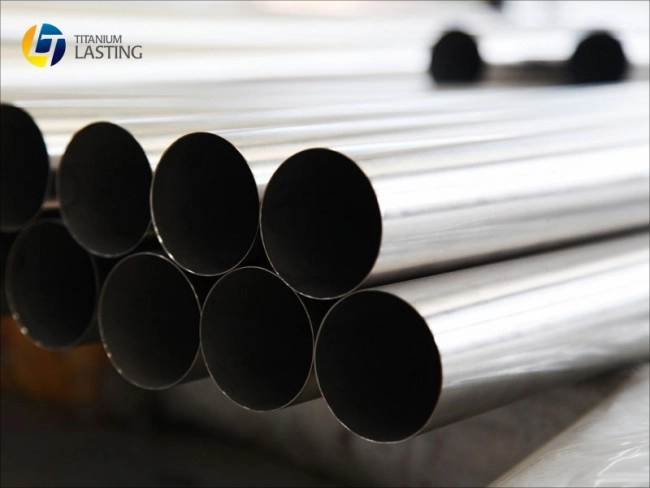
Titanium tubes are used in various applications, including:
- Aerospace: Used in aircraft components due to their lightweight and high strength. Titanium tubes are often found in critical structural components, fuel lines, and hydraulic systems, where their strength-to-weight ratio is essential for performance and efficiency.
- Medical: Employed in surgical instruments and implants due to their biocompatibility. Titanium's resistance to corrosion and ability to integrate with human tissue make it an ideal choice for medical applications, including orthopedic implants and dental devices.
- Marine: Utilized in seawater applications due to their corrosion resistance. Titanium tubes are commonly used in offshore oil rigs, shipbuilding, and desalination plants, where exposure to saltwater can lead to rapid corrosion of other materials.
- Chemical Processing: Used in heat exchangers and reactors where corrosive substances are present. The ability of titanium to withstand harsh chemicals makes it a preferred material in chemical processing industries, where reliability and safety are paramount.
The versatility of titanium tubes allows them to be tailored for specific applications, enhancing their performance and longevity in demanding environments.
When selecting titanium tubes, understanding the key specifications is vital for ensuring optimal performance in your application. By considering material grade, dimensions, surface finish, tensile strength, corrosion resistance, weldability, and thermal properties, you can make informed decisions that enhance the reliability and efficiency of your projects. The unique properties of titanium, combined with its adaptability to various applications, make it an invaluable material in modern engineering and manufacturing.
1. What is the most common grade of titanium used for tubes?
- Grade 2 is the most commonly used grade due to its balance of strength and ductility, making it suitable for a wide range of applications.
2. How does the wall thickness affect the performance of titanium tubes?
- Thicker walls provide greater strength and pressure resistance, while thinner walls reduce weight. The choice of wall thickness should align with the specific requirements of the application.
3. Can titanium tubes be welded?
- Yes, titanium tubes can be welded, but the weldability depends on the grade of titanium. Grade 2 is easier to weld than Grade 5, which requires more careful handling during the welding process.
4. What industries commonly use titanium tubes?
- Titanium tubes are widely used in aerospace, medical, marine, and chemical processing industries, where their unique properties provide significant advantages.
5. How does the surface finish impact corrosion resistance?
- A polished surface finish enhances corrosion resistance by reducing the surface area for corrosive agents to attack. The choice of surface finish can also affect the aesthetic appeal and functionality of the tubes.


