

Views: 368 Author: Lasting Titanium Publish Time: 2025-01-29 Origin: Site


Content Menu
● What is Additive Layer Manufacturing?
● Advantages of Titanium Additive Manufacturing
● Challenges in Titanium Additive Manufacturing
● Applications of Titanium Additive Manufacturing
>> 1. Aerospace
>> 2. Medical
>> 4. Defense
● Future Trends in Titanium Additive Manufacturing
>> 3. Integration with Traditional Manufacturing
>> 1. What is the main advantage of using titanium in additive manufacturing?
>> 2. How does powder bed fusion work in titanium additive manufacturing?
>> 3. What are the common challenges faced in titanium additive manufacturing?
>> 4. In which industries is titanium additive manufacturing primarily used?
>> 5. What future trends are expected in titanium additive manufacturing?
Additive Layer Manufacturing (ALM), commonly referred to as 3D printing, has revolutionized the way we produce components across various industries. This innovative technology allows for the creation of complex geometries and customized parts that were previously unattainable with traditional manufacturing methods. Among the materials that have gained significant attention in this domain is titanium, known for its exceptional strength-to-weight ratio, corrosion resistance, and biocompatibility. These properties make titanium an ideal candidate for a wide range of applications, particularly in industries such as aerospace, medical, and automotive. This article delves into the intricacies of additive layer manufacturing of titanium, exploring its processes, advantages, challenges, and applications, while also considering the future trends that may shape this exciting field.
Additive Layer Manufacturing is a process that builds objects layer by layer from a digital model. Unlike traditional subtractive manufacturing methods, which involve cutting away material from a solid block, ALM adds material to create the desired shape. This method allows for the production of complex geometries that would be difficult or impossible to achieve with conventional techniques. The digital nature of ALM also facilitates rapid prototyping, enabling designers and engineers to iterate on their designs quickly and efficiently. As a result, ALM has become a vital tool in product development, allowing for faster time-to-market and reduced costs.
1. Powder Bed Fusion (PBF): This is one of the most common methods for titanium additive manufacturing. It involves spreading a layer of titanium powder and using a laser or electron beam to selectively melt the powder, fusing it together to form a solid layer. This process is repeated layer by layer until the final part is completed. PBF is particularly advantageous for producing intricate designs and fine details, making it suitable for applications where precision is critical.
2. Direct Energy Deposition (DED): In this method, a focused energy source, such as a laser or electron beam, is used to melt feedstock material (powder or wire) as it is deposited onto a substrate. DED is particularly useful for repairing or adding material to existing components. This technique allows for the enhancement of parts that may have experienced wear or damage, extending their lifespan and functionality.
3. Binder Jetting: This technique involves depositing a binding agent onto a layer of titanium powder, which is then cured to form a solid part. After printing, the part is typically sintered to achieve the desired density and strength. Binder jetting is known for its speed and cost-effectiveness, making it an attractive option for producing large quantities of parts, although it may require additional post-processing to achieve optimal mechanical properties.
One of the most significant advantages of ALM is the ability to create complex geometries that are often not feasible with traditional manufacturing methods. This capability allows for innovative designs that can enhance performance and reduce weight. For instance, lattice structures can be designed to optimize strength while minimizing material usage, leading to significant weight savings in aerospace applications. The freedom to design without the constraints of traditional tooling opens up new possibilities for engineers and designers.
Additive manufacturing is inherently more material-efficient than subtractive methods. Since material is added only where needed, there is minimal waste, which is particularly beneficial when working with expensive materials like titanium. This efficiency not only reduces costs but also contributes to more sustainable manufacturing practices. The ability to recycle unused powder further enhances the sustainability of the process, making it an attractive option for environmentally conscious manufacturers.
ALM allows for easy customization of parts. This is especially valuable in industries such as aerospace and medical, where components often need to be tailored to specific requirements. For example, in the medical field, implants can be designed to match the unique anatomy of individual patients, improving surgical outcomes and patient satisfaction. The ability to produce small batches of customized parts without significant retooling costs is a game-changer for many industries.
The layer-by-layer approach of ALM can significantly reduce lead times for production. Parts can be produced directly from digital files, eliminating the need for extensive tooling and setup. This rapid production capability is particularly beneficial in industries where time-to-market is critical. Companies can respond more quickly to market demands and changes, gaining a competitive edge in their respective fields.
Titanium's high strength-to-weight ratio, combined with the design flexibility of ALM, enables the creation of lightweight structures that maintain strength and durability. This is particularly advantageous in aerospace applications, where weight reduction is critical for fuel efficiency and performance. The ability to produce lightweight components without compromising structural integrity is a significant benefit that can lead to cost savings and improved performance in various applications.
Despite its advantages, titanium additive manufacturing also faces several challenges:
The layer-by-layer process can lead to significant thermal gradients, resulting in residual stresses and warping of the final part. Effective thermal management strategies are essential to mitigate these issues. Techniques such as preheating the build platform or using controlled cooling rates can help manage thermal stresses and improve the dimensional accuracy of the final product.
Parts produced through ALM often require post-processing to achieve the desired surface finish. This can add time and cost to the manufacturing process. Common post-processing techniques include machining, polishing, and surface treatments to enhance the mechanical properties and aesthetics of the parts. The need for post-processing can be a drawback for some applications, particularly those requiring tight tolerances and high surface quality.
The mechanical properties of additively manufactured titanium can vary based on the processing parameters and the specific alloy used. Ensuring consistent quality and performance is a critical concern. Variability in properties can arise from factors such as layer thickness, scanning speed, and powder characteristics. Rigorous testing and quality control measures are necessary to ensure that the final parts meet the required specifications.
The initial investment in additive manufacturing equipment can be high, which may deter some companies from adopting this technology. While the costs of 3D printers have decreased over the years, high-end machines capable of processing titanium remain expensive. Companies must weigh the long-term benefits of ALM against the upfront costs to determine if it is a viable option for their manufacturing needs.
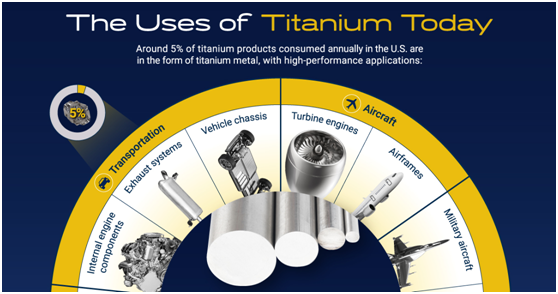
Titanium is widely used in the aerospace industry due to its strength, lightweight nature, and resistance to corrosion. ALM allows for the production of complex components such as brackets, housings, and structural parts that can withstand extreme conditions. The ability to produce lightweight, high-strength components is crucial for improving fuel efficiency and overall aircraft performance. Additionally, the rapid prototyping capabilities of ALM enable aerospace companies to innovate and iterate on designs more quickly.
In the medical field, titanium is favored for implants and prosthetics due to its biocompatibility. Additive manufacturing enables the creation of customized implants that fit the unique anatomy of patients, improving surgical outcomes. For example, ALM can be used to produce patient-specific dental implants, orthopedic devices, and cranial plates, enhancing the effectiveness of medical treatments. The ability to tailor implants to individual patients can lead to better integration with the body and improved recovery times.
The automotive industry is increasingly exploring titanium for high-performance components. ALM can produce lightweight parts that enhance fuel efficiency and performance. Components such as exhaust systems, brackets, and structural elements can benefit from the strength and weight savings offered by titanium. As the automotive industry moves towards more sustainable practices, the material efficiency of additive manufacturing aligns well with these goals.
Titanium's strength and lightweight properties make it ideal for defense applications, including components for aircraft and military vehicles. ALM allows for rapid prototyping and production of specialized parts, enabling defense contractors to respond quickly to changing requirements. The ability to produce complex geometries can also lead to innovative designs that enhance the performance and capabilities of military equipment.
As technology continues to advance, several trends are emerging in the field of titanium additive manufacturing:
Automation in the additive manufacturing process is expected to improve efficiency and reduce human error. This includes advancements in machine learning and artificial intelligence to optimize production parameters. Automated systems can monitor the printing process in real-time, making adjustments as needed to ensure consistent quality and performance. This shift towards automation will likely make ALM more accessible and cost-effective for a broader range of applications.
Research is ongoing to develop new titanium alloys specifically designed for additive manufacturing. These materials aim to improve mechanical properties and reduce production challenges. Innovations in alloy design can lead to materials with enhanced strength, ductility, and fatigue resistance, further expanding the applications of titanium in additive manufacturing. The development of new materials will also help address some of the challenges associated with variability in properties.
The future may see a hybrid approach where additive manufacturing is integrated with traditional manufacturing methods. This could enhance production capabilities and allow for more complex assemblies. For example, ALM could be used to produce intricate components that are then assembled with traditionally manufactured parts, combining the strengths of both methods. This integration can lead to more efficient production processes and improved overall product performance.
As industries focus on sustainability, additive manufacturing's material efficiency and reduced waste will become increasingly important. Efforts to recycle titanium powder and reduce energy consumption during production are likely to gain traction. The ability to produce parts on-demand also reduces the need for large inventories, further contributing to sustainability goals. As environmental concerns continue to grow, the adoption of sustainable practices in additive manufacturing will be a key driver of innovation.
Additive Layer Manufacturing of titanium presents a transformative opportunity across various industries. With its ability to produce complex, lightweight, and customized components, ALM is set to play a crucial role in the future of manufacturing. While challenges remain, ongoing research and technological advancements are paving the way for broader adoption and innovation in this exciting field. As the industry continues to evolve, the potential for titanium additive manufacturing to drive efficiency, sustainability, and performance will only increase, making it a vital area of focus for manufacturers worldwide.
The main advantage of using titanium in additive manufacturing is its exceptional strength-to-weight ratio, which allows for the creation of lightweight yet strong components, particularly beneficial in aerospace and medical applications.
Powder bed fusion involves spreading a layer of titanium powder and using a laser or electron beam to selectively melt the powder, fusing it together to form a solid layer. This process is repeated layer by layer until the final part is completed.
Common challenges include thermal management issues leading to residual stresses, the need for post-processing to achieve desired surface finishes, variability in material properties, and high equipment costs.
Titanium additive manufacturing is primarily used in aerospace, medical, automotive, and defense industries due to its lightweight, strong, and corrosion-resistant properties.
Future trends include increased automation, the development of enhanced materials, integration with traditional manufacturing methods, and a focus on sustainability and recycling of titanium powder.


