

Views: 380 Author: Lasting Titanium Publish Time: 2025-01-07 Origin: Site


Content Menu
● Understanding Titanium Alloys
● The Forging Process of Titanium Alloys
>> Heating
>> Cooling
● Benefits of Forging Titanium Alloys
>> Enhanced Mechanical Properties
● Challenges in Forging Titanium Alloys
>> Sensitivity to Contamination
>> Tool Wear
● Applications of Forged Titanium Alloys
● Future Trends in Titanium Alloy Forging
● Related Questions and Answers
>> 1. What are the main types of titanium alloys used in forging?
>> 2. What is the typical temperature range for forging titanium alloys?
>> 3. What are the advantages of using forged titanium alloys in aerospace applications?
>> 4. What challenges are associated with the forging of titanium alloys?
>> 5. How is the future of titanium alloy forging expected to evolve?
The forging of titanium alloys is a critical process in various industries, particularly in aerospace, automotive, and medical applications. This article explores the intricacies of titanium alloy forging, including its processes, benefits, challenges, and applications. Understanding these aspects is essential for engineers and manufacturers who work with these advanced materials, as they play a significant role in the performance and reliability of the final products.
Titanium alloys are materials made primarily of titanium, combined with other elements to enhance their properties. These alloys are known for their high strength-to-weight ratio, excellent corrosion resistance, and ability to withstand extreme temperatures. The most common titanium alloy is Ti-6Al-4V, which contains 6% aluminum and 4% vanadium. This alloy is widely used due to its superior mechanical properties and forgeability. The unique characteristics of titanium alloys make them suitable for applications where performance and durability are paramount, such as in high-stress environments.
Titanium alloys can be categorized into three main types:
1. Alpha Alloys: These alloys are primarily composed of titanium and have a hexagonal close-packed (HCP) structure. They exhibit good weldability and high-temperature strength, making them ideal for applications that require stability at elevated temperatures. Alpha alloys are often used in aerospace components that operate in high-temperature environments.
2. Beta Alloys: These contain a higher percentage of beta-stabilizing elements, resulting in a body-centered cubic (BCC) structure. They are known for their excellent ductility and formability, which allows for complex shapes to be forged without cracking. Beta alloys are particularly useful in applications where intricate designs are necessary, such as in certain automotive parts.
3. Alpha-Beta Alloys: These alloys combine both alpha and beta phases, offering a balance of strength, ductility, and weldability. This versatility makes alpha-beta alloys popular in various industries, including aerospace and medical, where both strength and formability are required.
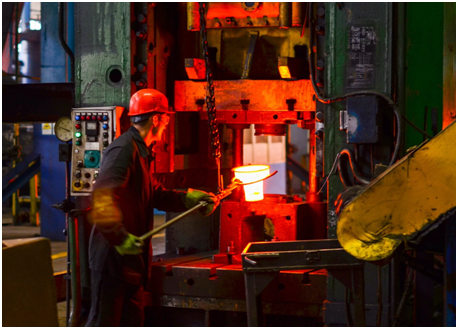
Forging is a manufacturing process that involves shaping metal using localized compressive forces. The forging of titanium alloys typically involves several key steps, each of which is crucial for achieving the desired properties in the final product.
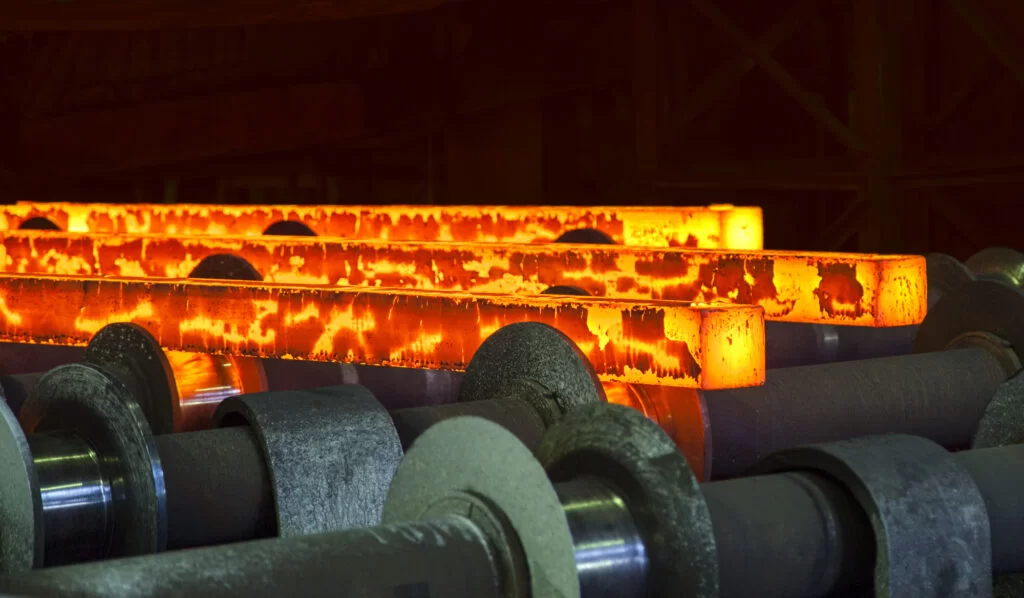
The first step in the forging process is heating the titanium alloy to a specific temperature. This temperature is crucial as it affects the material's ductility and strength. Titanium alloys are usually heated to temperatures between 800°C and 1,200°C, depending on the specific alloy and desired properties. Proper heating ensures that the material becomes malleable enough to be shaped without fracturing, allowing for more complex geometries to be achieved during the forging process.
There are several forging techniques used for titanium alloys, including:
- Open Die Forging: In this method, the metal is placed between two flat dies and shaped by hammering or pressing. This technique is suitable for large components and allows for significant deformation, making it ideal for producing large structural parts.
- Closed Die Forging: This involves placing the heated metal in a die that has a specific shape. The die closes around the metal, forcing it to take the shape of the cavity. This method is ideal for producing complex shapes with high precision, which is essential in applications where dimensional accuracy is critical.
- Isothermal Forging: This advanced technique maintains the temperature of the workpiece and die throughout the forging process, reducing thermal gradients and improving material properties. Isothermal forging can enhance the mechanical properties of the forged components, making them more suitable for high-performance applications.
After forging, the titanium alloy must be cooled properly to achieve the desired microstructure and mechanical properties. This cooling can be done in air or through controlled methods such as water quenching or furnace cooling. The cooling rate can significantly influence the final properties of the alloy, including its hardness and strength. Proper cooling techniques are essential to prevent warping or cracking, ensuring that the forged components meet the required specifications.
The forging of titanium alloys offers several advantages:
Forged titanium alloys exhibit superior mechanical properties compared to their cast counterparts. The forging process refines the grain structure, resulting in improved strength, toughness, and fatigue resistance. This enhancement is particularly important in applications where components are subjected to cyclic loading, such as in aerospace and automotive environments.
Forging is a highly efficient process that minimizes material waste. The ability to shape the metal precisely reduces the need for additional machining, leading to cost savings. This efficiency not only lowers production costs but also contributes to more sustainable manufacturing practices by reducing the amount of scrap material generated during production.
Components made from forged titanium alloys are often more reliable due to their uniform microstructure and reduced likelihood of defects. This reliability is crucial in applications where safety is paramount, such as in aerospace and medical devices. The consistent quality of forged components helps to ensure that they perform as expected under demanding conditions, reducing the risk of failure.
Despite its advantages, forging titanium alloys presents several challenges:
The cost of titanium alloys and the energy required for heating can make the forging process expensive. Manufacturers must balance these costs with the benefits of using titanium. The high initial investment in equipment and materials can be a barrier for some companies, particularly smaller manufacturers.
Titanium alloys are sensitive to contamination from elements such as oxygen, nitrogen, and hydrogen during the forging process. These contaminants can adversely affect the mechanical properties of the final product. Maintaining a clean environment during forging is essential to prevent contamination and ensure the integrity of the forged components.
The forging of titanium alloys can lead to significant wear on tooling due to the material's hardness and the high temperatures involved. This wear necessitates frequent tool replacement, adding to production costs. Manufacturers must invest in high-quality tooling materials and consider advanced coatings or treatments to extend tool life and reduce maintenance costs.
Forged titanium alloys are used in various industries due to their unique properties:
In aerospace, titanium alloys are used for components such as engine parts, landing gear, and structural elements. Their lightweight and high-strength characteristics make them ideal for reducing aircraft weight and improving fuel efficiency. The use of titanium alloys in aerospace applications contributes to enhanced performance and safety, making them a preferred choice for many manufacturers.
Titanium alloys are widely used in medical implants and devices due to their biocompatibility and corrosion resistance. They are commonly found in orthopedic implants, dental implants, and surgical instruments. The ability of titanium to integrate with human tissue makes it an excellent choice for medical applications, where long-term performance and safety are critical.
The automotive sector utilizes forged titanium alloys for high-performance components, including exhaust systems and suspension parts. Their strength and lightweight nature contribute to improved vehicle performance and efficiency. As the automotive industry increasingly focuses on reducing emissions and enhancing fuel economy, the demand for lightweight materials like titanium alloys is expected to grow.
The forging of titanium alloys is evolving with advancements in technology and materials science. Some future trends include:
Automation in the forging process can enhance efficiency and reduce labor costs. Automated systems can monitor and control the forging parameters, ensuring consistent quality. The integration of robotics and artificial intelligence in manufacturing processes is likely to streamline operations and improve productivity.
Research is ongoing to develop new titanium alloys with improved properties for specific applications. These new alloys may offer enhanced performance in extreme conditions or reduce costs. Innovations in alloy composition and processing techniques could lead to the creation of materials that meet the evolving demands of various industries.
As industries focus on sustainability, the forging of titanium alloys is likely to incorporate more eco-friendly practices. This includes recycling titanium scrap and reducing energy consumption during the forging process. Manufacturers are increasingly seeking ways to minimize their environmental impact, and sustainable practices will play a crucial role in the future of titanium alloy forging.
The forging of titanium alloys is a complex yet rewarding process that plays a vital role in various high-performance applications. Understanding the intricacies of this process, including the types of alloys, forging techniques, and benefits, is essential for manufacturers and engineers alike. As technology advances, the future of titanium alloy forging looks promising, with opportunities for innovation and improved sustainability.
The main types of titanium alloys used in forging are alpha alloys, beta alloys, and alpha-beta alloys, each offering different properties and applications.
The typical temperature range for forging titanium alloys is between 800°C and 1,200°C, depending on the specific alloy and desired properties.
Forged titanium alloys provide a high strength-to-weight ratio, excellent corrosion resistance, and improved reliability, making them ideal for aerospace components.
Challenges include high processing costs, sensitivity to contamination, and significant tool wear during the forging process.
The future of titanium alloy forging is expected to see increased automation, the development of new alloys, and a focus on sustainable practices.


