

Views: 315 Author: Lasting Titanium Publish Time: 2026-02-09 Origin: Site


Content Menu
>> Prosthetics
>> What are titanium square bars used for?
>> Why is titanium preferred in medical applications?
>> How do titanium square bars enhance automotive performance?
>> What advantages do titanium square bars offer in marine applications?
>> Are titanium square bars suitable for high-temperature applications?
Titanium and its alloys are increasingly becoming staples in various engineering fields due to their unique properties, including high strength-to-weight ratio, excellent corrosion resistance, and biocompatibility. This article explores the top five applications of titanium and titanium alloy square bars in modern engineering, highlighting their significance across different industries.
In the aerospace industry, titanium and titanium alloy square bars are extensively used in the construction of aircraft frames and structural components. Their lightweight nature and high strength make them ideal for applications where reducing weight is crucial for fuel efficiency and performance. For instance, titanium square bars are utilized in various support structures, joints, and fasteners, contributing to the overall structural integrity of the aircraft. While titanium alloy forgings and thick plates are more common in primary load-bearing structures like wing spars and fuselage frames, square bars play a vital role in secondary structures and components.
The aerospace sector is constantly evolving, with manufacturers seeking materials that can withstand the rigors of flight. Titanium's ability to resist fatigue and its excellent mechanical properties at various temperatures make it a preferred choice for critical structural components. As aircraft designs become more complex, the demand for titanium and titanium alloy square bars is expected to rise, further solidifying their role in aerospace engineering.
Titanium alloys, such as Ti-6Al-4V, exhibit excellent specific strength and creep resistance in the mid-temperature range (approximately 300-500°C). This makes them suitable for manufacturing components in jet engines, particularly in the fan and compressor sections, where they must endure significant centrifugal forces and airflow loads while maintaining a lightweight profile. The use of titanium in engines not only enhances performance but also extends the lifespan of components, reducing maintenance costs.
For example, titanium components can operate effectively in the demanding conditions found in jet engines, where they are subjected to high pressures and temperatures. The lightweight nature of titanium contributes to overall engine efficiency, allowing manufacturers to improve thrust-to-weight ratios, which leads to better fuel economy and performance. As the aerospace industry continues to innovate, the integration of titanium and titanium alloy square bars in engine design will likely become more prevalent, facilitating advancements in aviation technology.
In the medical field, titanium and titanium alloy square bars are favored for their biocompatibility and corrosion resistance. They are commonly used in the production of surgical instruments and implants. The biocompatibility of titanium ensures that it can be safely used in contact with human tissue, making it an ideal material for devices such as orthopedic implants and dental fixtures.
Moreover, titanium's excellent resistance to corrosion allows surgical instruments to withstand repeated sterilization processes without degrading. This durability is crucial in maintaining the integrity of medical devices over time. Additionally, titanium's non-magnetic properties make it suitable for use in MRI environments, where traditional materials may interfere with imaging. While the lightweight properties of titanium also contribute to ease of handling, the primary advantages lie in its biocompatibility, corrosion resistance, and fatigue performance, which are essential for ensuring patient safety and effective surgical outcomes.
Titanium and titanium alloy square bars are also employed in the manufacturing of prosthetic devices. Their lightweight and durable characteristics allow for the creation of prosthetics that are both functional and comfortable for the user. The strength of titanium ensures that these devices can withstand daily wear and tear while providing the necessary support. For instance, titanium is often used in prosthetic limbs, where its strength-to-weight ratio is crucial for mobility and comfort.
The biocompatibility of titanium means that prosthetic devices can be implanted without the risk of adverse reactions, making them a safe choice for patients. As technology advances, the integration of titanium and titanium alloy square bars in prosthetic design will likely lead to more personalized and effective solutions for individuals with limb loss, enhancing their quality of life.
The automotive industry benefits significantly from the use of titanium and titanium alloy square bars, particularly in high-performance vehicles. Components such as exhaust systems, suspension parts, and engine components are often made from titanium to reduce weight and enhance performance. The use of titanium not only improves fuel efficiency but also contributes to the overall safety and handling of the vehicle. In racing applications, where every ounce of weight matters, titanium square bars are used to create components that provide the necessary strength without the added weight of traditional materials.
Additionally, the durability of titanium ensures that automotive components can withstand the harsh conditions of the road, including exposure to chemicals, temperature fluctuations, and mechanical stress. The low thermal expansion coefficient of titanium also ensures that components maintain their shape and integrity under extreme thermal cycling, preventing deformation and leaks in exhaust systems. As manufacturers strive to meet stricter emissions regulations and consumer demands for fuel-efficient vehicles, the adoption of titanium and titanium alloy square bars in automotive design is expected to increase.
In motorsports, where every ounce of weight matters, titanium square bars are used extensively. They provide the necessary strength without the added weight of traditional materials, allowing for faster and more agile vehicles. The durability of titanium also ensures that components can withstand the extreme conditions of racing. For example, titanium is often used in the construction of exhaust systems, where its ability to resist heat and corrosion is critical for maintaining performance.
Moreover, the use of titanium in racing applications aligns with the industry's shift towards more sustainable practices. By reducing the weight of vehicles, manufacturers can improve fuel efficiency and reduce emissions, contributing to a more environmentally friendly approach to motorsports. As the demand for high-performance vehicles continues to grow, the role of titanium and titanium alloy square bars in automotive engineering will likely expand, driving innovations in vehicle design.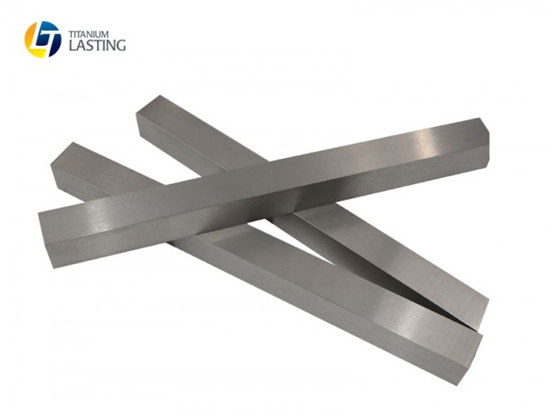
Titanium and titanium alloy square bars are ideal for marine applications due to their exceptional resistance to saltwater corrosion. They are used in various marine components, including boat fittings, propeller shafts, and structural supports for offshore platforms. The longevity of titanium in harsh marine environments reduces maintenance costs and enhances the reliability of marine vessels. For instance, titanium components can last significantly longer than those made from traditional materials, which often succumb to corrosion and require frequent replacement.
Additionally, the lightweight nature of titanium contributes to improved performance in marine applications. By reducing the weight of components, manufacturers can enhance the speed and maneuverability of vessels, making them more efficient in various marine environments. As the maritime industry seeks to improve efficiency and reduce environmental impact, the use of titanium is likely to expand, particularly in the construction of eco-friendly ships and offshore structures.
As the maritime industry seeks to improve efficiency and reduce environmental impact, the use of titanium is likely to expand. Titanium and titanium alloy square bars are increasingly being used in the construction of eco-friendly ships and offshore structures, contributing to sustainable practices in marine engineering. The ability of titanium to withstand harsh conditions without degrading means that vessels can operate more efficiently, reducing fuel consumption and emissions.
Moreover, the use of titanium in marine applications aligns with the industry's commitment to sustainability. By incorporating lightweight and durable materials, manufacturers can create vessels that are not only more efficient but also have a lower environmental footprint. As the demand for sustainable solutions in marine engineering continues to grow, the role of titanium and titanium alloy square bars will likely become more prominent, facilitating the development of innovative designs and technologies.
In the chemical processing industry, titanium and titanium alloy square bars are utilized in the manufacturing of equipment such as heat exchangers, reactors, and piping systems. Their resistance to corrosion from harsh chemicals ensures the integrity and longevity of the equipment, making them a preferred choice for critical applications. For example, titanium is often used in environments where traditional materials would fail due to chemical exposure, leading to leaks and equipment failure.
Furthermore, the lightweight nature of titanium allows for the design of more efficient systems. By reducing the weight of equipment, manufacturers can improve installation and maintenance processes, leading to cost savings and increased operational efficiency. As the chemical processing industry continues to evolve, the demand for titanium and titanium alloy square bars is expected to grow, particularly in applications that require high-performance materials.
Titanium and titanium alloy square bars are also finding applications in the energy sector, particularly in nuclear reactors and renewable energy systems. Their ability to withstand high temperatures and corrosive environments makes them suitable for components that require durability and reliability. For instance, titanium is often used in the construction of heat exchangers and piping systems in nuclear power plants, where its resistance to corrosion is critical for maintaining safety and efficiency.
Additionally, the use of titanium in renewable energy systems, such as wind turbines and solar panels, is becoming more common. The lightweight and durable characteristics of titanium allow for the creation of components that can withstand harsh environmental conditions while maintaining performance. As the demand for sustainable energy solutions continues to rise, the role of titanium and titanium alloy square bars in the energy sector will likely expand, driving innovations in energy technology.
Titanium and titanium alloy square bars are essential materials in modern engineering, offering unique properties that make them suitable for a wide range of applications. From aerospace and medical devices to automotive and marine engineering, the versatility of titanium continues to drive innovation across various industries. As technology advances, the demand for titanium and titanium alloy square bars is expected to grow, paving the way for new and exciting applications.
Titanium square bars are used in aerospace, medical devices, automotive components, marine engineering, and chemical processing equipment.
Titanium is biocompatible, corrosion-resistant, and non-toxic, making it ideal for surgical instruments and implants.
They reduce weight while providing strength, improving fuel efficiency and handling in vehicles.
Their corrosion resistance ensures longevity and reliability in harsh marine environments.
Yes, titanium maintains its strength and integrity at elevated temperatures, making it suitable for various high-temperature applications.


